

テクノロジー
Anthropic、Claude Codeの週次上限を9月14日に現状比17%減 「恒久25%増」の分母
Claude Codeの恒久的な週次枠は旧標準比25%増だが、期間限定50%増の終了により現状比では約17%減る。対象範囲と非公開の絶対量、5時間枠との違いを整理する。

別名: Colossus 1
テネシー州メンフィスの廃工場を転用して建設された、xAIの巨大データセンター。NVIDIAのH100、H200、GB200といった最新GPUを数十万台規模で搭載し、単一のネットワークで結合された世界最大級のAI計算基盤として知られる。
Claude Codeの恒久的な週次枠は旧標準比25%増だが、期間限定50%増の終了により現状比では約17%減る。対象範囲と非公開の絶対量、5時間枠との違いを整理する。

Anthropicが650億ドルを調達し、評価額は9,650億ドルに達した。Claude需要の急拡大を背景に、競争の焦点はモデル性能だけでなく計算資源の確保へ移っている。
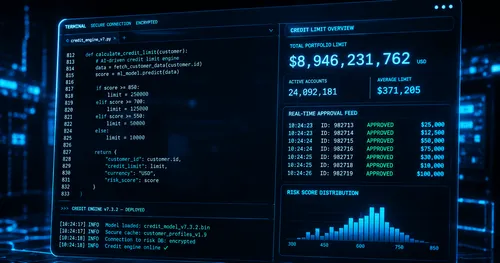
Anthropicは、Claude Agent SDKなどのプログラム利用を2026年6月15日から定額制から月間クレジット制度へ移行すると発表した。これは、サードパーティ製エージェントによる非効率なAPIリクエストがGPUインフラを圧迫したことが背景にあり、クレジット枯渇後は従量課金に切り替わる。この変更により、自動化ワークフローの運用コストが大幅に増加する可能性があるため、開発者はエージェントのキャッシュ最適化を強く求められる。

Anthropicは、AIコーディング支援モデルClaude Codeのレート制限を大幅に緩和するため、競合であるxAIのデータセンター「Colossus 1」の計算能力を借りる異例の契約を締結した。この提携により、Anthropicは22万台以上のGPUと300メガワット超の電力容量を確保し、Claude Codeの全プランでレート制限を最大16倍以上引き上げた。これは、急増するAI需要に対応し、長期的なインフラ構築のリードタイムを埋める緊急措置であり、SpaceXとの宇宙空間AIインフラ構想も視野に入れた戦略的な動きである。
The LIGO/Virgo/Kagra (LVK) Collaboration has detected numerous binary black hole (BBH) mergers with properties that challenge standard binary evolution scenarios, such as component masses above the pair-instability gap and high spin magnitudes. Dense stellar environments such as globular clusters provide a natural channel for producing such systems through hierarchical mergers, where black hole (BH) remnants formed in earlier mergers are retained in the cluster and undergo successive mergers. However, gravitational-wave recoil kicks often eject merger remnants from typical globular clusters, which limits hierarchical growth. Massive clusters with deeper potential wells, such as those found in giant elliptical galaxies like M87, may overcome this barrier, but direct simulations of such massive globular clusters remain computationally challenging. In this study, we present a 10-million-body cluster simulation performed with the Cluster Monte Carlo (CMC) code, referred to as colossus, which serves as a proxy for the most massive low-metallicity globular clusters observed in the local Universe. This simulation demonstrates that extended chains of hierarchical mergers can occur in massive globular clusters, producing BHs up to the fifth generation with masses approaching 250 M⊙, comparable to the most massive LVK events observed to date (e.g., GW231123). Combining the colossus simulation with the previous CMC Cluster Catalog, we develop a framework to extrapolate BBH merger predictions for the thousands of globular clusters seen in the Virgo Supercluster.
Colossus is designed to meet a growing need for survival analysis software capable of analyzing tens of millions of rows of radiation epidemiological data. Colossus is an R package devised to offer scalable survival analysis for the Million Person Study. The total and relative rate equations available in Colossus are outlined in this article, which are used in conjunction with Cox proportional hazards, Poisson, and Fine-Grey regression models. Following a comparison with existing software, validation with epidemiological cohort data is described. Exposure data and specific causes of death among workers at Los Alamos National Laboratory and U.S. nuclear power plants were analyzed by Colossus and 32-bit Epicure and compared with published results. Colossus results agreed with the results of existing software and previous publications.
BackgroundLarger "macrowires" may facilitate microcatheter-free delivery of large-bore aspiration catheters (ACs) for intracranial endovascular mechanical thrombectomy. We examined the safety and efficacy of the Aristotle Colossus Guidewire for this use.MethodsIn this retrospective analysis of prospective data from 12 institutions, we identified anterior circulation endovascular mechanical thrombectomy cases involving the Aristotle Colossus guidewire over a 12-month period. The primary efficacy endpoint was successful delivery of the AC to the site without the use of adjunct devices. Multivariable logistic regression was performed with clinically relevant covariables.ResultsIn 122 patients (median age 74 years (interquartile range (IQR) 63-82)), most intracranial occlusions were in the M1 segment of the middle cerebral artery (95/122, 78.0%). The primary endpoint of microcatheter-free AC delivery was met in 87.7% (107/122) of patients; 93/122 (76.2%) patients underwent microcatheter-free delivery with successful reperfusion via contact aspiration (modified thrombolysis in cerebral infarction grade ≥ 2B). The median number of passes was 1 (IQR 1-2). Multivariable regression demonstrated that severe internal carotid artery tortuosity or cervical loop presence (odds ratio (OR): 0.09, 95% confidence interval (CI): 0.01-0.54, p = 0.01) and presence of intracranial atherosclerotic disease (OR: 0.15, 95% CI: 0.03-0.83, p = 0.03) were significantly associated with lower odds of successful AC delivery over the guidewire. Intraprocedural vasospasm occurred in 4.9% (6/122) of cases; there were no reports of vessel dissection or perforation.ConclusionsWe demonstrate the favorable performance of the Aristotle Colossus guidewire for anterior circulation ischemic stroke intervention. The macrowire appears to safely facilitate navigation of the neurovasculature by large-bore ACs without the need for microcatheter and/or stentriever.
The proposal for a European Health Data Space (EHDS) has sparked extensive discourse, weighing the potential benefits for healthcare and innovation against concerns over privacy and societal impacts. At the heart of this discussion are the Health Data Access Bodies (HDABs), tasked with managing the reuse of secondary health data within the EHDS framework. This article delves into the formidable challenges facing HDABs, suggesting that the complexity and volume of data access requests may overwhelm their capacity. Ensuring compliance with EHDS regulations, GDPR provisions, and ethical standards presents a multifaceted challenge. The author argues that the expertise and efficiency required to navigate these complexities could strain HDAB resources and capabilities. Furthermore, the anticipated surge in data access requests may exacerbate these challenges, potentially compromising HDAB effectiveness. Consequently, there is a pressing need for a pragmatic approach to delineating HDAB responsibilities to ensure their ability to fulfill their role competently. By addressing these concerns, the EHDS can uphold individual rights, promote societal welfare, and foster trust in its overarching objectives.
The New Colossus by Emma Lazarus is a well-known poem that expresses ideas of immigration, freedom, and national identity. This study aims to analyze the poem through two perspectives, namely poetic structure and cultural meaning. It focuses on how poetic devices such as metaphor, imagery, symbolism, alliteration and personification contribute to shaping the poem’s message. Using a qualitative method, the research applied Kemple's (2019) semiotic theory to interpret poetic devices as symbolic signs, while Hall's (2013) theory of representation was used to examine how the poem reflects and responds to changing social contexts. The analysis reveals that these poetic elements build a persuasive and emotional message that supports the poem’s theme of inclusivity and hope. It also shows that the meaning of the poem has shifted over time, especially in relation to modern immigration debates. This research highlights the poem’s dual role as a literary text and a cultural artefact. The findings suggest that poetic language can carry lasting social influence and that literature remains a relevant tool in understanding national identity.