

テクノロジー
Apple「A20」チップとiPhone 18シリーズの全貌:2nmプロセス移行と次世代パッケージング技術がもたらす変革
iPhone 18 Pro向けA20 ProチップはTSMCの2nmプロセスと新パッケージング技術WMCMを採用し、AI処理と電力効率を大幅に向上させる。ベースモデルのiPhone 18はDRAM供給不足からWMCMを見送るが、メモリを12GBに増強し、Appleはリリースサイクルを分割してサプライチェーンの負荷分散を図る。

iOSは、Appleが開発・提供するiPhone向けのモバイルオペレーティングシステムである。iPhoneのハードウェアと密接に統合された形で設計されており、アプリケーションの実行、通信機能、セキュリティ管理、AI処理など端末の基本機能全般を担う。年1回程度のメジャーバージョンアップと複数回のマイナーアップデートにより、継続的に機能追加とシステム改善が行われている。
iOSはAppleのモバイルプラットフォーム戦略の中核を担うソフトウェアであり、App Storeを通じたアプリ流通、Apple IDによる認証・連携、iCloudとのデータ同期など、Appleのエコシステム全体と深く結びついた設計となっている。メジャーバージョンはおおむね秋のiPhone新モデル発売に合わせてリリースされ、その後も数カ月にわたってポイントリリース(マイナーアップデート)が続く形をとっている。現行の主要バージョン系列はiOS 26であり、2025年9月に登場した。
iOSはAppleが設計するAシリーズチップと密接に連携しており、ハードウェアとソフトウェアの一体的な最適化によって消費電力効率や処理性能を高めるアーキテクチャをとる。近年はオンデバイスAI処理の比重が増しており、Apple Intelligenceと呼ばれるAI機能群との統合が進んでいる。また、iOS上でのRCS(Rich Communication Services)対応など、業界標準プロトコルへの対応も段階的に拡大している。
2026年2月11日、Appleは「iOS 26.3」を正式リリースした。新機能の追加は限定的であった一方、Android端末への移行プロセスを簡略化する変更が含まれており、従来のエコシステム戦略に微細な変化が見られるアップデートとして注目された。
2026年3月30日にはiOS 26.5の開発者向けベータ第1弾が公開され、4月3日には改訂版の配信も実施された。同日にはパブリックベータも開始されており、マップの新表示形式、RCS通信の暗号化対応、EU向けの端末連携機能といった変更点が確認されている。
AI機能の強化においては、GoogleのGeminiモデルをiOS上のSiriに統合する取り組みが報じられている。BloombergのMark Gurman記者によると、Appleは長年のAI開発上の遅れを補う目的でGoogleとの協業を決断しており、Geminiを統合した新生Siriの詳細はiOS 26.4前後のタイミングで明らかになる可能性があるとされている。
2026年6月時点では、次期メジャーバージョン「iOS 27」に関する情報も浮上している。最新レポートによると、iOS 27は派手な新機能の追加よりも「徹底的なコードクリーンアップ」を主眼に置いたアップデートとなる可能性が高く、バッテリー効率の大幅な改善が期待されるとされている。地味ながらも内部アーキテクチャの刷新を図るリリースとして位置づけられる見通しだ。
また、2026年6月にはiOS 26の内部コードから大量の未発表製品情報が流出したことも報じられた。折りたたみiPhone、卓上ロボット、次世代チップ「M6」など30種以上の製品に関するコードが含まれていたとされており、Appleの今後の製品ロードマップを示す資料として広く注目された。
ハードウェア面では、2026年秋に登場予定のiPhone 18シリーズに搭載されるA20チップがTSMCの2nmプロセスで製造されることが伝えられており、AI処理性能と電力効率の向上がiOSの機能展開にも影響を与えると見られている。
iPhone 18 Pro向けA20 ProチップはTSMCの2nmプロセスと新パッケージング技術WMCMを採用し、AI処理と電力効率を大幅に向上させる。ベースモデルのiPhone 18はDRAM供給不足からWMCMを見送るが、メモリを12GBに増強し、Appleはリリースサイクルを分割してサプライチェーンの負荷分散を図る。

Appleは2026年3月30日にiOS 26.5の開発者向けベータ第1弾を公開し、4月3日には改訂版となる 23F5043k を配信した。あわせて同日には最初のパブリックベータも始まっており、26.5系は開発者向け先行 […]

Appleが2026年後半にリリースを予定している「iOS 27」は、iPhoneの歴史において、地味ながらも非常に重要なアップデートになるかもしれない。最新のレポートによると、次期OSは派手な新機能の追加よりも、システ […]

Appleは2026年2月11日(現地時間)、iPhone向けオペレーティングシステムの最新版「iOS 26.3」を正式にリリースした。2025年9月に登場したiOS 26ファミリーにおいて、今回のアップデートはバージョ […]

AppleがオンラインストアにおけるMacの購入プロセスを密かに、しかし抜本的に刷新した。これまで長らく続いてきた、スペックの異なる数種類の「標準構成(ベースモデル)」から選ぶスタイルを廃止し、すべてのユーザーが1から仕 […]

Appleが長年抱えてきたAI開発の遅れを取り戻すため、ついに最大のライバルであるGoogleの手を借りる決断を下した。BloombergのMark Gurman記者によると、GoogleのGeminiモデルを統合した「 […]

テクノロジー業界において、これほど大規模かつ具体的な「未来の地図」が流出した例は過去に類を見ない。 2025年12月中旬、Appleの厳重な秘密主義の壁に風穴を開けたのは、ある一台のプロトタイプ端末だった。そこに含まれて […]

言葉の壁が、また一つ音を立てて崩れ去ろうとしている。 Googleは2025年12月13日、同社の翻訳サービス「Google翻訳」に対し、生成AIモデル「Gemini」を統合する大規模なアップデートを発表した。このアップ […]

2025年12月10日、Googleは同社の主力写真・動画管理サービス「Google フォト」において、動画編集機能を大幅に刷新するアップデートを発表した。これは単なる機能追加ではない。これまでの「静止画の保管庫」という […]

シリコンバレーの勢力図において、地殻変動とも呼べる重大な人事異動が発生した。 2025年12月初旬、Appleのヒューマンインターフェースデザイン部門を長年牽引してきた副社長、Alan Dye(アラン・ダイ)氏が同社を去 […]

OpenAIが2025年10月23日(米国時間)、Mac向けにAIをOSレベルで統合するインターフェースを開発するスタートアップ、Software Applications Incorporatedの買収を発表した。 こ […]
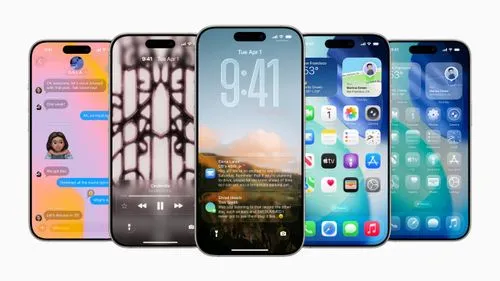
Appleは開発者向けリリースの翌日、iOS 26.1のパブリックベータ3を一般テスター向けに公開した。今回のアップデートでは、Appleのサービスリブランディングを象徴する新しいアプリアイコンや、ユーザーの利便性を高め […]

Appleは、iOS 26.1およびiPadOS 26.1のパブリックベータ2をリリースした。今回のアップデートは、大規模な機能追加よりも、ユーザー体験の根幹に関わる細やかで重要な改善に焦点が当てられている。特に、多くの […]

Appleは、2025年9月9日(現地時間)に開催された恒例の秋季イベントで、長らく噂されてきた新型iPhone「iPhone Air」を正式に発表した。長年iPhoneのラインナップを支えてきた「Plus」モデルに終止 […]

近年のiPhoneは「退屈」になったのだろうか。毎年秋に発表される新モデルは、より速いチップ、より高性能なカメラを搭載し、着実な進化を遂げてきた。しかし、その一方でデザインにおける大きな変革は影を潜め、多くのユーザーが「 […]

Windowsユーザーに知られることなく、Microsoft Storeのアプリ更新ポリシーに大きな変更が加えられた。これまでユーザーの手に委ねられていたアプリの自動更新を「完全に無効化する」選択肢が静かに削除され、最大 […]

Appleの次世代プロセッサ「M5」を搭載し2025年の秋に登場すると予想されていたMacBook Proの発売が、2026年初頭へと延期される可能性が浮上した。この情報は、信頼性の高い情報源として知られるBloombe […]

Appleが2026年春に「iPhone 17e」を投入する計画であることが、韓国の業界専門メディアThe Elecの報道によって明らかになった。この次世代モデルは、先行する「iPhone 16e」と同様に、既存の6.1 […]

長年の要望が、ついに現実のものとなった。Googleは2025年6月24日、Android版Chromeブラウザにおいて、アドレスバーを画面下部に移動できる新機能を正式にロールアウトしたと発表した。スマートフォンの大型化 […]

2025年6月24日、デジタル庁とAppleは、マイナンバーカードの機能をiPhoneのAppleウォレットアプリに追加できるサービスを正式に開始した。これにより、物理的なカードを持ち歩くことなく、iPhoneだけでマイ […]
Tracking is a highly privacy-invasive data collection practice that has been ubiquitous in mobile apps for many years due to its role in supporting advertising-based revenue models. In response, Apple introduced two significant changes with iOS 14: App Tracking Transparency (ATT), a mandatory opt-in system for enabling tracking on iOS, and Privacy Nutrition Labels, which disclose what kinds of data each app processes. So far, the impact of these changes on individual privacy and control has not been well understood. This paper addresses this gap by analysing two versions of 1,759 iOS apps from the UK App Store: one version from before iOS 14 and one that has been updated to comply with the new rules. We find that Apple’s new policies, as promised, prevent the collection of the Identifier for Advertisers (IDFA), an identifier for cross-app tracking. Smaller data brokers that engage in invasive data practices will now face higher challenges in tracking users – a positive development for privacy. However, the number of tracking libraries has – on average – roughly stayed the same in the studied apps. Many apps still collect device information that can be used to track users at a group level (cohort tracking) or identify individuals probabilistically (fingerprinting). We find real-world evidence of apps computing and agreeing on a fingerprinting-derived identifier through the use of server-side code, thereby violating Apple’s policies. We find that Apple itself engages in some forms of tracking and exempts invasive data practices like first-party tracking and credit scoring from its new tracking rules. We also find that the new Privacy Nutrition Labels are sometimes inaccurate and misleading, especially in less popular apps. Overall, our observations suggest that, while Apple’s changes make tracking individual users more difficult, they motivate a countermovement, and reinforce existing market power of gatekeeper companies with access to large troves of first-party data. Making the privacy properties of apps transparent through large-scale analysis remains a difficult target for independent researchers, and a key obstacle to meaningful, accountable and verifiable privacy protections.
Standardized privacy labels that succinctly summarize those data practices that people are most commonly concerned about offer the promise of providing users with more effective privacy notices than full-length privacy policies. With their introduction by Apple in iOS 14 and Google’s recent adoption in its Play Store, mobile app privacy labels are for the first time available at scale to users. We report the first indepth interview study with 24 lay iPhone users to investigate their experiences, understanding, and perceptions of Apple’s privacy labels. We uncovered misunderstandings of and dissatisfaction with the iOS privacy labels that hinder their effectiveness, including confusing structure, unfamiliar terms, and disconnection from permission settings and controls. We identify areas where app privacy labels might be improved and propose suggestions to address shortcomings to make them more understandable, usable, and useful.
In this article, we explore the communication performance of vehicle-to-vehicle (V2V) networks assisted by a reconfigurable intelligent surface (RIS) and a simultaneous transmitting and reflecting intelligent omni-surface (STAR-IOS) under non-orthogonal multiple access (NOMA) and orthogonal multiple access (OMA) schemes. In particular, we consider that the RIS is close to the transmitter vehicle while the STAR-IOS is near the receiver vehicles. In addition, it is assumed that the STAR-IOS exploits the energy-splitting (ES) protocol for communication and the fading channels between the RIS and STAR-IOS follow composite Fisher-Snedecor $\mathcal {F}$ distribution. Under such assumptions, we first use the central limit theorem (CLT) to derive the PDF and the CDF of equivalent channels at receiver vehicles, and then, we derive the closed-form expression of outage probability (OP) under NOMA/OMA scenarios. Additionally, by exploiting Jensen's inequality, we propose an upper bound of the ergodic capacity (EC) and subsequently develop an analytical expression of the energy efficiency (EE) for both NOMA and OMA cases. Further, our analytical results, which are double-checked with the Monte-Carlo simulation, reveal that applying RIS/STAR-RIS in V2V communications significantly enhances the communication performance of intelligent transportation systems (ITS). Besides, the results indicate that considering the NOMA scheme provides better performance in terms of the OP, EC, and EE as compared with the OMA case for the considered V2V communication system.
OBJECTIVES Report the results with a novel workflow of digital restoration for completely edentulous patients with implant supported full arch fixed dental prostheses (ISFDP). METHODS This multicenter retrospective clinical study was based on the evaluation from a cohort of 29 patients restored with 37 ISFDP's designed and manufactured from the data captured by a direct intraoral scan, using a novel full digital system (NEXUS IOS®, Osteon Medical, a Keystone Dental Group company, Melbourne, Australia). Data was collected over a 3-year period, in seven different dental centers. This study reported on the clinical parameters including: precision of marginal fit, functional and esthetic integration of Nexus ISFDP's. All patients were followed for a period of one year post delivery. Implant survival, biologic and prosthetic complications were assessed, at one year. A statistical analysis was conducted. RESULTS All 37 ISFDP's were deemed clinically acceptable on insertion. Implant survival at one year was 100%. The biologic and prosthetic complications were minimal during the follow-up period. CONCLUSIONS ISFDP's, designed and manufactured using the NEXUS IOS® system, are clinically acceptable, with a low incidence of complications at one year. Long-term clinical studies are needed. STATEMENT OF CLINICAL RELEVANCE Within the limitations of this study (retrospective design, small patient sample, limited follow-up) the NEXUS IOS® system seems to represent a viable solution for the restoration of completely edentulous patients with ISFDP, in a full digital workflow.
International organizations (IOs) are rapidly reorienting around climate change, despite powerful principal states having divergent preferences on the issue. When and why do IOs prioritize climate change? We argue that they do so as a result of an endogenous process of staff learning and rotation. IO staff surveil and implement programs in target states. When working in climate‐vulnerable countries, they come to see climate change as an issue warranting aggressive action. As these staff are rotated and promoted, interest in climate diffuses outwards and upwards through the institution. To test this theory, we introduce original data tracking the International Monetary Fund's attention to climate change and the career paths of key staff. We complement this with interviews of International Monetary Fund personnel. We find support for our theory.