

テクノロジー
Exchange Onlineの「終焉」が確定:EWS廃止ロードマップと管理者が直面する2026年の壁
Microsoftは、Exchange OnlineにおけるレガシーなAPI、Exchange Web Services(EWS)の廃止に向けた最終カウントダウンを開始した。2026年10月1日から段階的な無効化が始まり […]

Microsoft 365の主要なサービス(Outlook、SharePoint、Teams、Azure ADなど)を単一のエンドポイントで統合するRESTful APIです。詳細な権限管理(スコープ)、条件付きアクセス、高度なテレメトリをサポートしており、EWSの後継となる現代的な開発プラットフォームとして位置付けられています。
Microsoftは、Exchange OnlineにおけるレガシーなAPI、Exchange Web Services(EWS)の廃止に向けた最終カウントダウンを開始した。2026年10月1日から段階的な無効化が始まり […]
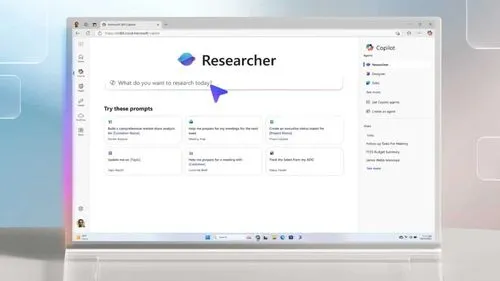
Microsoftは、企業の複雑な課題解決を支援するため、高度な推論能力を備えた新たなAIエージェント「Researcher」と「Analyst」をMicrosoft 365 Copilot向けに発表した。これにより、同 […]
Abstract An ongoing project explores the extent to which artificial intelligence (AI), specifically in the areas of natural language processing and semantic reasoning, can be exploited to facilitate the studies of science by deploying software agents equipped with natural language understanding capabilities to read scholarly publications on the web. The knowledge extracted by these AI agents is organized into a heterogeneous graph, called Microsoft Academic Graph (MAG), where the nodes and the edges represent the entities engaging in scholarly communications and the relationships among them, respectively. The frequently updated data set and a few software tools central to the underlying AI components are distributed under an open data license for research and commercial applications. This paper describes the design, schema, and technical and business motivations behind MAG and elaborates how MAG can be used in analytics, search, and recommendation scenarios. How AI plays an important role in avoiding various biases and human induced errors in other data sets and how the technologies can be further improved in the future are also discussed.
Abstract Although several large knowledge graphs have been proposed in the scholarly field, such graphs are limited with respect to several data quality dimensions such as accuracy and coverage. In this article, we present methods for enhancing the Microsoft Academic Knowledge Graph (MAKG), a recently published large-scale knowledge graph containing metadata about scientific publications and associated authors, venues, and affiliations. Based on a qualitative analysis of the MAKG, we address three aspects. First, we adopt and evaluate unsupervised approaches for large-scale author name disambiguation. Second, we develop and evaluate methods for tagging publications by their discipline and by keywords, facilitating enhanced search and recommendation of publications and associated entities. Third, we compute and evaluate embeddings for all 239 million publications, 243 million authors, 49,000 journals, and 16,000 conference entities in the MAKG based on several state-of-the-art embedding techniques. Finally, we provide statistics for the updated MAKG. Our final MAKG is publicly available at https://makg.org and can be used for the search or recommendation of scholarly entities, as well as enhanced scientific impact quantification.
With the announcement of the retirement of Microsoft Academic Graph (MAG), the non-profit organization OurResearch announced that they would provide a similar resource under the name OpenAlex. Thus, we compare the metadata with relevance to bibliometric analyses of the latest MAG snapshot with an early OpenAlex snapshot. Practically all works from MAG were transferred to OpenAlex preserving their bibliographic data publication year, volume, first and last page, DOI as well as the number of references that are important ingredients of citation analysis. More than 90% of the MAG documents have equivalent document types in OpenAlex. Of the remaining ones, especially reclassifications to the OpenAlex document types journal-article and book-chapter seem to be correct and amount to more than 7%, so that the document type specifications have improved significantly from MAG to OpenAlex. As another item of bibliometric relevant metadata, we looked at the paper-based subject classification in MAG and in OpenAlex. We found significantly more documents with a subject classification assignment in OpenAlex than in MAG. On the first and second level, the classification structure is nearly identical. We present data on the subject reclassifications on both levels in tabular and graphical form. The assessment of the consequences of the abundant subject reclassifications on field-normalized bibliometric evaluations is not in the scope of the present paper. Apart from this open question, OpenAlex seems to be overall at least as suited for bibliometric analyses as MAG for publication years before 2021 or maybe even better because of the broader coverage of document type assignments.
The education landscape has undergone a significant transformation, with online learning emerging as the preferred mode of instruction for many students. Remote learning required a variety of digital tools and technologies that not all students and teachers could use. As some students struggled to adjust to an unfamiliar environment, attendance and engagement varied. Various methodologies were employed to enhance student involvement, classified into the domains of Virtual Reality, Augmented Reality, Internet of Things, and Artificial Intelligence (AI). The application of AI in this particular area demonstrated encouraging outcomes compared to other domains. Therefore, this paper incorporates Generative AI to enhance the existing AI literature. Multiple APIs were utilized, and their configuration procedures were thoroughly described. The findings in this paper show that the utilization of Microsoft Graph and Gemini APIs facilitated the gathering of transcripts/recordings and the creation of questions based on the content that was presented. The Streamlit web application employs these questions and presents them to students in order to evaluate their degree of engagement. The aim of this paper is to propose a solution for fostering engagement in online classes by encouraging students to consistently interact with the presented content through generated questions.