


Aviation Week reported on November 22, 2026 that Boom Supersonic of the US has successfully lit and run its prototype core, the "Sprint Core," in Watkins, Colorado. The test took place the day before, on November 21. The Sprint Core corresponds to the high-pressure section shared by the "Superpower" gas turbine for power generation and the "Symphony" aircraft engine for the "Overture" supersonic airliner. The core, whose completion was announced in October, has now actually run, and Boom has reached the stage where it can measure performance with the compressor, combustor, and turbine working together. However, output tests with a connected generator and tests as a fan-equipped aircraft engine are still to come.
First light-off confirms the common core operates
In its October 22 announcement of the core's completion, Boom said it would move the Sprint Core into a dedicated test facility at Colorado Air and Space Port in Watkins and light it before the US Thanksgiving holiday. CEO Blake Scholl told Aviation Week that the core lit on the second attempt and that rotation speed was raised to 6,500 rpm. He said the first run was kept short to prioritize data collection. According to the magazine, Boom plans to widen the operating conditions step by step over the next two months.
The Sprint Core is a prototype combining a six-stage high-pressure compressor, a combustor, and a single-stage high-pressure turbine. The high-pressure compressor compresses air, and the combustor adds fuel and burns it. The resulting hot combustion gas passes through the high-pressure turbine, where extracted energy is used via a shaft to drive the compressor. With this first light-off, the behavior of these components operating as a single unit can now be measured.
According to the October announcement, the Sprint Core itself is fitted with more than 1,000 sensors measuring temperature, pressure, strain, timing, and vibration. Including the fuel supply system, lubrication equipment, and other systems, the test facility as a whole has about 2,000 sensors. By recording temperatures and pressures at each point while varying rotation speed, Boom can verify how closely actual behavior matches design predictions. The company plans to use the collected data to improve the accuracy of its design and analysis tools and to feed it into development of the production Superpower.
The test facility also includes a mechanism to simulate the influence that the low-pressure section has on the core in a finished engine. According to Aviation Week, a variable exhaust nozzle reproduces the back pressure from the downstream low-pressure turbine, and vacuum pumps simulate the airflow that bypasses the core. This allows the performance of the high-pressure compressor to be examined under different operating conditions. However, because the configuration outside the high-pressure section differs between the power generation and aircraft versions, performance must be verified with equipment closer to each finished form.
How the power-generation Superpower differs from the aviation Symphony
According to Aviation Week, the Superpower and Symphony share a high-pressure compressor and high-pressure turbine but differ in low-pressure compressor configuration: four stages for Superpower and three for Symphony. The power-generation Superpower has a power turbine on an independent shaft, and energy extracted from the combustion gas drives a generator. The Symphony, by contrast, is a turbofan engine that spins a fan to move air and generate thrust. Even if testing of the common core improves the design accuracy of the high-pressure section, overall engine performance will have to be confirmed with each version's low-pressure section installed.
The Superpower's rated output published on Boom's product page is 42MW, an ISO rating measured under specified reference conditions. It uses natural gas as its main fuel, and its design divides the intake, turbine, generator, and exhaust equipment into four transportable modules. The 6,500 rpm recorded this time was obtained from a test run of the core alone and does not confirm a 42MW generating capability. Verifying the rated output will require integrating the modules and measuring the power that can be drawn from the generator. Changes in temperature and vibration over long-duration operation are also items to be confirmed on the completed unit.
When Boom announced the Superpower for AI data centers on December 9, 2025, it outlined a plan to use operating data accumulated from ground-based equipment in developing the Overture. In this prototype core test, the characteristics of the high-pressure section are being examined under varying operating conditions, and once operation as power generation equipment begins, the long-term reliability of the shared components can also be evaluated. By sharing the high-pressure section between the power gas turbine and the aircraft engine, Boom aims to apply operating experience accumulated on the ground to the aircraft engine's design as well.
Centennial factory aims for annual production equivalent to 2GW
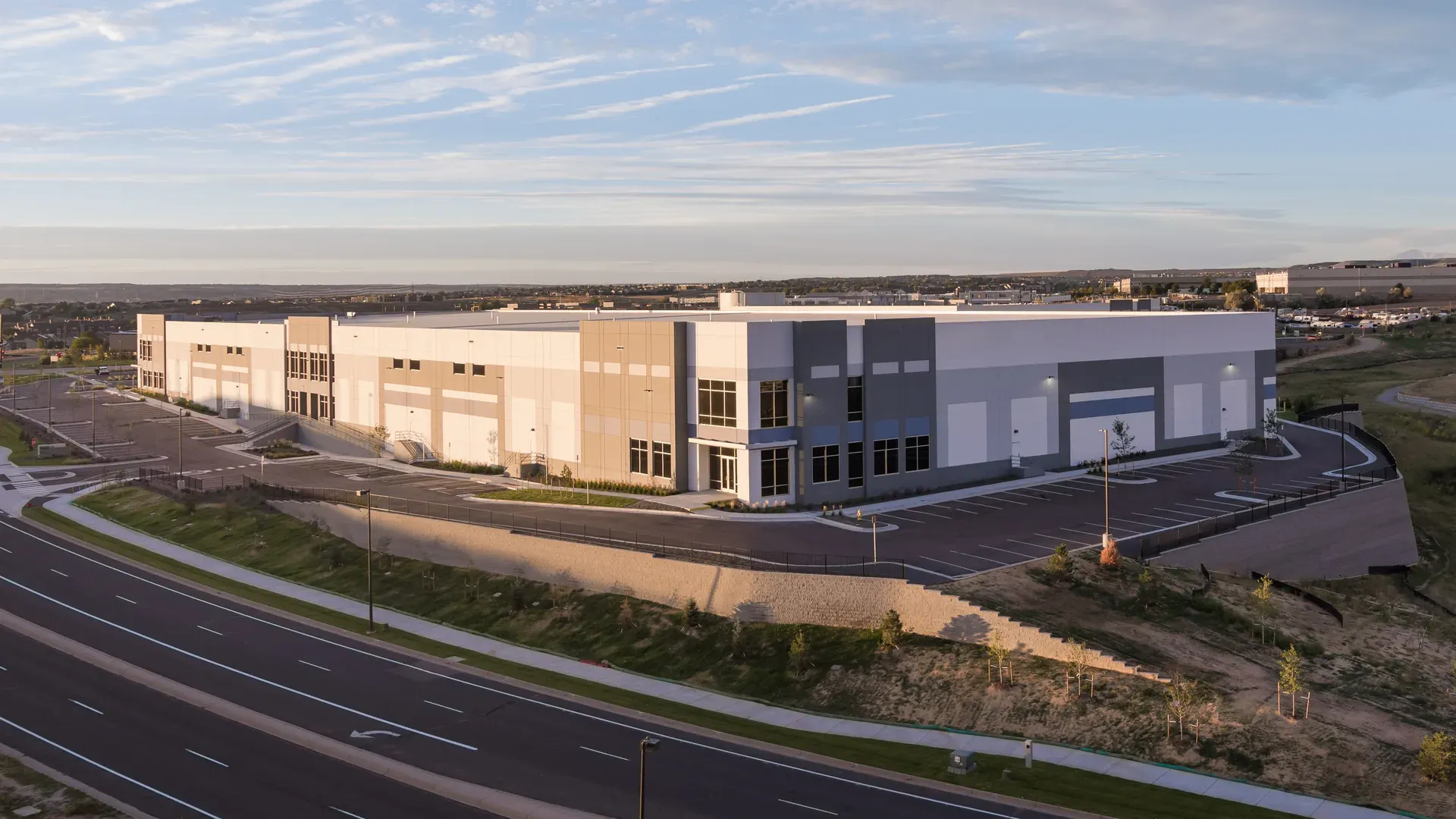
Feeding test data back into the design and retesting improved parts also requires a manufacturing setup. In its October 22 announcement, Boom said it is investing $150 million in its factory in Centennial, Colorado, and is manufacturing parts in parallel with construction. The company plans to make, from raw materials in-house, parts equivalent to about 85% of the finished product's weight. The Sprint Core already uses compressor stator vanes, a main shaft, a turbine case, and other parts the company manufactured.
Boom also plans to cast single-crystal turbine blades and vanes in-house and to install dedicated equipment in the factory. The aim is to shorten development time by building a system that can quickly produce new test parts in response to design changes. In its October announcement, the company expected the factory to reach full operation in early 2027 and the first shipment of single-crystal parts made there later that year.
Integrated product testing and delivery to customers will also be important upcoming milestones. Scholl told Aviation Week that he expects tests of the engine with all components combined around mid-2027. Meanwhile, the target for the first customer delivery that Boom set out in its October announcement is also mid-2027. The two plans were presented at different times, and the time needed between integrated testing and handover to customers has not been disclosed.
For the Centennial factory's production targets, Boom has outlined plans to raise output to 25 units a year by 2028 and 50 units a year by 2029. The company describes these as equivalent to roughly 1GW and roughly 2GW of generating capacity, respectively. Calculated at the 42MW ISO rating per unit, 25 units come to 1.05GW and 50 units to 2.10GW. However, this is installed capacity converted from annual unit production at each unit's rated output and does not represent actual electricity generated. Generated energy is determined by operating output and running hours after installation.
Going forward, the focus of performance evaluation will be how much power an integrated Superpower can actually supply and how long it can run continuously at that output. Progress against the production plan can be judged by the number of finished units at the Centennial factory and the number actually delivered to customers.