


What is the bottleneck for modern computers? Finnish startup Flow Computing points to the CPU. The company claims that its chip technology, the Parallel Processing Unit (PPU), can boost CPU processing power by up to 100 times, and that this will meet the enormous computational demands required by AI development today.
Boosting CPU Performance by Up to 100x Without Rewriting Existing App Code
Flow Computing, a spin-out from Finland's national research institute VTT, claims that its PPU will usher in an entirely new era of "super CPUs."
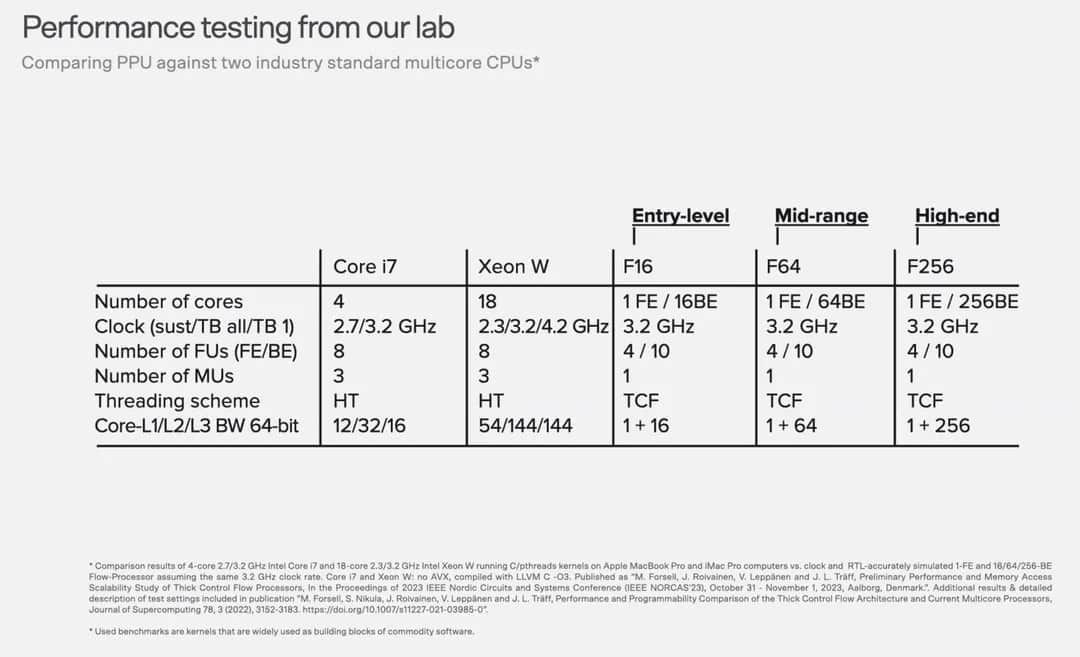
While CPUs have made significant progress compared to a decade ago, their fundamental method of processing remains unchanged—they can only do one thing at a time. Although they switch billions of times per second across multiple cores and pathways, a fundamental limitation exists: one task must finish before the next can begin. This creates enormous waste and remains a persistent bottleneck.
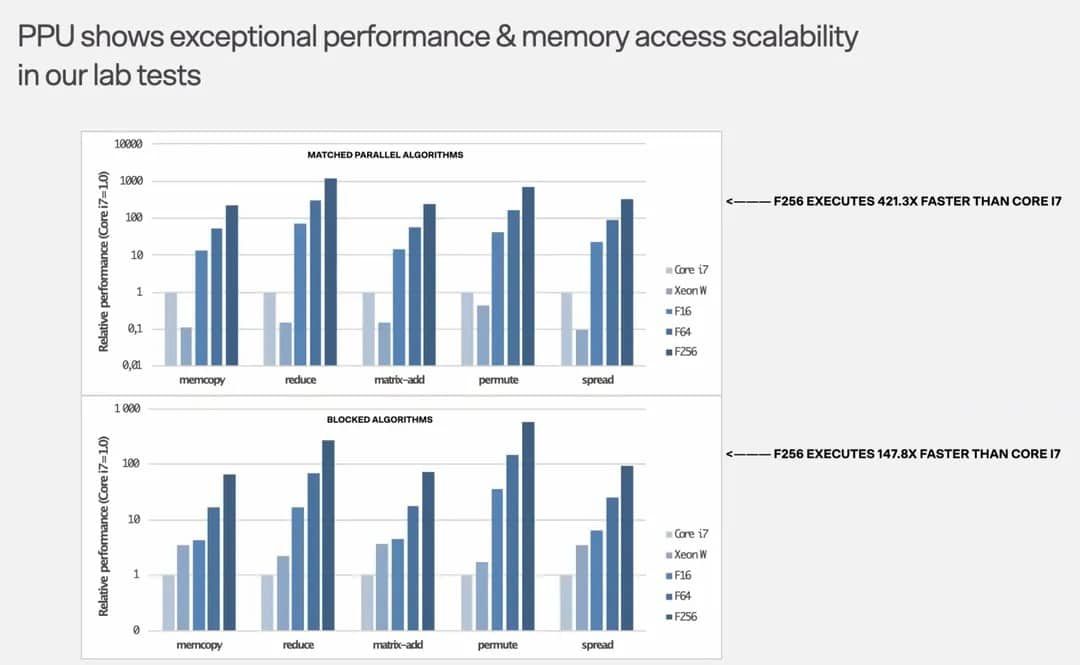
Flow Computing's PPU removes this limitation, effectively transforming a CPU from a single-lane road into a multi-lane highway. While the CPU can still only process one task at a time, Flow's PPU manages on-die traffic at the nanosecond level, allowing tasks to move in and out of the processor faster than ever before.
Flow Computing's PPU can be applied to any CPU architecture while maintaining full backward compatibility. Furthermore, by restructuring and recompiling software to work with the PPU-CPU combo, even greater performance gains are expected. Flow states that when code is modified (though not completely rewritten) to leverage the technology, performance improvements of up to 100x have been confirmed. The company is developing recompilation tools for developers who want to optimize their software for Flow-enabled chips.
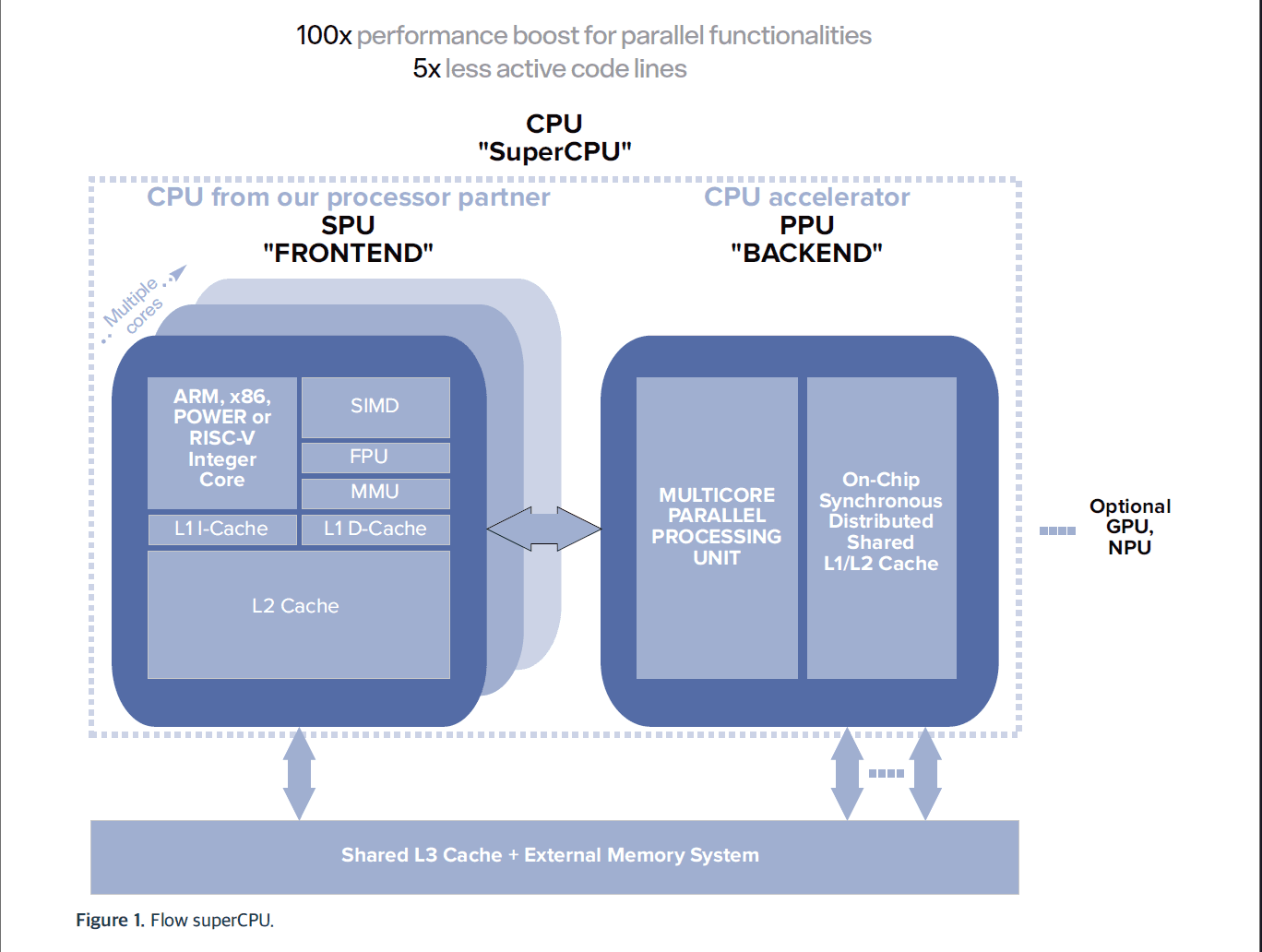
Moreover, the benefits are not limited to improving CPU performance alone—other connected units (such as NPUs and GPUs) can also indirectly benefit from the PPU's performance gains.
Such parallelization has already been possible at the research level, but it required rewriting app code from the ground up, making it impractical. If Flow Computing's claims are true, the company has achieved this without requiring any code changes at all.
However, to put this into practical use, Flow Computing's PPU needs to be integrated at the chip design stage. Flow appears to have demonstrated that the technology works using an FPGA-based test setup.
Flow has now emerged from stealth mode, having secured €4 million (approximately $4.3 million) in pre-seed funding led by Butterfly Ventures, with participation from FOV Ventures, Sarsia, Stephen Industries, Superhero Capital, and Business Finland.
The company also states that it is working to jointly develop next-generation advanced CPU computing in collaboration with leading CPU companies such as AMD, Apple, Arm, Intel, NVIDIA, and Qualcomm. Additionally, Flow is exploring partnerships with smaller CPU startups, including Tenstorrent, led by legendary chip designer Jim Keller.
Sources