


Samsung has split its horizontally folding smartphone into two distinct forms. The Galaxy Z Fold8, announced on July 22, 2026, adopts a shorter, wider body than before, shifting its focus toward video and reading. Meanwhile, the Galaxy Z Fold8 Ultra retains nearly the same exterior as the Fold7, positioning itself as the direct successor with an enhanced camera and battery. In Japan, three models including the Galaxy Z Flip8 will be available for pre-order starting at 9:00 a.m. on July 23, with release on August 7.
This change is hard to grasp simply as "one more high-end model added." Samsung itself explicitly states that the Fold8 Ultra is the successor for existing Fold users. The standard Fold8 is not a cost-cut budget version—it's a separate line rebuilt around a different screen ratio and way of holding the device.
Why the Traditional Fold Lineage Moved to the Ultra
The Fold8 Ultra's closed body measures approximately 72.8×158.4×8.9mm and weighs about 215g—identical in both dimensions and weight to the Fold7. Only the opened thickness saw a slight reduction, from 4.2mm to 4.1mm. It also carries over the roughly 6.5-inch cover screen and roughly 8.0-inch main screen, preserving the usage pattern of opening a tall smartphone to gain a large workspace.
In contrast, the Fold8 measures approximately 81.9×123.9×9.7mm when closed and weighs about 201g. Its cover screen is roughly 5.5 inches with a 10:16 ratio, and the main screen when opened is roughly 7.6 inches with a 4:3 ratio—14g lighter than the Fold8 Ultra. It's about 34.5mm shorter in height and about 9.1mm wider, giving its closed form more of a passport-like shape than that of a tall smartphone.

The screen ratios also divide their use cases. The Fold8 lets you check short videos or messages while closed, and when opened, displays video and games in 4:3. Rotated, it becomes 3:4, making it easier to read e-books and long text. If the Fold8 Ultra is a work device for running multiple apps side by side, the Fold8 is a device for immersing yourself deeply in a single piece of content.
Screen, Camera, and Battery Divided by a 26,900 Yen Gap
According to Samsung's Japanese online shop pricing, the 256GB Fold8 costs 269,880 yen, while the Fold8 Ultra costs 296,780 yen—a difference of 26,900 yen. The same gap applies to the 512GB and 1TB models, meaning the price difference reflects the body design and equipment rather than storage capacity.
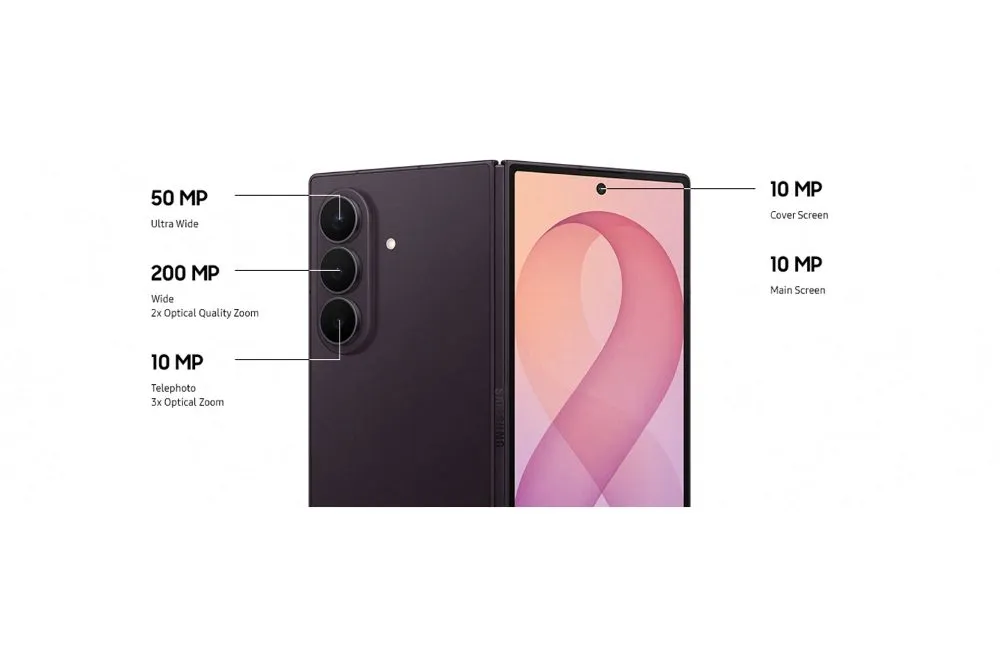
The Fold8 Ultra features a triple-camera system: a roughly 200-megapixel wide-angle lens, a roughly 50-megapixel ultra-wide lens, and a roughly 10-megapixel telephoto lens with 3x optical zoom. The Fold8 has a dual-camera setup with both wide-angle and ultra-wide lenses at roughly 50 megapixels each, lacking a telephoto camera entirely. If you prioritize telephoto shooting or editing on a large screen, the Ultra becomes the choice.
As for battery, the Fold8 has 4,800mAh compared to the Fold8 Ultra's 5,000mAh. The Ultra also adopts a dual-path structure that distributes 45W wired charging across two routes, along with an expanded graphite cooling structure. Under Samsung's test conditions, the Fold8 can charge up to 63% and the Ultra up to 67% in about 30 minutes. Chargers are sold separately for both models, and actual charging speeds will vary depending on usage conditions and temperature.
This price difference represents a fork in usage style: choosing lightness and an easy-to-hold wide screen, versus opting for roughly 8.0 inches of workspace, a telephoto camera, and a larger battery. The Fold8 is 14g lighter than the Fold8 Ultra, a difference likely to be quite noticeable in a device carried daily.
Specification and Price Differences from the Fold7 and Flip7
The Fold8 Ultra keeps the same 215g weight as the Fold7 while increasing battery capacity from 4,400mAh to 5,000mAh—a 600mAh, roughly 13.6% increase. Samsung's stated video playback time also extends from a maximum of roughly 24 hours to 27 hours. The ultra-wide camera has jumped from roughly 12 megapixels to roughly 50 megapixels, and peak brightness has reached 3,000 nits, about 15% higher. Without changing its exterior, the device has been updated in battery capacity, ultra-wide camera, and screen brightness.
However, the price for this successor has also risen. The 2025 Fold7 cost 265,750 yen for the 256GB model. The Fold8 Ultra costs 31,030 yen more than that—about 11.7% higher. For the standard Fold8, the difference narrows to 4,130 yen, or about 1.6%, but it comes with a smaller screen than the Fold7 and omits the telephoto camera. Comparing prices based solely on the shared "Fold" name risks misjudging what an actual upgrade entails.
The Flip8 weighs about 180g, with an opened thickness of about 6.1mm and a closed thickness of about 13.1mm—lighter and thinner than the Flip7's 188g, 6.5mm, and 13.7mm. Meanwhile, the roughly 6.9-inch main screen, roughly 4.1-inch cover screen, 4,300mAh battery, and roughly 50-megapixel wide-angle camera remain unchanged. The 256GB price rose from 164,800 yen to 192,680 yen, an increase of 27,880 yen, or about 16.9%. The Flip8 should be evaluated not as a major spec upgrade, but as a price increase tied to improved portability.
Flex Titanium and AI: Usage Conditions Worth Checking
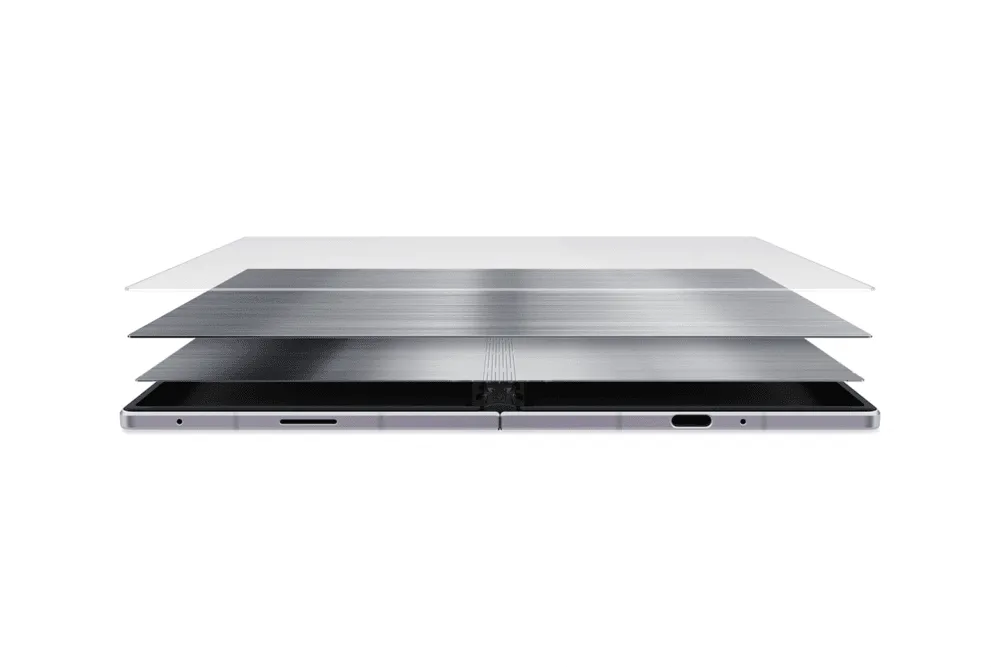
All three models use a new Flex Titanium structure for their folding screens. Combining a titanium alloy film with a reinforced titanium plate, it's designed to support the screen while absorbing pressure and impact, reportedly keeping the crease less noticeable over long-term use. However, Samsung has not disclosed a guaranteed number of fold cycles in its announcement materials. Whether thinness and durability have truly been balanced remains something to verify through extended use.
The Flip8's FlexWindow allows access to apps and Now Brief without opening the device, and can invoke automated Gemini Intelligence operations via the side key or voice. However, according to Samsung's notes, this automation feature will initially support US English and Korean in the United States and South Korea only, with plans to expand to more regions and languages during 2026. It's not guaranteed that all the demonstrated operations will be available in Japan on the release date.
All three models sold in Japan support FeliCa. The Japanese version of the Flip8 is equipped with the Snapdragon 8 Elite Gen 5 for Galaxy, differing from the Exynos 2600 listed in the global specification sheet. Before purchasing, it would be wise not to simply apply overseas review results, but to verify performance and battery life on the actual Japanese model.
What needs to be determined before the August 7 launch is whether the Fold8's new aspect ratio genuinely makes everyday browsing more comfortable, how much the Fold8 Ultra's 600mAh increase actually improves real-world usage time, and when FlexWindow's AI features will become fully available in Japanese. Once these three points are confirmed, the choice can be made not based on the name "Fold" alone, but on what you actually intend to do with the screen you open.