

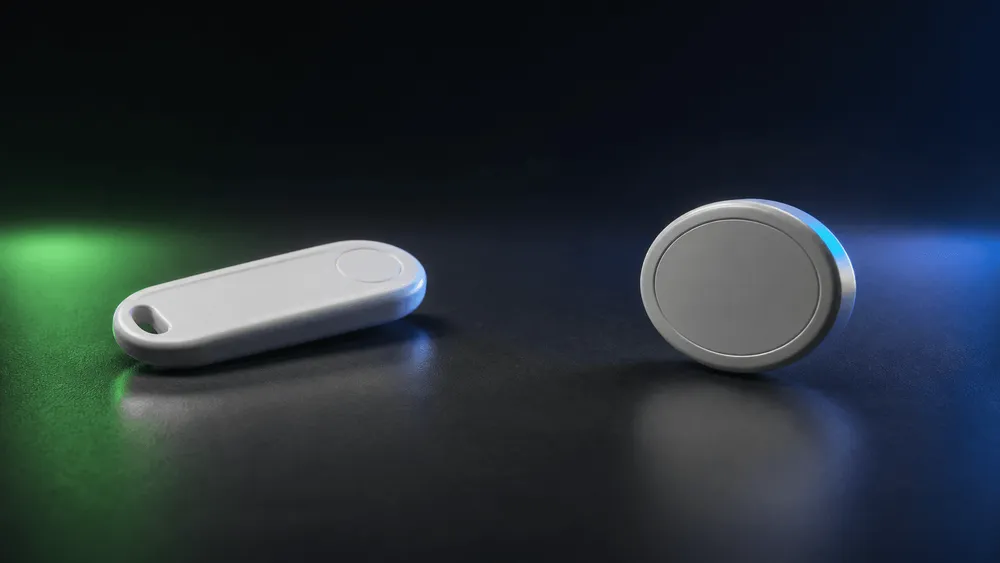
Reports have piled up suggesting Google is extending Android's lost-item finding capabilities into its own hardware. 9to5Google has confirmed product images and a retail listing for what's being called the "Google Pixel Tag," while Dealabs reported an announcement date of August 12, 2026, and a price of 34.99 euros. Google has not yet confirmed the product's existence, and that date is not a release date. But if the reports are accurate, Google would be bundling the Find Hub network, Android, and the tag itself into a single product for the first time.
Going Head-to-Head With AirTag at 34.99 Euros
The European price reported by Dealabs on August 5 is 34.99 euros. Apple's new AirTag sold in France costs 35 euros per unit. The difference is a mere 0.01 euros, meaning Pixel Tag isn't positioned to win on price. According to the outlet, the announcement is expected on August 12, but the actual release date remains unknown.
Images obtained by 9to5Google show a white, vertically-oriented oval-shaped tag. The online retail listing identifies it as "Google Pixel Tag" with model number GA12506, and the product description mentions the Find My Device network and a built-in speaker. Meanwhile, the images show no visible hole for directly attaching it to keys or a bag. As with AirTag, a separate case or holder may be required to attach it to belongings.
More remains unconfirmed than confirmed. Ultra-wideband (UWB) support, whether the battery is replaceable or rechargeable, water and dust resistance, dimensions and weight, and the regions of sale (including whether Japan will be included) have not been reported. Even the color name is inconsistent—the retail listing says "Fog Light" while Dealabs says "Light Fog"—so all that can be confirmed is that it comes in some shade of white.
Under the Hood Is Find Hub—Where Both Strength and Weakness Lie
Find Hub is a crowdsourced tracking network in which nearby Android devices detect Bluetooth Low Energy (BLE) signals and relay encrypted location data back to the owner. When Google launched it in 2024, it described the network as spanning over a billion Android devices. The system allows a tag's location to be updated via passersby's devices, even without the tag itself having cellular or GPS capability.
However, a network of a billion devices doesn't guarantee the same tracking performance everywhere. Android's default setting is "High traffic areas only," which aggregates detections from multiple devices before sharing location data. The "All areas" setting, which shares a location detected by even a single device with the network, must be manually enabled by the user. Google itself notes that the default aggregation protection can affect Bluetooth tag detection in low-traffic areas.
In places where Android devices are densely packed, such as airports and train stations, versus suburban roads or sparsely populated residential areas, the same Pixel Tag could be found with very different reliability. As a genuine Google product, the pairing process and Find Hub-based tracking could be designed to work seamlessly together. But the ability to locate a distant tag doesn't depend solely on the device's own radio capabilities—it also depends on surrounding devices and their participation settings.
UWB Support Will Determine the Outcome of This Price-Matched Battle
Google's developer specifications divide short-range lost-item tag tracking into three methods. UWB can indicate both distance and direction, while BLE signal strength alone cannot provide accurate distance or direction—only rough guidance like "near" or "far." Wi-Fi NAN RTT can measure distance but currently cannot indicate direction. Google itself states that Find Hub's Precision Finding works best when UWB is used.
The similarly priced AirTag already offers distance-and-direction guidance via UWB. The new AirTag Apple released in January 2026 features a second-generation UWB chip, extending the usable range for "Precise Finding" by up to 50% over the previous generation. Speaker volume has also increased by 50%, making it audible from up to twice the distance. The French price remains 35 euros.
If Pixel Tag includes UWB, Find Hub would be able to offer distance-and-direction tracking as well. If it doesn't, near-range tracking guidance is likely to be weaker compared to the equally priced AirTag. However, UWB support has not been reported, and conditions regarding compatible Android devices or regions remain unknown. Now that the prices appear aligned, this is the single biggest unconfirmed factor that will determine the product's value.
Safety Measures Aren't Left to Individual Product Discretion
As a Find Hub certification requirement, compatible tags must comply with the DULT (Detecting Unwanted Location Trackers) specification. This means Android will warn users if a tag separated from its owner is detected traveling with someone else, showing detection locations on a map, providing controls to sound an alert, and offering identification information and disabling instructions. Google's specifications also mandate a sound-playing feature, requiring sound makers to reach a peak of at least 60 phons based on ISO 532-1:2017.
Warnings for unknown tags apply not only to Find Hub-compatible products and headphones, but also to Apple's AirTag. In other words, even with Pixel Tag's introduction, safety measures won't be designed to function solely within Google's own product ecosystem. The retail description mentioning a built-in speaker aligns with Find Hub's requirements, but the actual volume and disabling method will need to await the official announcement.
What needs to be confirmed on August 12—beyond whether an announcement happens at all—includes the release date and target countries, UWB support and compatible devices, battery type, and the pricing of attachment accessories. If the reported 34.99-euro price is accurate, Google isn't competing on a lower price but rather on how seamlessly it can integrate Find Hub and Android to challenge AirTag. That assessment will hinge on how much of the spec sheet gets filled in on announcement day.