


Google has announced the official release of its 'Find My Device' network, which it had previewed a year prior. This technology leverages a crowdsourced network of over 1 billion Android devices operating worldwide to help pinpoint the location of lost gadgets, offering functionality similar to what Apple and Tile already provide. Starting today, this feature will be rolled out to Android users in the US and Canada, with a worldwide rollout to follow soon.
Anyone who has used Apple's Find My network and actually tracked down a lost item has likely experienced firsthand just how convenient it is. Apple's Find My network relies on Apple devices operating worldwide, which anonymously share their location data. This network can locate devices that aren't actively connected to the internet, and an iPhone will function even when powered off.
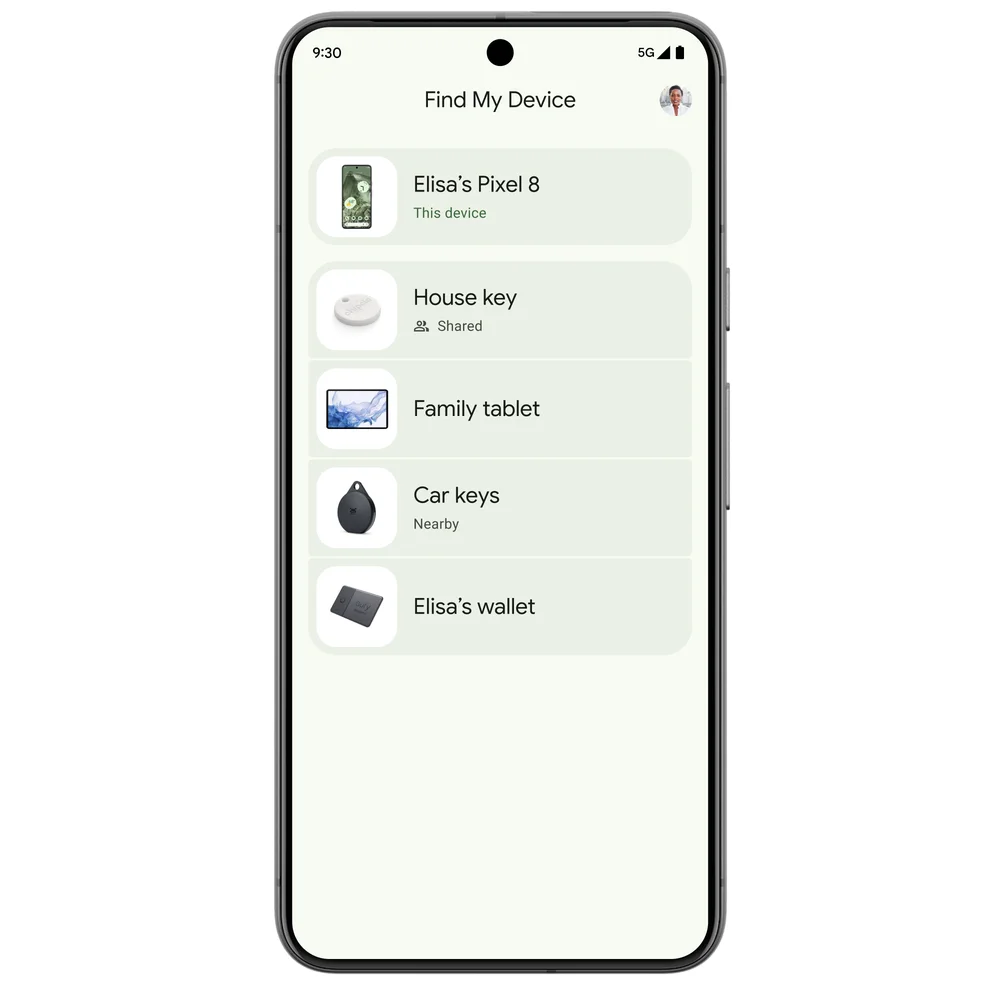
The feature Google is releasing for Android provides essentially the same functionality. Google states that it took its time with implementing this feature to ensure it met high standards of privacy and security.
The mechanics behind Google's Find My Device network are similar to Apple's approach. It works by leveraging nearby Bluetooth signals from other devices participating in the network to locate compatible devices. As an example, Google describes a scenario where you lose your keys with a compatible Bluetooth tracker attached to a keyring at a café. A nearby stranger's Android smartphone that's part of the Find My Device network can help pinpoint the approximate location of your Bluetooth tracker.
To ensure the privacy and security of all network users, location data is end-to-end encrypted and cannot be accessed by anyone other than the intended recipient. Furthermore, according to Google, when using the Find My Device system to locate a tracker or device, it's not even possible to identify the owner of the Android device that's part of the network. To further enhance privacy, location data is frequently cleared and overwritten. Additionally, if it turns out that an owner's device is near their own tracker, other devices won't be used in an attempt to locate that tracker.
However, Google's privacy-first approach comes with some trade-offs. By default, the network only locates a tracker when multiple Android devices are nearby. This is intended to make it difficult to track someone in a private location, such as their home. But it also means that you can't rely on the Find My Device network in situations where multiple Android devices aren't nearby, such as when you lose your keys while hiking in a forest.
Also, if you add your home location to your Google account, Google will no longer use your device to track nearby devices owned by others. This is to prevent a stalker from hiding a tracker in your bag and using it to figure out where your home is located. Should such a stalking attempt occur, Google will send you an unknown tracker alert, notifying you that someone may have hidden something in your bag or car. This works the same way with Apple's AirTag, and vice versa, and it's one of the reasons it took Google time to launch this system.
Users can also precisely control how they want to contribute to the Find My Device network. By default, all Android devices "contribute to aggregated location reporting," but as Google explains, users can also "opt in to unaggregated location contributions, or turn off the network entirely."
You Can Find Your Phone Even When It's Offline
With the launch of the Find My Device network, it becomes possible to locate a phone's position even without mobile connectivity or Wi-Fi. Using the same technology as Bluetooth trackers, the device's location can be pinpointed with help from other nearby connected devices. Google also states that "thanks to dedicated Pixel hardware, Pixel 8 and 8 Pro owners can find their device even when it's powered off or the battery has died."
Incidentally, Bluetooth trackers won't immediately join this Find My Device network. In May, Chipolo and Pebblebee will launch the first devices compatible with this network, with additional Bluetooth tags from eufy, Jio, Motorola, and others arriving "later this year."
Nest devices will be part of this network. According to Google, since people frequently lose devices and keys at home, the Find My Device network will leverage Nest devices to tell users how far away the item they're looking for is from them.
The new Find My Device feature is available on Android 9 and above. In addition to the aforementioned Bluetooth trackers, Google is working with several accessory manufacturers to make them compatible with the network. Headphones from JBL and Sony, among others, are also expected to become trackable once software updates are provided.
Source
- Google The Keyword: 5 ways to use the new Find My Device on Android