


On October 13, Apple announced the HomePod mini 2 and the fourth-generation Apple TV 4K. The new mini can serve as a Mac's default speaker, and paired with the new Apple TV, four speakers placed at the front and rear can deliver surround sound. Arriving exactly six years after the original mini, this update widens the places where HomePod can be used, from the desk to the living room.
In Japan, the HomePod mini 2 goes on sale October 30 for ¥24,800, and the Apple TV 4K on November 13 for ¥49,800. Both prices include tax, and preorders began October 13. However, which speaker generations work for surround, which Macs are supported, and where Siri AI is available all differ, and what you need to buy depends on the devices you already own.
Four-speaker surround: the cost depends on what you already own
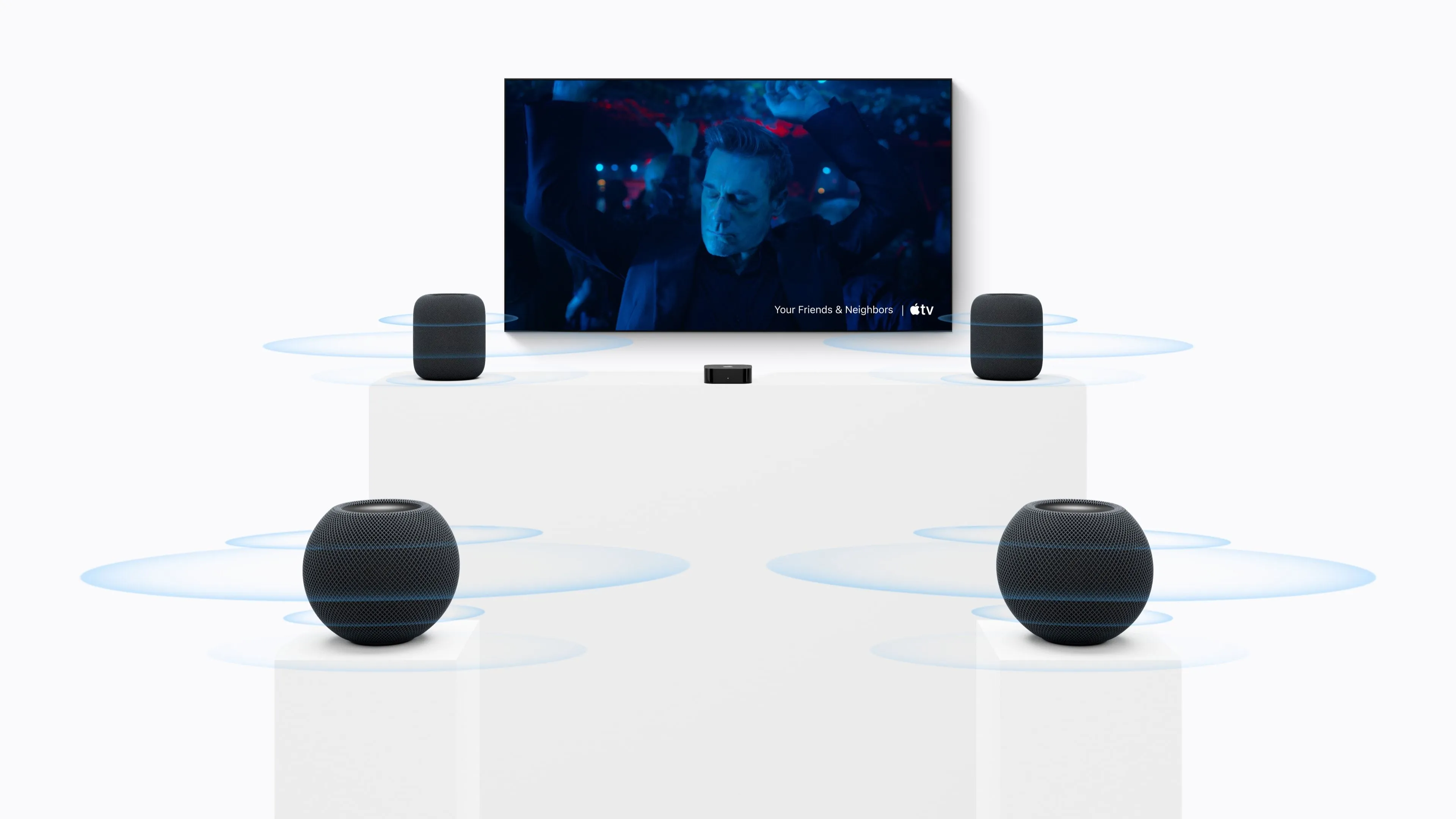
Four-speaker surround requires an Apple TV 4K (4th generation) running the latest software. The speakers can be HomePod mini 2 or HomePod (2nd generation), and the two front speakers and the two rear speakers must each be the same model. Apple shows setups with four mini 2 units, as well as a combination with HomePod at the front and mini 2 at the rear.
According to Apple, the four speakers and the Apple TV detect their positions in the room and automatically adjust the timing and volume of the sound to suit the space. Although front and rear pairs must each match, someone who already owns two second-generation HomePods can keep that pair at the front and add two mini 2 units at the rear.
Based on Apple's October 13, 2026 tax-inclusive prices, the total for four HomePod mini 2 units plus the new Apple TV 4K comes to ¥149,000. For someone who already has two second-generation HomePods, the additional cost is ¥99,400.
| Setup | New speakers to buy | New Apple TV 4K | Hardware cost (tax incl.) |
|---|---|---|---|
| Two mini 2 units each at front and rear | ¥24,800 × 4 = ¥99,200 | ¥49,800 | ¥149,000 |
| Existing pair of 2nd-gen HomePods, plus two mini 2 at rear | ¥24,800 × 2 = ¥49,600 | ¥49,800 | ¥99,400 additional |
The figures add Japan's announced price for HomePod mini 2 to the Apple TV price announced the same day. They exclude the TV, mounting accessories, and content subscriptions. The second row excludes the cost of the HomePods already owned and assumes buying a new fourth-generation Apple TV.
So whether you own HomePods, and which generation they are, affects the cost. The original HomePod and original mini are not listed as compatible for this four-speaker setup, and older Apple TV models don't meet the requirements either. Before adding speakers, you need to check the TV-side device too.
Also, "four" refers to the number of speakers. It doesn't mean the same thing as a setup with a dedicated center speaker and subwoofer, and the number alone doesn't let you infer 5.1 or 7.1-equivalent playback. How well the automatic adjustment works in a real room, and how bass and sound continuity come across, will need to be judged by listening after launch.
When a HomePod mini can be your everyday Mac speaker

HomePod mini 2 can be used as a Mac's default speaker, either alone or as a stereo pair. Apple lists movies, games, and calls such as FaceTime as uses. A desk setup with two mini 2 units costs ¥49,600 in hardware, which involves different purchases from a four-speaker home theater.
However, support is limited to Macs with Wi-Fi 6E or later. In Apple's list of compatible models, these are MacBook Pro models released in 2023 or later and MacBook Air models from 2024 or later. Having an Apple-made chip does not mean an older Mac can use the new feature.
Sending audio from a Mac to a HomePod isn't new in itself. When the original mini was announced in 2020, Apple already explained that music could be played from a Mac. What has changed is that Apple now pitches it as a Mac default speaker and explicitly names uses from video to calls.
This matters more to people who want a permanent output device on their desk than to those who connect only to listen to music. Still, Apple saying games and calls are supported is different from measurements confirming that latency is unnoticeable. Audio-video sync, call usability, and connection stability should wait for testing on compatible Macs.
S10 and A19: differences in processing power and playback
The chip in HomePod mini 2 has moved from the original's S5 to the S10. Apple says it analyzes the song being played in real time and adjusts volume and dynamic range. This approach of shaping sound through computation continues from the original, so the move to S10 alone doesn't tell us how much sound quality improves.
On the acoustic side, the current specifications combine a full-range driver with two passive radiators. Being able to place minis at front and rear doesn't mean each speaker's bass capability equals that of the larger HomePod.
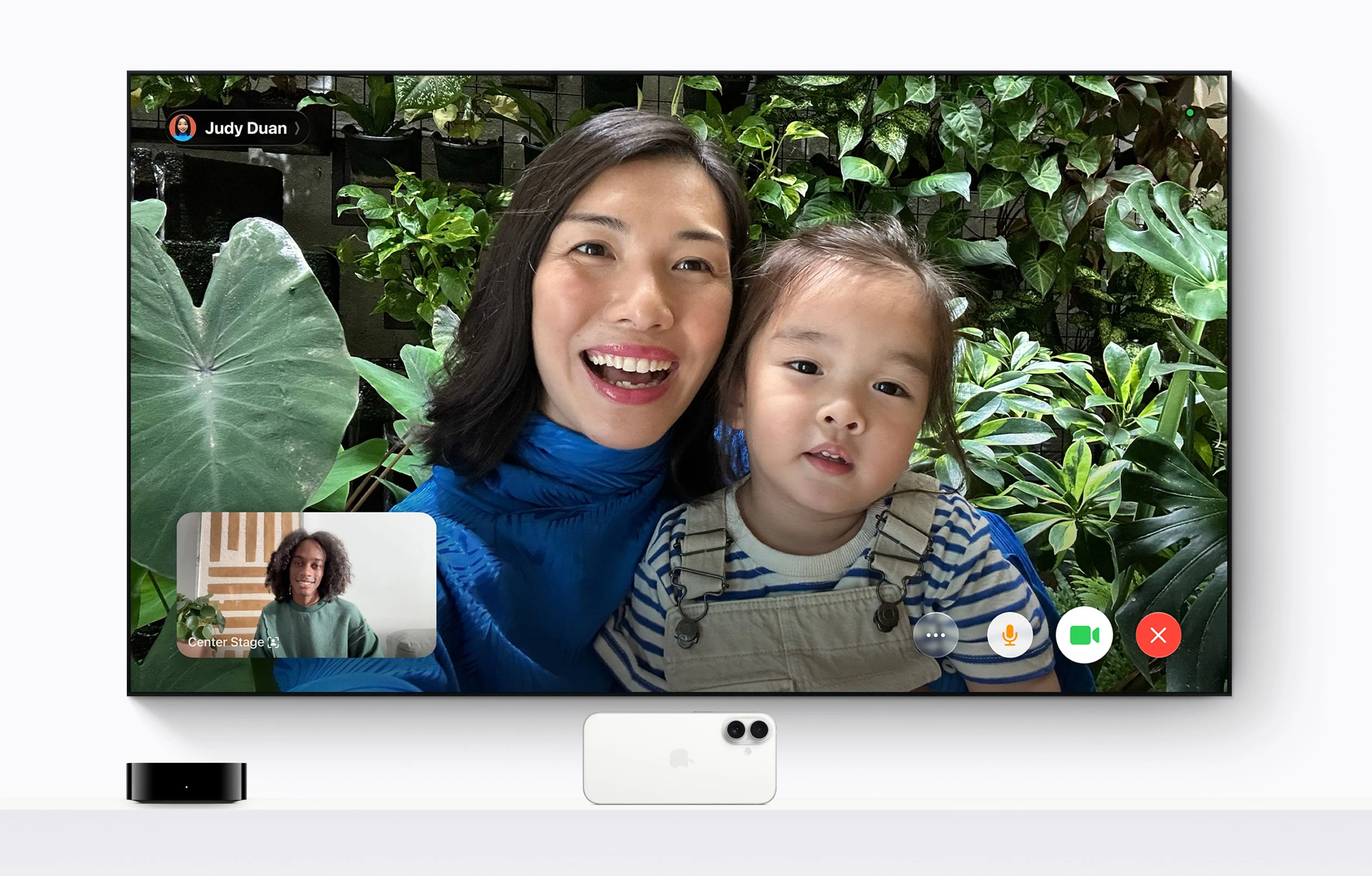
The Apple TV 4K has been updated from the A15 Bionic in the previous generation announced in 2022 to the A19. By Apple's figures, the CPU is up to 50% faster and the GPU up to 2x faster than the previous generation. This improves headroom for navigation and games, but these are Apple's comparison figures and don't mean streamed video quality rises by the same factor.
For video playback, the addition of a dedicated AV1 decoder is another change. It uses dedicated circuitry to decode video compressed in AV1, which Apple says enables high-quality streaming with less bandwidth. The benefit also depends on which formats streaming services use, so it can't be said that data usage falls by a fixed percentage for all viewing. Video output is up to 2160p at 60fps.
Wireless specs also differ: Wi-Fi 6E for the mini 2 and Wi-Fi 7 for the Apple TV. Thread, which both devices have, is a networking technology for connecting smart home devices and plays a different role from the Wi-Fi used for video streaming. On the 2022 Apple TV, only the Wi-Fi + Ethernet model supported Thread, but the new Japan specifications list 128GB of storage, Gigabit Ethernet, and Thread together. Separating the connectivity that supports audio, video, and home control makes the substance of the generational update easier to grasp.
Japan's launch versus English-language Siri AI: the conditions differ
Although Siri AI features prominently in the US announcements, it can't be assumed that the same feature will be available in Japan from launch. Apple lists eight English-speaking regions as initial markets, and Japan and Japanese are not among them. No date has been given for Japanese.
In the US HomePod mini 2 announcement, Siri AI is planned to arrive in a future software update. In the US Apple TV announcement, by contrast, it is described as a beta feature in tvOS 27.2, available in supported regions at launch. It will also work with second-generation and later Apple TV 4K models, so not everyone needs to upgrade to an A19 model to get Siri AI.
The AI features also require preparation at home. The person who owns the home in the Home app needs an Apple Intelligence–compatible iPhone or iPad running the latest software, with Siri AI enabled in a supported language. Requests that use personal information, such as in Messages, also require a paired compatible device. It isn't a setup where the speaker or TV device alone handles all personal-information processing.
The new Apple TV has three built-in microphones that pick up voices from a distance. These too carry separate language conditions. The footnote in the US announcement lists supported languages for calling Siri through the unit's microphones, and Japanese is not among them. This should be distinguished from speaking via the Siri button on the remote; it can't be concluded that you can control the unit by addressing it in Japanese.
The "Sound Glow" feature, which makes the top of the mini 2 light up in time with music, also requires an iPhone running the latest software with Apple Intelligence enabled when operated by voice. The iPhone requirement applies to the voice-control part and is distinct from the requirements for the lighting feature as a whole.
More Apple touchpoints in the home
On the same day, Apple also announced HomeView, with a 7-inch display, and the Apple Home Collection, developed with LG Electronics and Schneider Electric. The latter includes cameras, doorbells, and door locks, designed to be managed together in the Home app.
HomePod and Apple TV have long been able to act as home hubs. With these two products, Apple extends their uses to front-and-rear movie surround, Mac audio at the desk, and voice control in each room, while adding more touchpoints for controlling home devices. Taken together with the simultaneous announcements, Apple appears to be trying to connect the TV area, the desk, and individual rooms to increase everyday use.
Where household data is processed also becomes part of the product story. Apple describes the new TV's Secure Exclave as an execution environment that isolates microphone data from other processing. It also says HomeKit Secure Video is processed locally, with video end-to-end encrypted when stored. For devices that handle the sounds and video of a home, coordination involves not only processing power but also design around who can access the information.
HomePod mini 2 goes on sale October 30 and the new Apple TV 4K on November 13. If connections prove stable on a compatible Mac and latency doesn't get in the way of calls or games, Mac users could keep mini 2 units on the desk permanently and consolidate music, video, and call audio into a single output.