


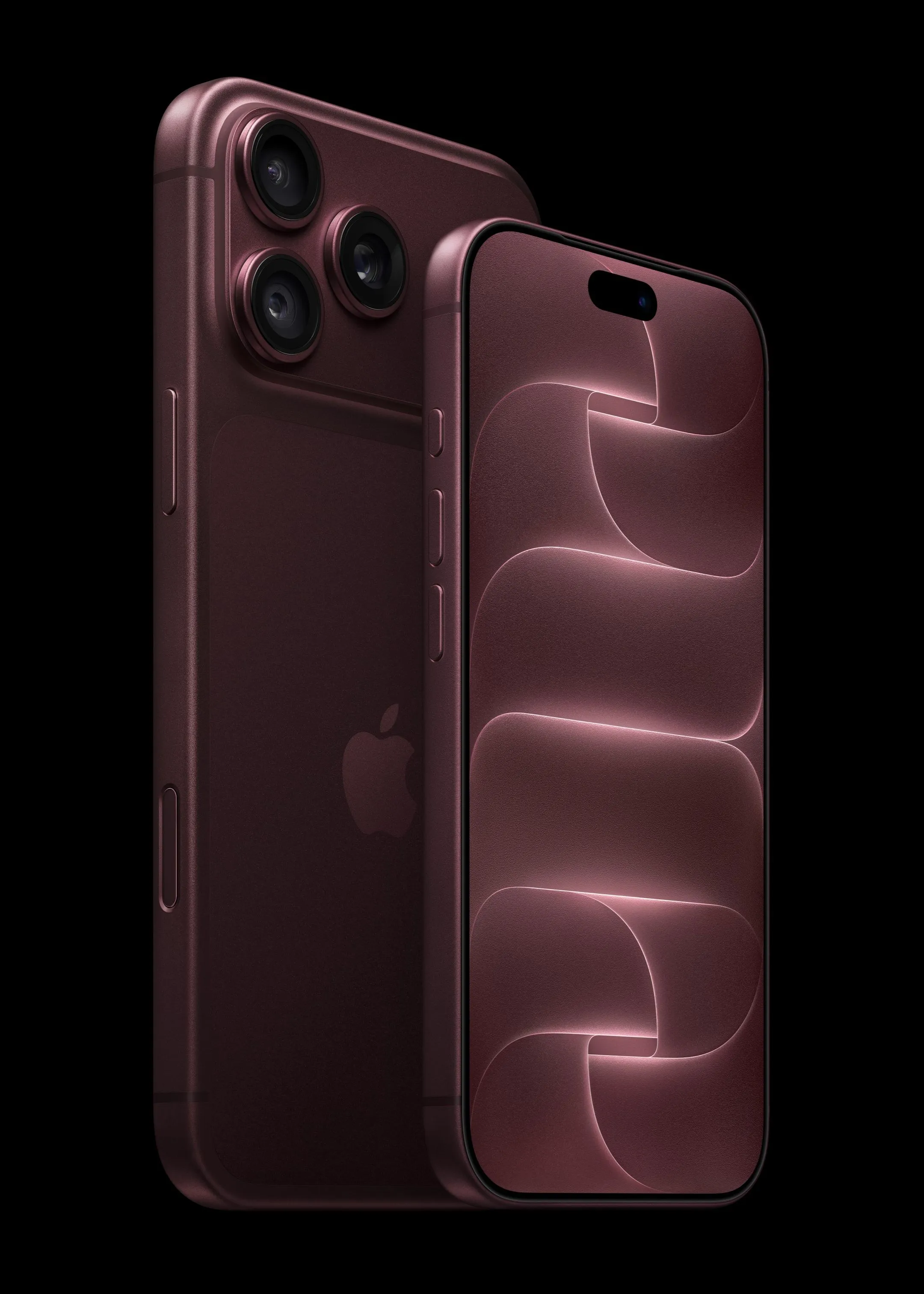
Apple announced the iPhone 18 Pro and iPhone 18 Pro Max on September 9, 2026. The devices bring a variable aperture to the 48MP main camera for the first time on iPhone, the 2nm A20 Pro chip, an Apple Reference Image feature that preserves shooting data, and longer battery life. Pre-orders open September 12, with availability starting September 18. In the U.S., the 256GB iPhone 18 Pro starts at US$1,199 and the Pro Max at US$1,299, before sales tax — US$100 more for each model than the previous generation’s launch price. Since the body's width, height, and thickness remain unchanged while weight has increased, whether the added cost and weight are worth it depends on how you plan to use the phone.
US$100 More for the Same 256GB
Comparing Apple’s U.S. launch prices at the same 256GB tier, the iPhone 18 Pro costs US$100 (about 9.1%) more than the 17 Pro, while the 18 Pro Max costs US$100 (about 8.3%) more than the 17 Pro Max.
Looking at the iPhone 18 Pro against the 17 Pro at matching 256GB capacity, the price rose about 9.1%. Display size, resolution, and body dimensions are unchanged, but weight increased by 5g, and Apple’s rated video playback ceiling extended by 3 hours.
| Item | iPhone 17 Pro | iPhone 18 Pro | Generational Change |
|---|---|---|---|
| Apple U.S. launch price (256GB, before sales tax) | US$1,099 | US$1,199 | +US$100 (about 9.1%) |
| Display | 6.3-inch, 2,622×1,206 | 6.3-inch, 2,622×1,206 | Key specs unchanged |
| Body dimensions | 150.0×71.9×8.75mm | 150.0×71.9×8.75mm | Same |
| Weight | 206g | 211g | +5g (about 2.4%) |
| Video playback | Up to 33 hours | Up to 36 hours | +3 hours (about 9.1%) |
| Main camera | 48MP, fixed ƒ/1.78 | 48MP, ƒ/1.48/1.8/2.8/4.0 | Variable aperture added |
| Max storage | 1TB | 2TB | 2TB option added |
The Pro Max also keeps its display and dimensions unchanged. Its U.S. launch price rises by the same US$100, while the weight gain grows to 16g. Video playback extended by 6 hours.
| Item | iPhone 17 Pro Max | iPhone 18 Pro Max | Generational Change |
|---|---|---|---|
| Apple U.S. launch price (256GB, before sales tax) | US$1,199 | US$1,299 | +US$100 (about 8.3%) |
| Display | 6.9-inch, 2,868×1,320 | 6.9-inch, 2,868×1,320 | Key specs unchanged |
| Body dimensions | 163.4×78.0×8.75mm | 163.4×78.0×8.75mm | Same |
| Weight | 233g | 249g | +16g (about 6.9%) |
| Video playback | Up to 39 hours | Up to 45 hours | +6 hours (about 15.4%) |
| Main camera | 48MP, fixed ƒ/1.78 | 48MP, ƒ/1.48/1.8/2.8/4.0 | Variable aperture added |
| Max storage | 2TB | 2TB | Same |
The price difference is calculated as “18-generation launch price minus 17-generation launch price,” and the percentage increase as “difference ÷ 17-generation launch price × 100,” rounded to one decimal place. Weight and video playback time follow the same method. Prices are Apple’s U.S. launch prices at matching 256GB capacity, in U.S. dollars and before sales tax; they exclude trade-in credits, carrier discounts, and retailer markdowns on older models. Battery figures are Apple’s rated maximums, not real-world daily usage times.
For context, Apple’s tax-included Japanese prices start at ¥219,800 for the 18 Pro and ¥239,800 for the 18 Pro Max, up ¥40,000 and ¥45,000 from their predecessors’ launch prices. These are separate regional prices, not currency conversions; their tax treatment also differs from the U.S. prices above.
U.S. pricing sources: Apple’s launch announcements for the iPhone 18 Pro lineup and the iPhone 17 Pro lineup.
Variable Aperture and Shot Verification Expand the Camera's Role
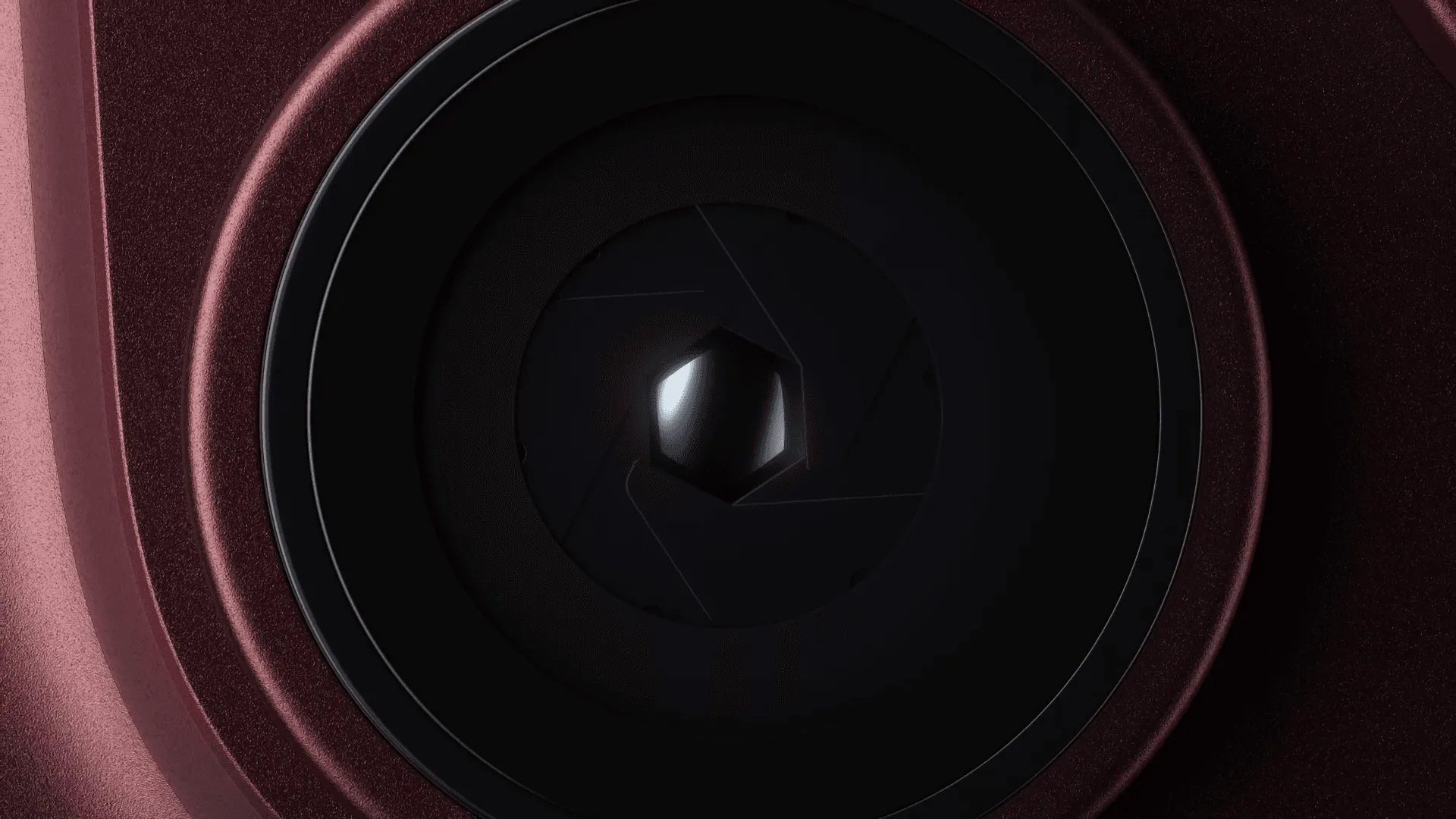
The clearest change in the 18 Pro generation is the variable aperture on the 48MP Fusion main camera. Six aperture blades move to shift the light path across four stops: ƒ/1.48, ƒ/1.8, ƒ/2.8, and ƒ/4.0. Beyond automatic camera adjustment, users can manually set aperture, shutter speed, and white balance, and check exposure via a histogram. Apple has also provided an API allowing third-party apps to control the aperture range.
Opening the aperture to a smaller f-number lets in more light in dark scenes and makes it easier to blur the background. Conversely, closing it to a larger f-number widens the range of apparent focus across subjects at different depths — reducing failures where only the person in front stays sharp in group photos. That said, image outcomes also depend on the sensor, lens, shutter speed, sensitivity, image processing, and subject motion. The aperture number alone doesn't determine the degree of low-light image improvement.

The basic configuration — a 48MP ultra-wide equivalent to 13mm and a 48MP telephoto equivalent to 100mm — carries over from the 17 Pro generation. In other words, this camera update isn't primarily about adding more lenses or greater telephoto magnification; it centers on letting users choose light volume and depth of field on the main camera before shooting. Automatic control serves casual shooters, while manual control benefits those in video or creative work who want to lock in a specific look.
Apple Reference Image is a separate new feature from camera performance itself. When shooting in the dedicated Reference mode, the main camera records signed sensor data, and Private Cloud Compute generates a reference image that cannot be altered. In the Photos app, this reference image is displayed alongside the main image like a digital negative, letting users visually compare whether edits were made. iOS 27, iPadOS 27, and macOS 27 will also include an API for third-party apps to display reference images.
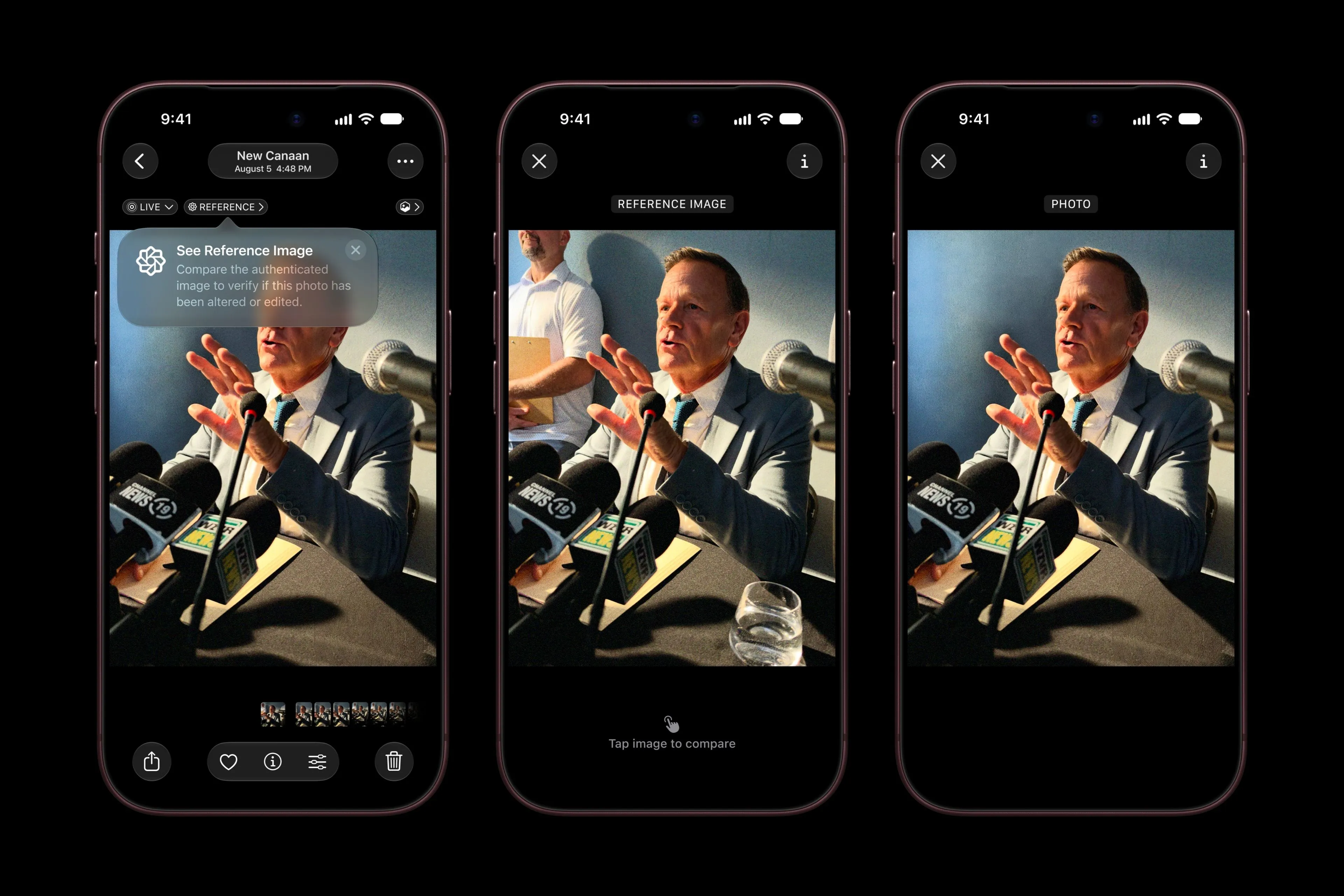
What this feature can actually verify is limited. The reference image serves as a clue for comparing "what the sensor captured at the time of shooting" against the edited image — it does not guarantee that the scene itself wasn't staged, nor that any accompanying caption is accurate. Screenshots or recompressed copies won't necessarily retain the original reference data. While potentially useful for news photography or evidentiary purposes, this single feature does not complete the full chain of custody from capture to publication on its own.
There are also availability conditions. Apple Reference Image is an optional feature and won't be available at launch in China. In the EU, shooting with the 18 Pro won't support this feature at launch, though developing and displaying reference images will work via iOS 27 and related updates. Support for SynthID, which flags AI-generated or edited content, will be added in a software update in late 2026 and is planned to appear in most edited images depending on the type of edit. Apple has not specified a separate rollout date for Reference mode in Japan.
A20 Pro and Battery Gains Come at the Cost of Added Weight
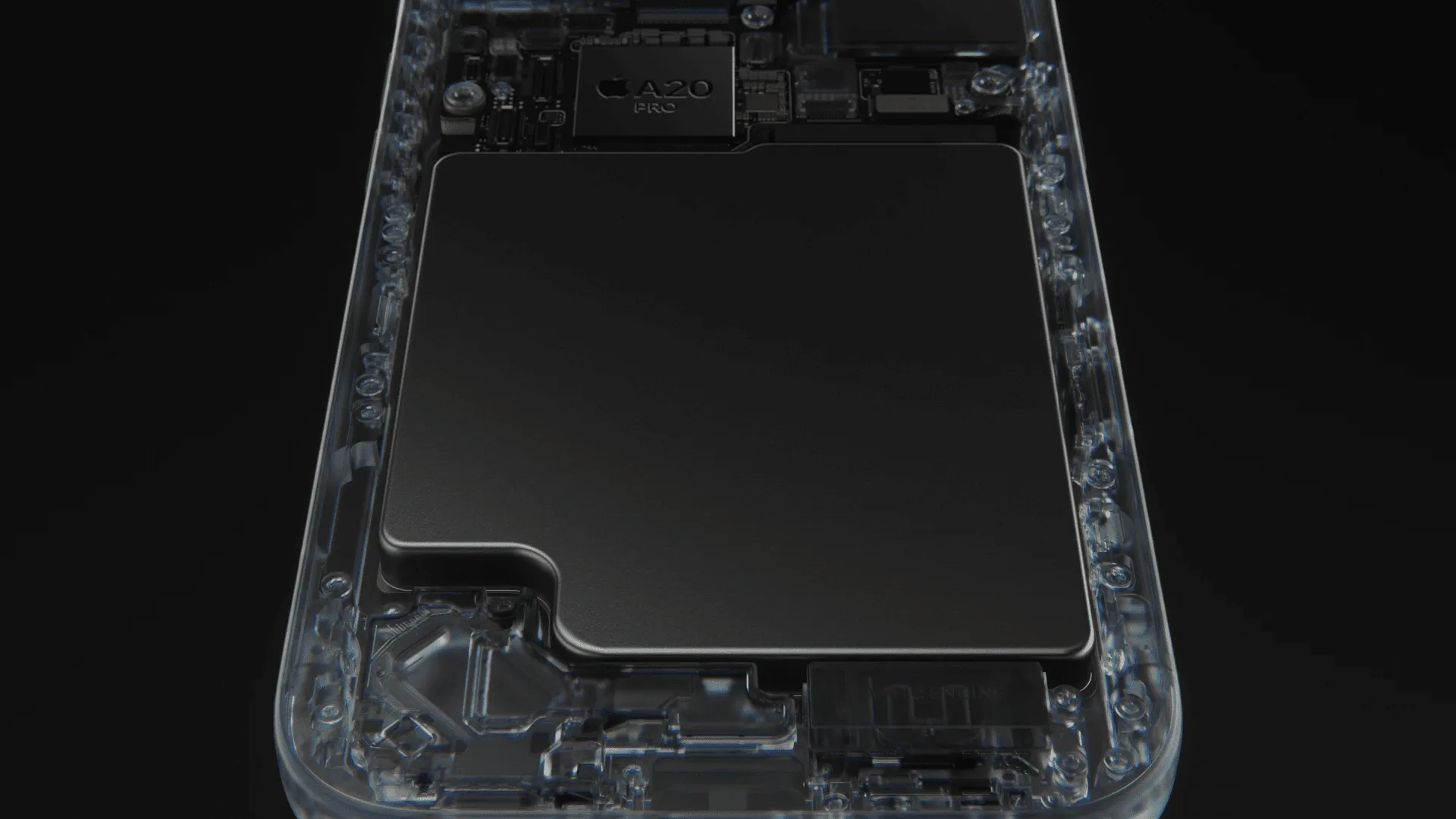
The A20 Pro uses a 2nm process and includes a 6-core CPU, 7-core GPU, and a 32-core Neural Engine built from two 16-core blocks. According to Apple, memory bandwidth is 50% wider than the A19 Pro, and the GPU is up to 40% faster. Apple states the Neural Engine's AI processing capability has doubled. However, the relevant section of Apple's press materials doesn't include absolute benchmark values, workload details, or measurement duration. This doesn't mean app processing across the board becomes 40% faster.
On the hardware side, Apple placed the chip die and memory side by side, removing memory from the heat dissipation path. The company says it connected the A20 Pro directly to a next-generation vapor chamber and tripled the surface area compared to the 17 Pro generation. The rated sustained performance is up to 40% higher than the previous generation. Though it shares the same "up to 40%" figure as the standalone GPU claim, this number refers to sustained device performance under extended load including cooling — the two improvement rates cannot simply be added together for overall performance.
For connectivity, the phones now include the new C2 modem. Apple states it reduces energy consumption by 15% compared to the C1X and speeds up uploads, though it doesn't specify the magnitude of the speed improvement. mmWave support is reserved for US models; Japanese specifications include sub-6 GHz band support alongside the C2. Users in Japan will need to test real-world connection speed under matched signal conditions, recovery from no-signal areas, and power consumption on actual devices.
Rated video playback maximums are now 36 hours for the 18 Pro and 45 hours for the 18 Pro Max. The gains over the 17 Pro generation are 3 hours for the Pro and 6 hours for the Pro Max. Streaming playback also extended to 33 hours and 40 hours, respectively. The Pro Max shows the larger improvement, but its 16g weight increase is also the kind of difference users are likely to notice when holding the phone with a case or during extended shooting sessions.
Wired charging on both 18 Pro models reaches up to 50% from empty in about 15 minutes. This requires a separately sold 60W-or-higher variable-voltage adapter and a USB-C cable. The 17 Pro generation took 20 minutes with a 40W-or-higher adapter, so the rated time shortened by 5 minutes. Using a household 20W or 30W adapter won't necessarily achieve the same time.
MagSafe charging tops out at 25W, and the time to reach 50% — 30 minutes — remains the same as the previous generation. However, the 18 Pro requires a 35W-or-higher adapter, up from 30W-or-higher on the 17 Pro generation. When reusing an existing charger, check not just the connector shape but also the output method and power rating.
Siri AI Launches as an English-Only Beta
The iPhone 18 Pro lineup runs iOS 27 and supports Siri AI. However, Siri AI ships as a beta, and the supported language at launch is English only. Apple Intelligence generally supporting Japanese is not the same as the new Siri AI being usable in Japanese from launch.
Apple explains that Siri AI understands personal context across Messages, Mail, and Photos, as well as on-screen content, to assist with tasks. Meanwhile, it won't be available at launch in EU versions of iOS. Some server-based features, including Siri AI and advanced photo editing, carry daily usage limits that vary by feature, request complexity, and demand. Extended usage is planned to become a paid option in the future. Buying the hardware should not be taken to mean unlimited access to all AI features in Japanese.
Who Should Upgrade From the 17 Pro
Upgrading from the 17 Pro generation makes the most sense for photographers who want manual control over the main camera's aperture, users who need sustained performance for long gaming sessions or on-device AI, and Pro Max users who value the 6-hour battery extension. The added 2TB option on the 18 Pro also matters for those who need that capacity but want to avoid the larger Pro Max body.
On the other hand, if the 17 Pro's fixed aperture or 33-hour/39-hour video playback haven't been a problem, both new models carry a US$100 higher launch price than their predecessors; the upgrade needs to offer benefits you will actually use. Display size, resolution, 3,000-nit outdoor peak brightness, body dimensions, and the basic ultra-wide and 4x telephoto specs remain largely unchanged. The Pro Max in particular now weighs 249g — a step in the wrong direction for users who prioritize lightness.
What matters most to check right after launch isn't short benchmark runs that line up peak figures. It's frame rate and power consumption during sustained gaming at identical quality settings, the real-world difference the four-stop aperture makes in low light or group shots, and how well Apple Reference Image data survives passage through third-party apps and publishing workflows. Only once these can be reproduced can you judge where the price increase actually pays off — in the camera, the battery, or sustained performance.