

Microsoft has filed a patent application for a system that inserts ads as a game progresses and, after the player watches one, grants the right to play for a set amount of time or a set section of the game. A U.S. application published on September 3, 2026 describes a design that combines remaining time with breakpoints in the game to choose when an ad interrupts play. However, the specification also includes examples that show an ad once a deadline is reached, and others that keep the game running while blocking only the player's input. It is important to keep this separate from any announcement of an Xbox rollout, and to ask how far a design that "chooses breakpoints for ads" actually protects the player's experience.
Watch an ad, earn the right to keep playing
The publication number is US20260260258A1. Microsoft Technology Licensing filed it on April 23, and it is titled "Contextually Aware Management of Interactive Software Application Access." The text and claims of the publication, as reproduced on Patsnap, describe a procedure that links a system managing ad display with a game.
At the center is the play right, granted in exchange for watching an ad. The specification says it can be set as a length of time, such as 30 minutes, or as a range of progress, such as until a single level is completed. These are design examples, not a service specification saying that ads will actually appear every 30 minutes.
Claim 1 sets up a window in which an ad can be inserted, close to the expiry of the play right. If a breakpoint notification arrives from the game before that window, it is ignored and play continues. A notification that arrives inside the window is treated as a condition for starting an ad, so input is interrupted and the ad is shown. Play then resumes, and the next usage period is set.
Under this design, the same end-of-round screen may or may not trigger an ad depending on how much play right remains. Rather than placing an ad at every breakpoint, it combines management of the usage period with a judgment about moments in the game that are easy to interrupt.
The specification starts from the premise that stopping a game at fixed intervals harms the experience. Unlike video, a game can leave the player in very different situations after the same amount of elapsed time. If ads are shown by the clock alone, a player could lose control in the middle of a fight or a match. The idea, then, is to bring in-game events into the decision about when to show an ad.
Notifications from the game, the player's own input, and detection from video
The ways of recognizing a breakpoint are not limited to notifications built in by game developers. The publication lists notifications through an API connecting the game and external functions, the user's own actions, and information from an event-detection function. Claims 2 to 4 each correspond to one of these routes.
In the API approach, developers designate appropriate interruption points, such as the end of a chapter. The creators, who know the structure of the game, can signal scenes where an ad can be inserted. The specification does, however, anticipate that older games may not provide such notifications.
In the approach where the player chooses the moment, the system indicates on screen or elsewhere that an ad can be shown and how much time remains, and starts the ad on receiving input. The event-detection function, meanwhile, finds save screens, round-end screens, pause screens and the like, and judges where an ad could plausibly be inserted.
There is also a proposal to analyze video, audio and game state with machine learning. It would detect exciting scenes or competitively important moments and avoid interrupting during them. But this is an implementation option described in the specification, and it does not mean detection accuracy has been demonstrated. Nor is AI a prerequisite for every approach.
This line of thinking has earlier groundwork. The new application references a U.S. application filed on May 1, 2023, and the corresponding US20240370894A1 was published on November 7, 2024. It too describes a mechanism combining the duration of the play right with in-game notifications. It would not be accurate to treat the September publication as the first appearance of the overall in-game ad mechanism.
Ads at expiry, and cases where only input is stopped
Paragraph 0055 of the specification contains an embodiment in which an ad is shown if the user provides no input by the time the play right expires. Paragraph 0096, which describes a scheme where the user confirms a suggestion from the system, records the same handling at expiry.
In other words, even in examples where the user can choose when an ad starts, the ad cannot necessarily be postponed indefinitely. From the explanation that ads appear "at natural breaks," one cannot conclude that players can keep playing forever until a convenient break arrives. Display at expiry is only part of the embodiments in the specification, and it is not settled that it will be the behavior of any future product.
The effect on players also changes depending on what is stopped during the ad. The publication describes methods that pause the whole game or restrict its execution, but it also describes a method in which the game itself keeps running while only the user's input is disabled.
In the latter, game processing can continue behind something like a loading screen. But in a game such as an online match, where the surrounding world keeps moving even when the player can no longer act, stopping input is not the same as ensuring safety. The specification itself points out that many competitive games cannot be paused, and that an ill-timed interruption can lead to defeat or get in the way of communication with teammates.
An example of showing an ad while the player is in a safe team base is a proposed remedy for that problem. Even so, the question remains of what happens if the situation is misjudged. Beyond the accuracy of breakpoint detection, the conditions under which the game can progress during an ad without harm to the player need to be checked title by title.
On this point, the technology for choosing where to show ads and the player's freedom to choose a break should be evaluated separately. Even if a save screen can be detected, it does not reveal whether the person wants to watch an ad at that moment.
How this differs from the Xbox ad test
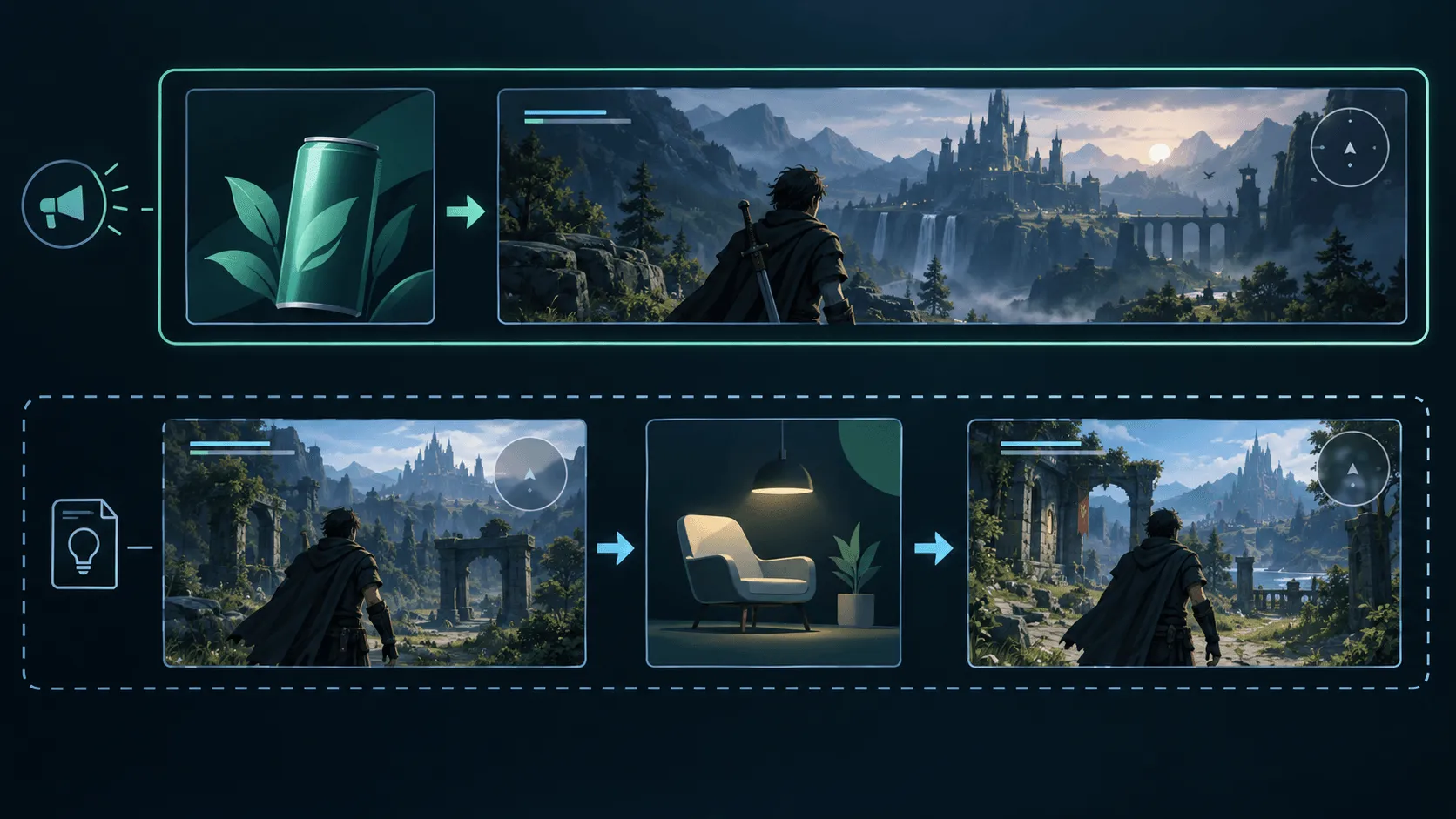
On July 23, 2026, Microsoft officially announced a limited-time test for Xbox Insiders that lets them stream some of the games they own for free with ads. The announced cap is one hour per session, and ads run before the session starts. Participation is optional, and Microsoft also stated a policy of not interrupting the flow of gameplay.
The test announced in July for Xbox plays ads before a session begins, while the patent application published in September covers interruptions during use and the granting of play rights afterward.
| Point of comparison | Xbox test announced July 23 | Patent application published September 3 |
|---|---|---|
| When ads appear | Before the session starts | Interrupts mid-use, conditioned on breakpoints and similar triggers |
| Unit of use | Up to one hour per session | Play right set by time or game progress |
| Scope | Streaming of some games owned by Insiders | Games running on the device, software executed remotely, and similar |
| Stage | Announcement of a limited-time test | Publication of a patent application for the technology |
The comparison is based on documents checked on September 21, 2026. On the patent side, we used claim 1 and paragraphs 0024, 0025 and 0032 of the specification, and on the test side the official July announcement, to contrast when ads appear and the terms of use. The table does not show that the patent's design was adopted in the test, nor the test's current availability.
The two share the idea of using ads to support access to games. But an arrangement where you watch an ad before starting and one where play is stopped midway for an ad change the terms users are accepting. There is no basis for reading this publication as advance notice of a specification change for Xbox or Game Pass.
The idea of showing ads at game breakpoints also already exists in current systems. Google's rewarded interstitial ads likewise show an ad at a natural screen transition and reward viewing. Google asks for a preceding notice screen that gives the user an option to skip before the ad starts, along with time to decide. What shapes the experience is less whether breakpoints are used than what choices are left to the user.
If a concrete product comes out of this patent application, how it treats a player who declines an ad, and what happens when the deadline arrives, will be key factors for judgment. Only when online progress is protected and the playtime earned by watching is known in advance can users weigh the time they spend on ads against the benefit of being able to play.