


Gallium Studios and Artificial Agency announced on November 18, 2026 that MyMems, a simulation game now in development, will use Behavior Engine, an AI technology that controls character behavior. Gallium Studios was founded by Will Wright, creator of SimCity and The Sims, and is aiming for a community release in 2027. The defining feature of MyMems is that the game world and its characters are shaped by the player's own memories. To explain the concept, Wright gave the example of choosing three people from the people you have met in your life to build a bridge across a canyon. Who you remember changes which characters appear in the game and which companions help you solve puzzles.
Generating characters and game worlds from players' memories
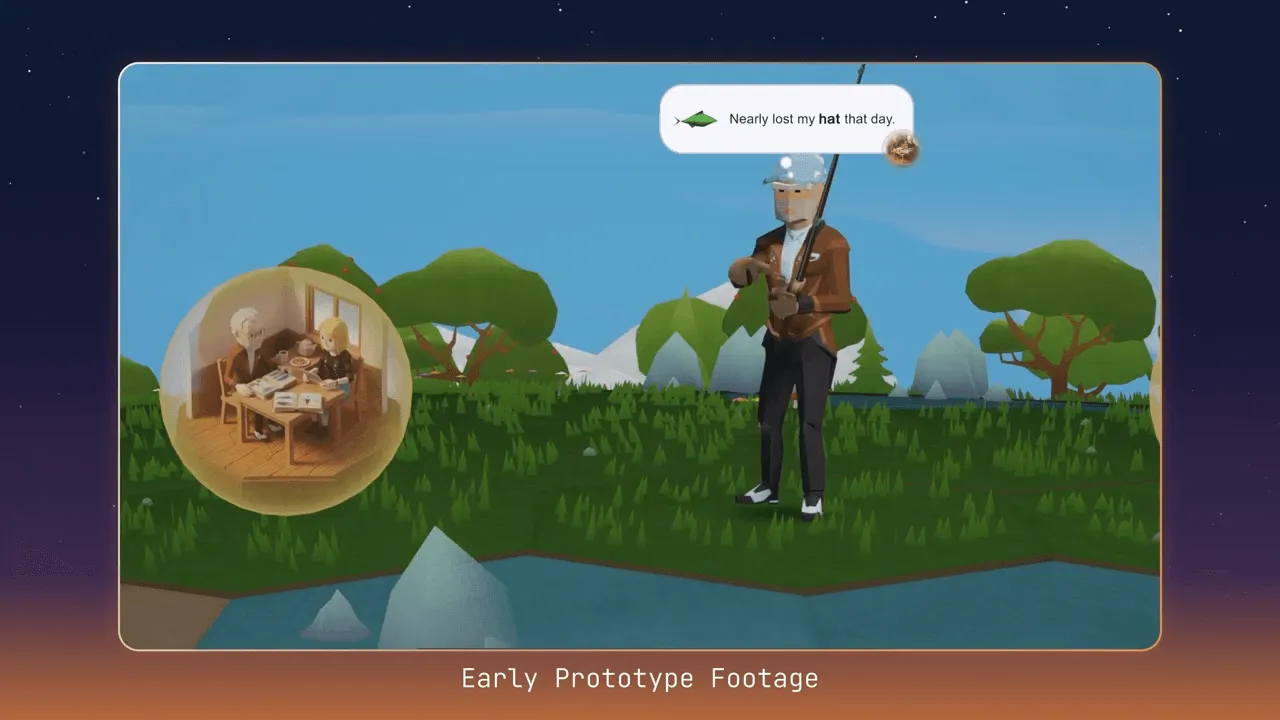
In MyMems, players begin their adventure in a guide's world and expand their own world by solving puzzles with a "merge" mechanic that combines their memories with items and other elements. According to the companies' joint announcement, the game features characters modeled on acquaintances and family members, along with mementos tied to memories. Characters interact not only with the player and other characters but also with objects and places in the world. The bridge-building example Wright described is one way to play: choosing the companions best suited to a challenge from among these characters.
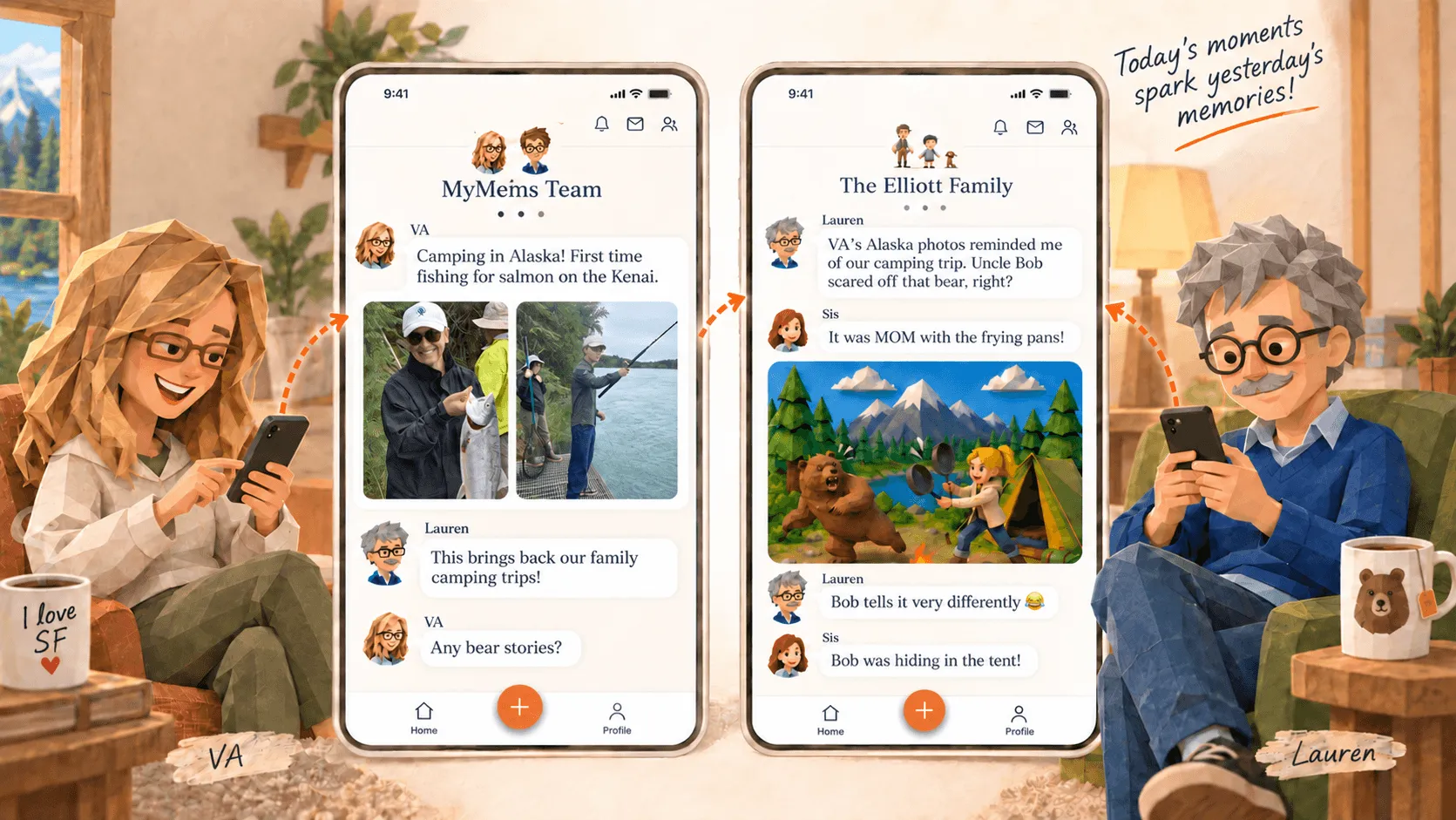
According to Gallium Studios' official website, players can enter a memory in as little as a single sentence. A memory of an outing with someone, for example, includes information such as who was there, where you went, and what happened. The company represents the relationships among these people, places, and events as a "knowledge graph." A personal behavior model that learns from the memories you enter is called "MemDNA," and it works together with Artificial Agency's behavior AI to shape character behavior and how the game world responds.
The idea of bringing players' memories into a game predates this partnership. Kyle Orland of Ars Technica points to Proxi, a mobile simulation game announced in 2018, as a predecessor of MyMems. According to the publication, in the MyMems announcement video Wright described a concept of turning themes extracted from memories into playable areas, much like sections of a theme park. Gallium Studios plans to use this game as a starting point and expand into other experiences that use memory and people data.
Splitting AI character behavior into reflex, instinct, and planning
Behavior Engine, which MyMems will adopt, is an AI technology that lets in-game characters choose actions based on the situation. Developers assign roles to AI characters called "Virtual Players" and configure what they can see and hear and which actions they can take. Based on those conditions, Behavior Engine decides the next action as the game progresses and the player acts.
Artificial Agency uses small AI models optimized for each game, enabling characters to react to their surroundings and cooperate with other characters. What stands out is the design: rather than leaving every decision to a single AI model, it separates actions that require an immediate response from those that require more complex reasoning.
In its technical explainer "Inside a kitchen shift," Artificial Agency illustrates this mechanism using the behavior of a Virtual Player working in a kitchen. Behavior Engine combines three main types of processing to decide on an action:
- Reflex: Handles actions that need an immediate response, such as catching an ingredient thrown at the character. It responds without calling an AI model.
- Planner: When a burrito order comes in, it breaks the required cooking steps into multiple tasks and decides the order in which to carry them out.
- Instinct: Works a new action into a plan already in progress, such as when a player asks for lettuce in the middle of a task.
The actions determined by these mechanisms are compiled into a single list, from which Behavior Engine selects the next operation to execute. When an order is received, its content is added to the Virtual Player's memory, and the actions it chooses are recorded as well. This allows the character to resume handling an earlier order even if the work is interrupted partway.
Having an AI model decide even simple motions such as grabbing an ingredient every time would increase the number of model calls, leading to response delays and higher computing costs. By separating actions that can be handled instantly from those that require reasoning, Behavior Engine is designed to limit model use to the situations that need it. However, the companies have not disclosed how each type of processing will be assigned to actions in MyMems, or how much time or computing cost its decisions will require.
Local memory learning and sharing: how will data be handled?
Because MyMems uses players' personal memories to generate its game world, where data is stored and how widely it is shared also matter. According to Gallium Studios, MemDNA learns from the memories you enter locally, and only if the player gives permission.
The game will also include features for sharing memories, photos, and stories with family and friends. The company explains that players can invite family, friends, coworkers, and others to build a shared world together with a limited group of people. The idea is to also use characters and places born from personal memories in shared experiences with other players.
As for Behavior Engine, which controls character behavior, Artificial Agency lists both the cloud and the player's device as options for where it can run. It is unclear which MyMems will actually use, or what information will be passed to Behavior Engine. Nor have the companies given specifics on where memories, photos, knowledge graphs, and shared data entered by players will be stored, or how much of it will be sent externally.
MyMems is aiming for a community release in 2027, but the specific release date, participation requirements, supported platforms, sales model, and price have not been announced.
Whether shared memories can later be corrected or deleted will also be an important consideration for users. Because MyMems generates characters and game worlds from memories, there is a question of how far changes to an original memory would carry over into the makeup of a shared world and the behavior of its characters. Especially when multiple players build a world together, how personal memories and shared in-game information are managed will be a key factor in evaluating the service's design.