


On November 12, 2026, Noctua released the NT-CP1 AM5/4, a thermal pad for AMD's AM5 and AM4 platforms. The manufacturer's suggested retail price is US$24.95 / €24.95. Sales began the same day at Noctua's official Amazon stores, with other retailers to receive stock in due course.
The pad sits between the CPU's metal heat spreader and the cooler, and its performance changes over long-term use. In Noctua's tests, the number of thermal cycles needed to overtake the company's NT-H1 thermal paste varied widely by configuration. A thermal cycle is one round trip of the contact surface heating up and cooling back down. Temperatures right after installation matter, but so do how long you plan to use the pad and how often you will remove the cooler.
An easy-to-apply coating shapes initial cooling performance
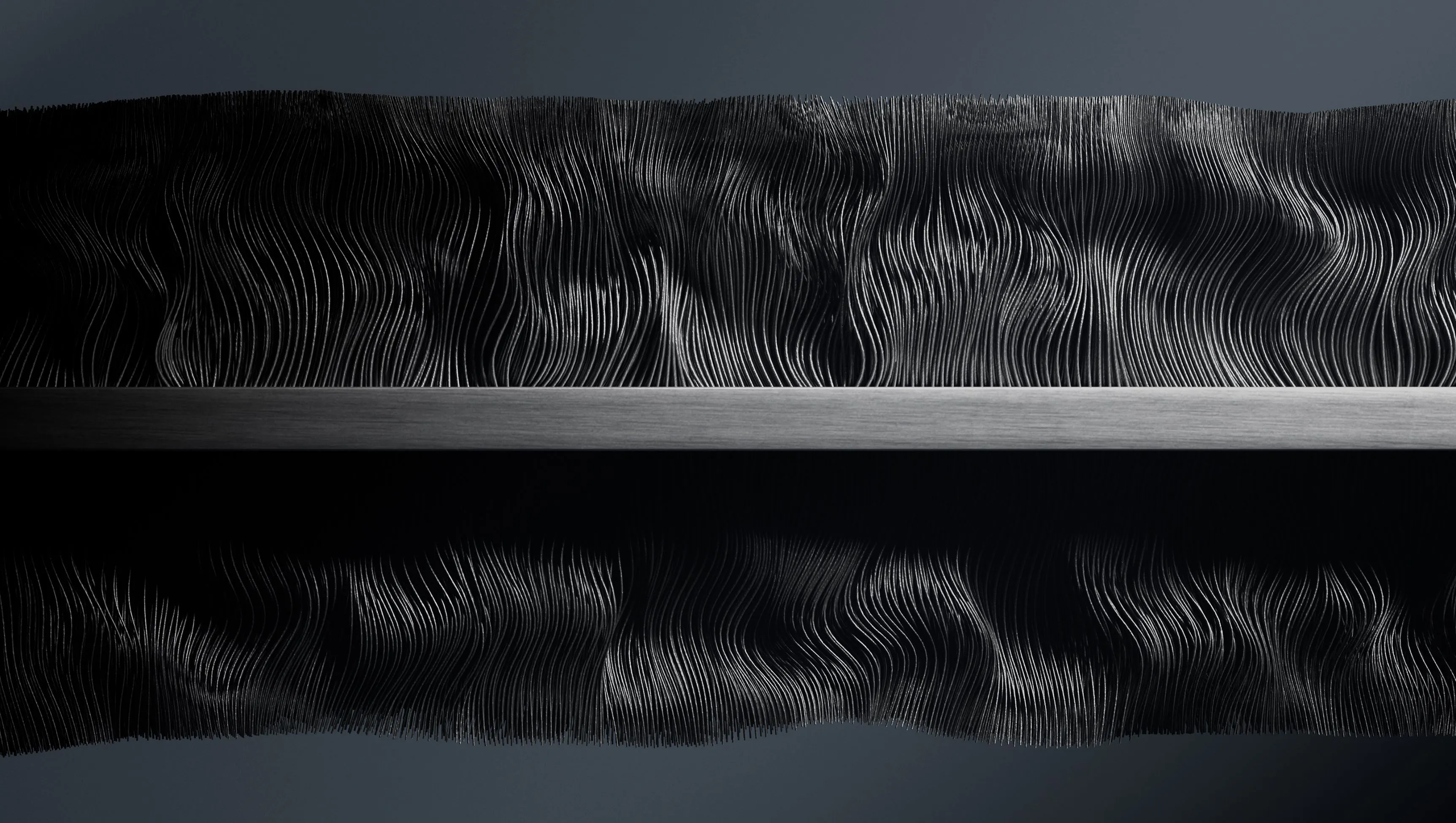
The NT-CP1 is a 33 × 33 mm sheet, 90 µm thick, manufactured by the US company Carbice. At its center is a 50 µm aluminum core, with layers of vertically aligned carbon nanotubes, each 20 µm long, above and below it. According to Noctua, the aluminum maintains the sheet's strength and spreads heat laterally, while the nanotubes carry heat through the thickness of the pad.
The surface carries a thin coating of phase-change polymer that flows when heated. Because it is tacky, you peel the film from one side, place the pad on the CPU, press firmly for about 10 seconds, then peel the film from the other side and mount the cooler. Unlike paste, there is no need to judge how much to apply, and the pad is less likely to shift out of position, Noctua says.
However, the coating that makes installation easy also adds thermal resistance right after mounting. Noctua explains that the coating conducts heat less well than the nanotubes, so a new pad starts out with lower performance than freshly applied high-performance paste. Once the CPU warms up, the coating flows and contact improves, after which the nanotubes gradually conform to the fine irregularities of the contact surface.
The company says that under loads of 200 W or more, where both faces of the pad repeatedly rise above 60°C and then fall below 50°C, the coating changes within the first 5 to 10 cycles. The nanotubes need several hundred to several thousand more cycles to conform further to the surface. Performance therefore changes in two stages.
A dedicated break-in procedure is optional. Noctua says performance improves over weeks to months of normal use with varying loads and temperatures. Its definition of an effective cycle is that both faces of the pad stay above 60°C for at least 2 minutes and then cool below 50°C for at least 2 minutes. CPU package temperature differs from the temperature at this contact surface, and with a low-power CPU and an efficient cooler, the contact surface may struggle to reach 60°C, which can prolong break-in.
For users who want to speed things up, the company also describes a script using Prime95. In an example alternating 5 minutes of load with 5 minutes of cooling, 100 cycles take about 16 hours 35 minutes, plus time for starting and stopping. It is an option for accelerating changes that would otherwise occur during everyday use.
When the pad overtakes NT-H1 varies greatly by configuration
Noctua has published long-term tests comparing the pad with its NT-H1 paste. The number of thermal cycles needed to overtake NT-H1 ranged from about 130 to 3,700 depending on the configuration.
| Noctua test configuration | Thermal cycles to surpass NT-H1 |
|---|---|
| Ryzen 9 9950X + NH-D15 G2 LBC | ~3,700 |
| Ryzen 9 7950X + NL-LC1-24 | ~130 |
| Ryzen 9 9950X + standard NH-D15 G2, 200 W | ~850 |
Note: In Noctua's published tests, temperatures for each configuration were compared against NT-H1. Contact pressure, contact quality, temperature gradient, shear forces and other factors differ by configuration.
With the 9950X and NH-D15 G2 LBC, the temperature gap to NT-H1 narrowed to within 2°C at about 900 cycles and to under 1°C at about 1,600 cycles, then reversed at about 3,700 cycles. After that, the company reports, the paste's performance declined while the pad remained stable.
In the test with the 7950X and NL-LC1-24, measured temperatures with the pad fell by about 7°C over the first 10 cycles and dropped a further 1.3°C by 500 cycles. The pad surpassed NT-H1 at about 130 cycles, and was reportedly more than 1°C cooler at about 300 cycles and about 2°C cooler at 1,000 cycles. Day-one temperatures and temperatures after settling need to be considered separately.
Variation also reflects contact conditions. In measurements of 12 samples with another 9950X and NL-LC1-24 combination, Noctua reported variation of ±1.7 K at the first measurement and ±1.3 K after 100 cycles. Change the CPU and cooler combination, and you cannot assume the same result at the same point in time.
Independent measurements also show changes at the contact surface. Igor Wallossek of Igor'sLAB measured under a 9 N force on a 1 cm² area, an average pressure of 90 kPa, at roughly 30–65°C. During the first heat-up, the joint thickness fell from about 90.8 µm to 72.3 µm, and then remained broadly stable at about 68–70 µm. He analyzed that the drop in thermal resistance cannot be explained by the reduction in thickness alone, and that improvement at the contact interface plays a large role.
Longevity and reuse need to be considered separately
Noctua cites stability tests of more than 100,000 thermal cycles and promotes use for 10 years or more. However, keeping a pad in place and using it is a different matter from removing it and moving it elsewhere.
According to the product FAQ, the pad can often be reused, but reuse is not officially supported and performance is not guaranteed. Noctua does not recommend reuse in critical applications. On the other hand, removing the cooler while the pad stays attached to either the CPU or the cooler and then reinstalling it is normally fine, the company says.
If a removed pad has sharp creases, or if its layers have separated and left wide areas of aluminum exposed, Noctua asks users to avoid reusing it. A reused pad may also need more cycles than a new one to settle again. For PCs that are rebuilt frequently, even a long-lived material requires checking its condition at each removal and installation.
Proximity to live electrical components also determines suitable uses. The polymer coating on the surface of a new pad is non-conductive, but the carbon nanotubes and aluminum inside are conductive. The aluminum at the edges is not covered, and Noctua explains that sharp parts can tear the coating, or the coating can flow during use and partially expose the nanotubes.
The tested and recommended targets are AM5 and AM4 Ryzen CPUs and APUs. The metal cover on AM4 is slightly larger than the pad, but Noctua says this can be handled by centering the pad, since little heat transfers through the edges. The company recommends the pad for its own coolers in general, while saying that results with other manufacturers' coolers vary with the contact surface. It is also not a substitute for the soft pads used to fill gaps for RAM, VRAM and SSDs, as it lacks the thickness and flexibility. Uses such as GPUs and laptops require insulating nearby live components and are outside the recommended applications.
Whether $24.95 is worth it depends on how often you replace it
Noctua and Carbice announced a long-term partnership for PC cooling and exclusive retail distribution in June 2026, when a September launch was planned. The suggested retail price and sales start have now been announced. The official announcement gives no Japanese retail price or domestic release date.
Wccftech compared the $24.95 price with inexpensive high-quality paste that can be applied multiple times, and judged that the NT-CP1's main value lies in long-term stability. People who plan to use the same CPU and cooler for a long time and want to reduce the hassle of reapplying paste have a reason to consider it. For those who frequently change their builds, the cost of paste that lasts through multiple applications from one tube may factor into the decision.
Wallossek also praised the pad's stability after break-in, but pointed out that pressure distribution, surface flatness, warpage and mounting quality affect results. He suggests that guaranteeing stability over several years across a wide range of CPUs and GPUs would require long-term testing under multiple mounting conditions. Post-purchase evaluations will turn on how temperatures progress with the same configuration and how much upkeep the pad actually requires.