


On November 10, 2026, Ring announced the Ring Drone Cam, a camera that flies around the home, and the Ring Rover Cam, a ground-patrol robot for businesses. They are the first two products from the newly established Ring Robotics, and they move the camera itself so it can check on areas that fixed cameras leave in blind spots. One flies through the air in homes and the other rolls across the floor in commercial spaces, but both share the same design philosophy: go where needed and film.
In the U.S., the Drone Cam costs $249.99 and the Rover Cam costs $999.99, with scheduled shipping dates of January 27, 2027, and December 16, 2026, respectively. However, as of the announcement, the Drone Cam has not received authorization from the U.S. Federal Communications Commission (FCC) and cannot be sold until it does. Both products also rely on cloud processing for autonomous movement, so network conditions will matter in real-world use. Anyone considering these products should check the authorization status needed for sale, as well as connection stability and how the captured video is handled.
Flying through homes, patrolling business floors
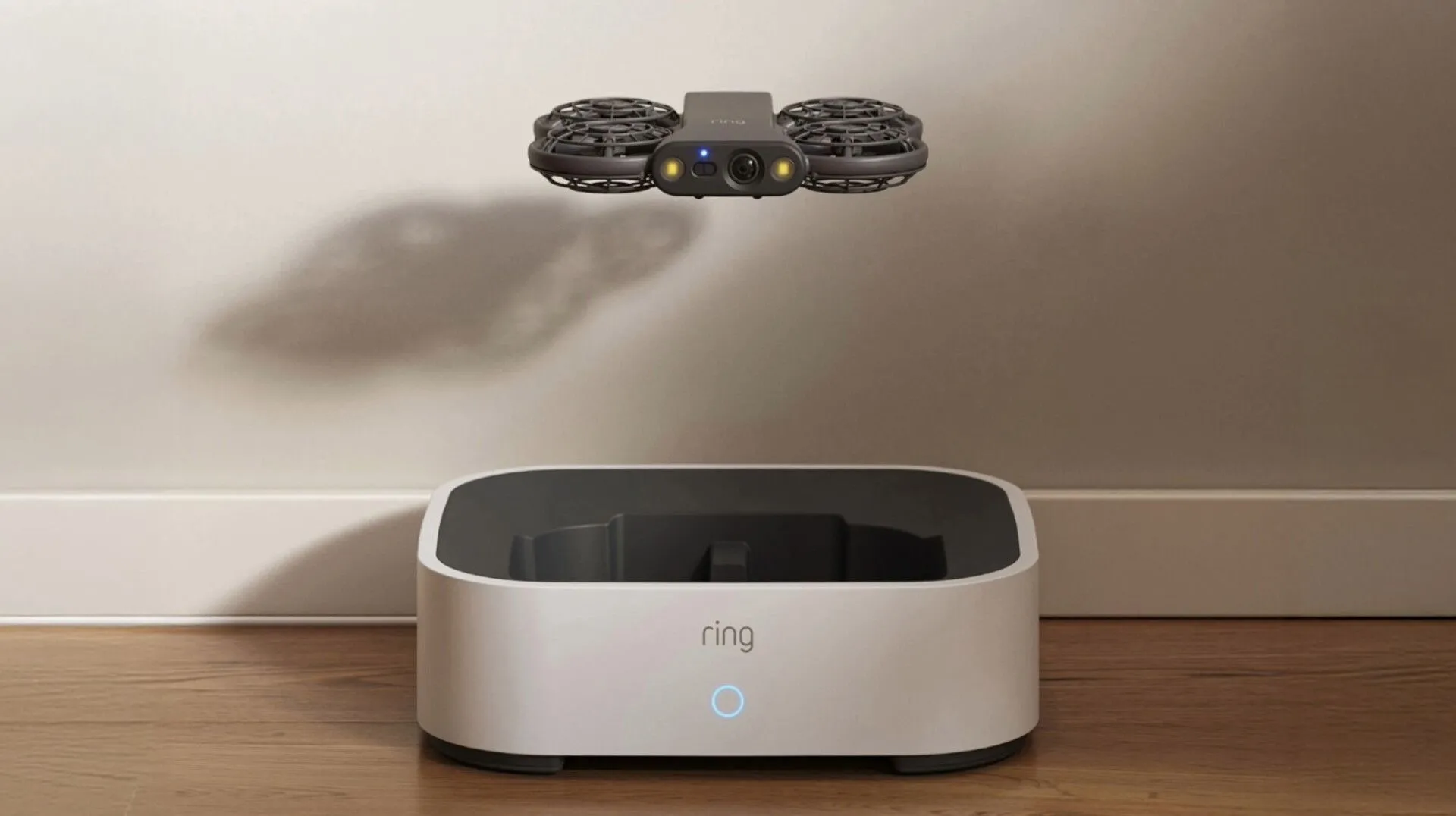
Both products work with existing Ring devices and the Ring app, moving to the places users want to check. The Drone Cam can fly to preregistered locations. It can be sent out on a schedule or dispatched on demand. It can also be set to head automatically to a designated spot when an existing Ring camera, sensor, or alarm is triggered.
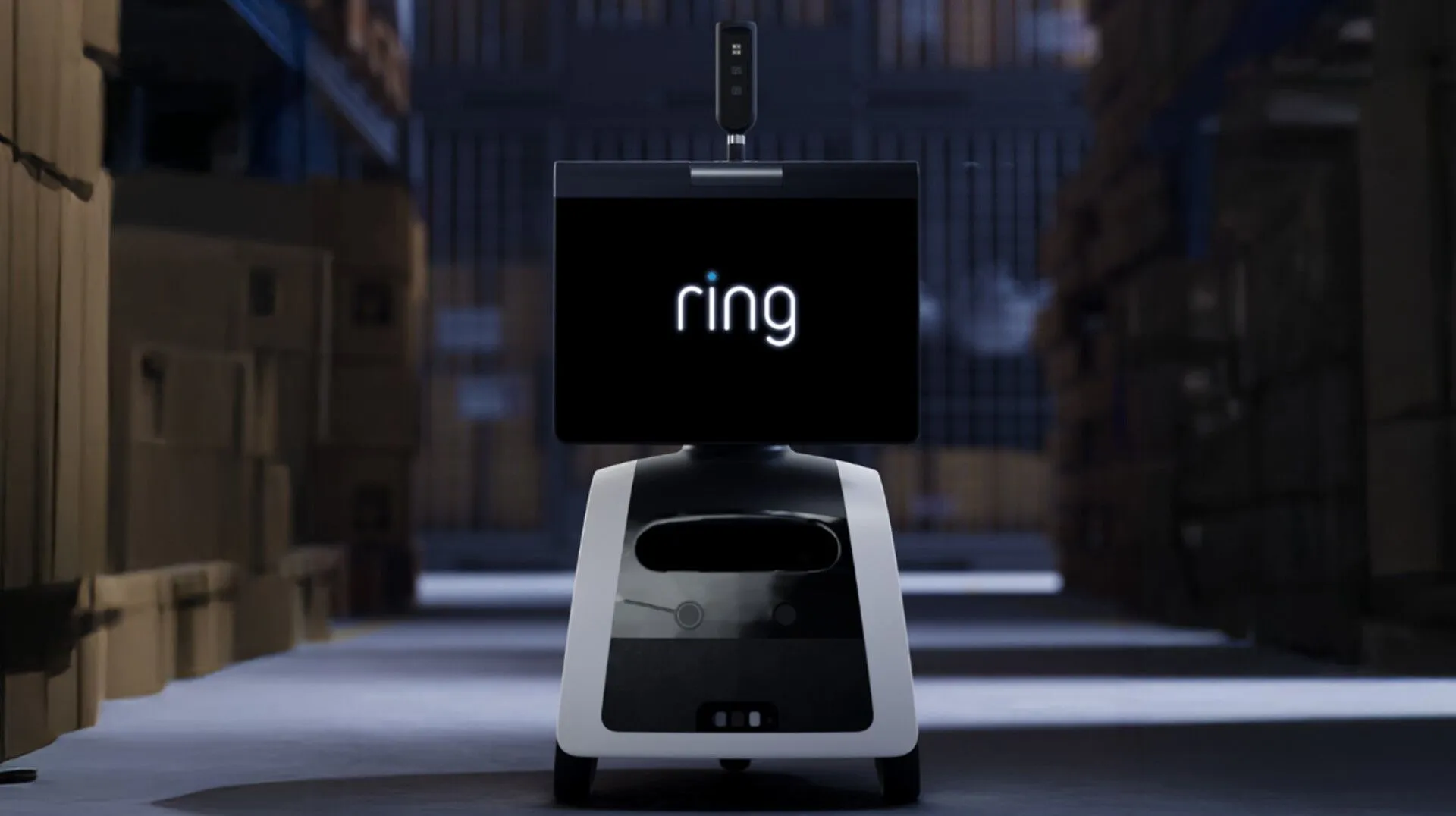
The Rover Cam, meanwhile, travels along the ground inside a business facility and patrols designated locations. When it reaches a registered spot, it scans the surroundings through 360 degrees to assess the situation. Its periscope-style camera mast has adjustable height, and the right height can be saved for each location. The main specifications and sales status of both products as of the November 10, 2026, announcement are as follows.
| Item | Ring Drone Cam | Ring Rover Cam |
|---|---|---|
| Target | Homes | Businesses |
| Movement and filming | Flies indoors. 2K, 148-degree field of view, 360-degree rotation | Moves and patrols on the ground. Streams and records up to 4K, 360-degree scan at each stop |
| Key features | Flight to registered locations, two LED lights that turn on automatically in the dark | Height-adjustable periscope camera, lights, siren, two-way audio |
| U.S. unit price | $249.99 | $999.99 |
| Scheduled shipping date | January 27, 2027 | December 16, 2026 |
| Sales status at announcement | Email sign-up offered; FCC authorization pending | Pre-order link published |
This table summarizes specifications published by Ring; it is not the result of independent performance testing or a total cost of ownership comparison. The prices shown are for the hardware only. Scheduled flights and patrols, as well as reviewing recorded video, require a compatible Ring Protect plan. Not every feature requires a paid plan, but anyone using these functions should factor ongoing costs into the hardware price.
A fixed camera captures whatever is visible from where it is mounted, while the Drone Cam moves to the necessary spot to check on a situation. Still, being able to check multiple locations in sequence is not the same as monitoring an entire home at all times. For the Rover Cam, Ring says it can detect human movement within its field of view even while it sits in its charging dock.
Cloud AI behind autonomous flight and patrols
Autonomous movement in both products is powered by Ring's proprietary "AI Pilot." It combines information from the camera, dedicated vision models, and onboard sensors with cloud processing to generate routes and avoid obstacles. When a user specifies a place to check, AI Pilot helps the device move according to its surroundings.
The way the initial floor plan is created differs by product. With the Drone Cam, the user carries the device around the home, while the Rover Cam explores its surroundings on its own. AI Pilot identifies rooms and suggests patrol points, and users can add more as needed. In addition to scheduled flights, the Drone Cam can be dispatched at any time or triggered by existing Ring devices. It also supports control from the new Alexa Home Map.
In this setup, users specify where and when to check, while the device and the cloud handle route generation and obstacle response. However, Ring has not presented independent third-party verification of metrics such as its obstacle-avoidance success rate. This means there is no guarantee that the devices can avoid obstacles and reliably reach designated spots in every indoor environment.
In an interview with WIRED, Ring founder Jamie Siminoff described the development path from the Always Home Cam, an indoor flying camera announced in 2020. The company initially tried to have the aircraft handle a wide range of situations itself, but adding more sensors increased the computing power and energy consumption required and interfered with flight. Ring therefore adopted a design that moves part of the necessary processing to the cloud.
The Drone Cam sends captured video to Ring's servers and receives navigation instructions from AI Pilot. WIRED reports that if the internet connection is lost, the device uses its remaining onboard processing power to land. In other words, it is not designed to continue normal patrols using local processing alone when the connection drops. This landing behavior was described in the interview for the Drone Cam, and it has not been confirmed whether the Rover Cam has a similar mechanism.
According to the magazine, the Drone Cam does not support manual piloting and can fly for five to eight minutes on a single charge. This information came from the interview and is not a figure measured by a third party. Given the limited flight time and the cloud connection involved in autonomous flight, the network environment inside a building could affect how usable the product is in practice.
Recording stops while idle, and video is encrypted
For a camera that moves through a home, the mechanism for stopping recording matters as much as when it records. According to Ring, the Drone Cam powers off and its camera stops while it sits in its charging dock. Recording begins when flight starts, and the design does not keep filming while the device is idle.
When the Rover Cam enters sleep mode, it retracts its periscope camera into the body and turns off its microphone. At the same time, it is described as able to detect human movement within its field of view while docked, so the docked state must be distinguished from sleep mode. Both products also light an LED while recording, and the Rover Cam shows its recording status on its screen as well.
To protect captured video, Ring says both products use an encryption technology it calls "TAKE." However, according to WIRED, because AI processing takes place in the cloud, Ring temporarily holds the encryption key and deletes its copy after processing. For this reason, TAKE cannot be equated with full end-to-end encryption, in which the service provider never handles the key.
Turning off the camera and microphone while idle, encrypting recorded video, and processing video with cloud AI are separate design elements. Encryption does not necessarily mean the service provider has no access to the content of the video. At this point, the specific length of time keys are held, the retention period for all data, and the results of any third-party security verification have not been confirmed.
Sales conditions and connectivity to check before buying
Before adopting Ring's new products, buyers need to check sales authorization, network conditions, and how video is handled. First, the Drone Cam had not received FCC authorization at the time of the announcement. Until it is authorized, FCC rules prohibit selling or leasing it, or offering it for sale or lease, so the January 27, 2027, shipping date does not mean the start of sales is certain. Actual terms of availability should be confirmed after formal authorization.
Connectivity also needs attention. Even once a product is on sale, it will not necessarily work without problems in every building. According to WIRED, the Drone Cam is designed to land if it loses its internet connection, so autonomous flights to check on a situation could be limited in places with unstable connections. And because Ring temporarily holds the encryption key during cloud AI processing, connection reliability and the protection of video data need to be evaluated from separate perspectives.
The announced unit prices and shipping dates apply to the U.S., and pricing for the compatible Ring Protect plans has not been confirmed. For those who use scheduled flights, scheduled patrols, or recorded video playback, the actual costs involved will also factor into the decision. For now, no independent verification has been presented for obstacle-avoidance success rates, communication latency, or actual security effectiveness.
The Ring Drone Cam and Rover Cam point to a new direction for home and facility surveillance systems: using movement to cover the blind spots of fixed cameras. Their practical value, however, will not be determined by image quality and mobility alone. Whether they can reliably reach target locations in real buildings, how they behave when the connection drops, and how captured video is processed and stored are key factors to check before adopting them.