

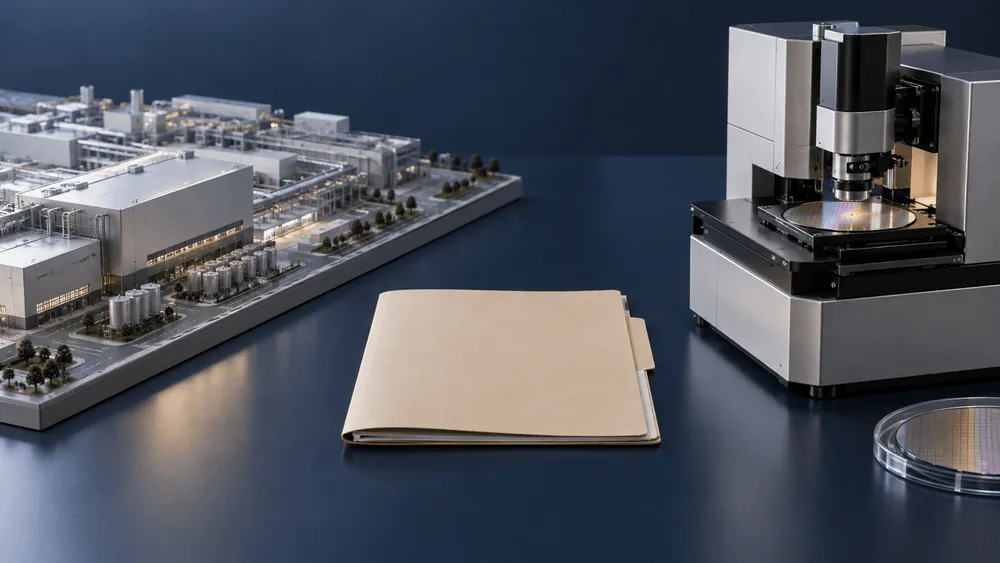
On September 15, 2026, Tesla, SpaceX and SpaceXAI sued US nanofabrication equipment maker TERA-print over the name of their semiconductor manufacturing project, "Terafab." They are seeking a declaratory judgment that using the Terafab name does not infringe TERA-print's trademark rights. After TERA-print sent a letter demanding that they stop using the name, and after negotiations, the three Musk-affiliated companies asked a court to decide. A giant chip fab and a tabletop research tool are obviously very different things, but in a trademark dispute that difference in size alone cannot rule out a likelihood of confusion.
Tesla side files first after receiving a demand letter
According to the complaint filed in the US District Court for the Western District of Texas, TERA-print on May 23 demanded that Tesla and others immediately and permanently stop using the Terafab name, on the grounds that it could be confused with TERA-print's "TERA-FAB" product line. The plaintiffs also say they were told on June 10 that they would be sued for trademark infringement, unfair competition and other claims.
This was a demand letter from a company, not a court order halting construction of a fab or use of the name. The plaintiffs in the case filed on September 15 are Tesla, SpaceX and SpaceXAI, not TERA-print. The three companies ask the court to confirm, among other things, that their current and planned use of the name does not infringe.
The plaintiffs say the two sides held six discussions between June and August without reaching a resolution. The complaint argues that legal uncertainty remains over their ability to use and protect the name. Having publicized the fab project, they were confronted by a company with a similarly named product, and this lawsuit is an attempt to remove that uncertainty first.
TERA-print co-founder Andrey Ivankin gave a different account in a direct response to PCMag. He said Tesla had put forward a settlement proposal and had indicated it wanted to keep talking, yet sued anyway, and he stated that the company intends to defend its trademark. As evidence of business relevance, he cited a contract with the US Department of Defense to manufacture new semiconductors, as well as a partial investment in and dealings with the AI company Mattiq, which uses TERA-FAB products. These are his statements; the size and content of the contract have not been established in this lawsuit.
Reading the existing registration and the May filing separately
TERA-print's "TERA-FAB" has a registration that predates Musk's side announcing its plan. Paragraph 31 of the complaint states that registration No. 6295482 was filed on June 7, 2017 and registered on March 16, 2021. It covers lithography equipment for drawing fine patterns and the pen arrays used in that equipment.
TERA-print's 2021 registration, its additional filing in May 2026, and Tesla's three applications, all described in the complaint, differ in scope and in procedural stage.
| Party / mark | Registration or application described in the complaint | International class | Main subject matter |
|---|---|---|---|
| TERA-print "TERA-FAB" | Registered March 16, 2021, Reg. No. 6295482 | Classes 7 and 9 | Polymer pen / beam pen lithography equipment, pen arrays for printing |
| TERA-print "TERA-FAB" additional application | Filed May 22, 2026, Serial No. 99840889 | Classes 9 and 42 | Semiconductor-related materials and silicon chips, nanoelectronic devices, AI design and development services, etc. |
| Tesla "TERAFAB" word mark | Filed May 18, 2026, Serial No. 99829894 | Classes 39 and 40 | Delivery of semiconductor chips and similar goods, contract manufacturing |
| Tesla stylized "TERAFAB" and word mark "TESLA TERAFAB" | Filed May 18, 2026, Serial Nos. 99829877 / 99829887 | Classes 9, 39, 40 and 42 | Goods such as chips, plus their delivery, contract manufacturing, and design, testing and research services |
Source: the complaint filed September 15, paragraphs 23–27, 31 and 34. Tesla's two filings with the same designated scope are combined in the last row. The table compares what the complaint describes; it does not show the latest examination status or any court findings.
The existing registration and the additional filing cannot be lumped together. The fact that TERA-print made a broader filing on May 22 does not mean its earlier registration has been extended to that scope. Conversely, the newness of the additional filing does not erase the older registration in the equipment field.
Tesla's side points out that the additional filing came four days after its own US applications and the day before the demand letter, and argues that TERA-print was trying to widen its rights in reaction to the Terafab announcement. That characterization of motive, however, is the plaintiffs' own. Tesla itself also claims priority for its three US applications based on a March 30 filing in Jamaica. Simply lining up the May filing dates cannot determine which side has priority.
A tabletop tool versus a giant fab: the trademark question remains
TERA-print's equipment is a tool for prototyping fine surface structures in a laboratory. Its beam pen lithography technology passes light through many probes with tiny apertures and draws patterns by digitally controlling each beam. It uses light rather than electron-beam writing and is described as not requiring a vacuum.
With the TERA-Fab E series 2.0, the drawn pattern can be changed from an image file. The manufacturer advertises resolution below 250 nm in beam pen lithography mode, but that is a specification of the patterns the machine can draw. It is not a figure for the process node of mass-produced semiconductors or the production capacity of a fab. The product's purpose is to let researchers experiment while changing designs and materials.
By contrast, Terafab's official plan is to bring logic, memory and advanced packaging together in one facility and produce AI semiconductors at scale for use on the ground and in space. A fab that supplies finished chips and a machine that makes experimental patterns differ in what they sell and how they are used. Tesla's statement in the complaint that it has no intention of making or selling tabletop equipment serves to emphasize this difference.
Still, it is not accurate to dismiss TERA-print's equipment as biological research gear unrelated to semiconductors. TERA-print's official list of applications includes electronic devices and sensing as well as bioengineering. Overlapping uses is not the same as competing in the same market, but photos of a giant fab and a tabletop tool side by side do not reveal the commercial relationship between them.
In its general explanation of how confusion is assessed during registration examination, the US Patent and Trademark Office (USPTO) cites the similarity of the marks and the commercial relationship between the goods and services. Even if goods are not identical, a problem can arise where consumers would mistake them as coming from the same source. The USPTO's trademark search guidance also states that related goods and services need not fall in the same international class. The class numbers in the table alone therefore do not decide infringement or non-infringement.
This USPTO explanation is a general statement about registration examination and does not preempt the outcome of this lawsuit. It does help clarify what is meant by confusion: not whether someone would mistake a fab for a tabletop tool, but whether the name would lead people to think the two share a source or are connected.
Indeed, Tesla's complaint also denies confusion in both directions. Beyond the possibility that the Terafab fab would be taken to derive from TERA-print, it argues that the reverse, where TERA-print's equipment is thought to be a product related to Tesla's side, is unlikely given the differences in customers and commercial context. The dispute cannot be settled just by considering whether the larger party might be mistaken for the smaller one.
Settling the name is separate from mass-producing chips
In its September 15 complaint, Tesla's side states plainly that Terafab does not yet have manufacturing capability and is not selling products. The large-scale semiconductor production described on the official website is a plan, not current capacity.
The trademark suit deals with legal uncertainty over the name to be used for that plan. A demand letter arriving cannot be equated with a court order stopping fab construction, and nothing in the complaint allows us to determine any effect on a mass-production schedule. Conversely, resolving the naming dispute would not prove that manufacturing capability has been established.
Future court rulings or agreements between the parties will clarify the conditions under which the Terafab name can continue to be used. To gauge progress on the semiconductor project itself, actual manufacturing capability and product supply will need to be checked separately.