

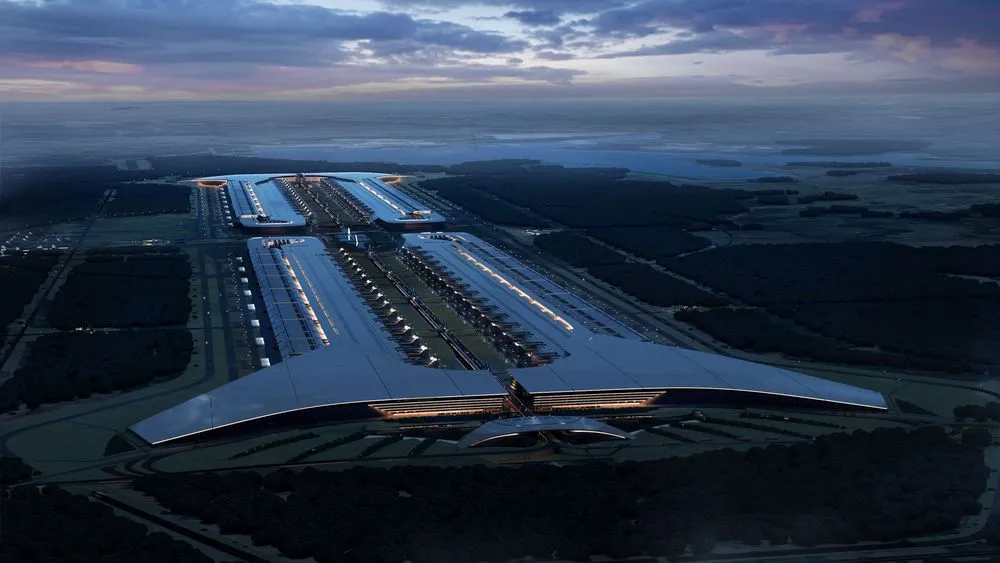
On October 3, 2026, Elon Musk confirmed that he is in talks with TSMC over Terafab, his planned semiconductor manufacturing project. The talks followed an exclusive report by Tim Culpan saying that TSMC is exploring ways to help operate Terafab's plant in Texas. Musk said it was "just talks, but may lead to something," and he did not announce that a partnership has been agreed. Even so, it matters that an established foundry could take on plant operations for an enormous manufacturing project that would bring together logic, memory, and advanced packaging. The key questions are who will fund and build Terafab, and whose technology and responsibility will carry it into volume production.
TSMC Could Own and Operate the Plant
In an exclusive Culpium article on October 2, Tim Culpan reported, citing sources, that TSMC is exploring ways to help operate Terafab's new Texas plant. In a follow-up published the next day, he named TSMC owning and operating the new plant as the most likely arrangement. However, the plan has not been finalized, and other forms of cooperation are reportedly under consideration.
Musk's reply responded to that report. In a post embedded in the Culpium follow-up, he acknowledged the talks, but he did not address who would own the plant or when production would start. It cannot be taken to mean that Musk confirmed TSMC will own and operate the plant.
If TSMC were to own and operate it, Terafab could secure the chips it needs while leaving plant operations to a company with experience in volume semiconductor production. Building a plant to meet the needs of one's own group of companies is a different challenge from bringing an advanced manufacturing process online and producing at scale reliably. The talks also touch on how to divide those two roles.
Separating Investment Plans, Partnerships, and Talks
On August 6, the Texas Governor's office announced that SpaceX will build a semiconductor plant in Grimes County, Texas. For Terafab's first phase, capital investment of more than $16.8 billion and 3,000 new jobs are planned.
Earlier, on April 23, Intel announced in its first-quarter 2026 earnings that it had joined Terafab as a strategic partner alongside SpaceX, xAI, and Tesla.
The first-phase investment and jobs plan, Intel's participation, and the talks with TSMC can each be confirmed for Terafab. None of them, however, shows that a contract for TSMC to operate the plant has been signed.
| Date / Source | What can be confirmed | Stage indicated |
|---|---|---|
| April 23 · Intel | Joined Terafab as a strategic partner alongside SpaceX, xAI, and Tesla | Participation in Terafab. Separate from any plant operation contract with TSMC |
| August 6 · Texas Governor's office | First-phase investment of more than $16.8 billion in Grimes County; 3,000 new jobs | Plans for construction, investment, and jobs |
| October 3 · Elon Musk | Acknowledged talks with TSMC and said they may lead to something | Talks stage. Does not mean ownership or operating structure has been decided |
The table organizes page 2 of Intel's prepared remarks, the Governor's office announcement, and the public post embedded in the Culpium follow-up by source and content. It compares three materials checked on October 4, 2026, and does not cover every contract or partnership related to Terafab.
Texas offered SpaceX a $30 million Texas Enterprise Fund (TEF) grant and also explained that the plant is eligible for JETI (Texas Jobs, Energy, Technology, and Innovation), a state investment-attraction program. This support shows that the site and business plan are becoming concrete.
On the other hand, the investment amount is not a direct measure of the plant's production capacity. The figure of 3,000 jobs is also a planned number, not a count of people already engaged in volume production.
Intel has also said that, in joining Terafab, it will help support efforts to fundamentally rethink semiconductor manufacturing technology. The disclosure of talks with TSMC gives no basis for concluding that Intel has withdrawn from Terafab or been replaced by TSMC. If both companies are involved, it will be necessary to confirm which processes each handles, and whether their roles overlap or complement each other.
Kumamoto's JASM Shows How Investment and Plant Operation Can Be Divided
There is a precedent in Kumamoto's JASM for a manufacturing subsidiary in which TSMC holds a majority stake and customer companies also invest. In a joint announcement on February 6, 2024, TSMC, Sony Semiconductor Solutions, DENSO, and Toyota announced additional investment in a second plant. In this structure, not only TSMC, which manufactures the semiconductors, but also the companies that use the chips invest in the manufacturing company.
The ownership ratios shown in that announcement were approximately 86.5% for TSMC, 6.0% for Sony Semiconductor Solutions, 5.5% for DENSO, and 2.0% for Toyota. These were ratios presented at the time on the assumption that the transaction would close, and they should not be treated as-is as figures for the current ownership. Even so, they offer one example of a business structure in which customer companies invest while TSMC holds control of the manufacturing company.
The JASM announcement cited growing customer demand as the reason for building the second plant and explained that expanding production scale would improve the cost structure and supply chain efficiency. It also said production capacity could be adjusted according to customer demand.
When a company that puts money into a plant also becomes one of its main customers, it is easier to reduce the risk that the equipment will be underused after completion. If TSMC owned and operated a Terafab plant, and Musk-affiliated companies guaranteed investment or certain purchase volumes, the arrangement could become a business structure linking the manufacturer with the heavy user.
However, the processes then planned at JASM ranged from 40nm to 6/7nm, so both the products and the technical requirements differ from Terafab's. The ownership ratios and business structure adopted in Kumamoto cannot simply be applied to Texas.
TSMC Arizona Shows the Gap Between Finished Buildings and Volume Production
At TSMC's own U.S. plants too, completing a building and starting volume production are separate milestones. According to TSMC Arizona's official explanation, the second fab's building was completed in 2025, but volume production on the N3 process is targeted for the second half of 2027.
| Arizona fab | Target process | Construction / production status |
|---|---|---|
| Fab 1 | N4 | Volume production began in Q4 2024 |
| Fab 2 | N3 | Building completed in 2025; volume production targeted for second half of 2027 |
| Fab 3 | N2 and A16 | Construction began in April 2025; volume production targeted by the end of the 2020s |
This is based on TSMC's explanation as checked on October 4, 2026. Volume production has begun at Fab 1, but what is shown for Fabs 2 and 3 is future plans. Actual results and future targets need to be viewed separately.
Completing a plant building alone does not make it possible to supply chips reliably on the processes customers need. Volume production requires installing manufacturing equipment, bringing up the process, and improving yields, so there is a time gap between construction completion and the start of production.
If TSMC cooperates on Terafab, deciding who operates the plant would likewise be a separate stage from being able to supply the required volume of chips. A concrete plan is needed for which process to introduce, when to begin volume production, and how much production capacity to secure.
Of course, the timeline of the Arizona plants cannot be used to estimate how many years Terafab will need to start up. The locations and target processes differ, and what TSMC would be responsible for at Terafab has not even been decided. What this comparison shows is that even TSMC, with its extensive manufacturing experience, plans construction and volume production as separate stages.
Terafab's Vision Does Not End With Logic
According to Musk's explanation included in the Texas Governor's office announcement in August, Terafab is envisioned as bringing logic, memory, and advanced packaging together at a single site. It would manufacture the logic chips that handle computation, prepare the memory that holds data, and also consolidate the process of connecting and assembling multiple chips. Terafab's large scale is tied to this vision of combining several manufacturing areas at one site.
However, even if TSMC were to take charge of manufacturing logic semiconductors, that alone would not settle the memory manufacturing setup. For advanced packaging as well, it would still be necessary to decide where, by whom, and which chips will be combined and assembled. Even a plan presented under the single name Terafab needs to be considered process by process.
The talks with TSMC could become an occasion to decide how to divide roles between Musk's companies, which need large volumes of chips for their own use, and a company that can actually operate a semiconductor plant.
What matters is not the name of the partner itself but whether it becomes clear who handles which manufacturing process and how far they bear responsibility for supply. If the processes handled, the start of volume production, purchase volumes, and other details become known along with future contracts, it will be possible to evaluate Terafab's path to securing the chips it needs not only by the size of the plant but also by its actual production plan.