


Earlier this year, Samsung officially announced the launch of its new smart ring wearable device, the Galaxy Ring, as part of its Galaxy Unpacked event. Set to launch in late summer 2024, the ring can monitor users' health parameters and provide insights based on the observed health metrics.
The global wearable devices market is expected to grow from US$314.52 billion (roughly ¥47.6 trillion) in 2023 to US$2,570.3 billion (roughly ¥389.05 trillion) by 2030. So it comes as no surprise that Apple is rumored to be currently filing patents for a smart ring, with expectations that the product will be ready in time to compete with Samsung's release.
However, you might be surprised to learn that neither Samsung nor Apple are the pioneers of this new wearable technology. Oura actually unveiled its first-generation ring back in 2015 via a Kickstarter campaign.
Now on its third generation, with a fourth generation set to launch in 2024, this smart ring can measure respiratory rate, heart rate, heart rate variability (HRV), blood oxygen saturation, and body temperature. It also features an accelerometer that records the user's activity and movement. But the biggest question is whether wearable technology is really worth all this value.
What Is Wearable Technology?
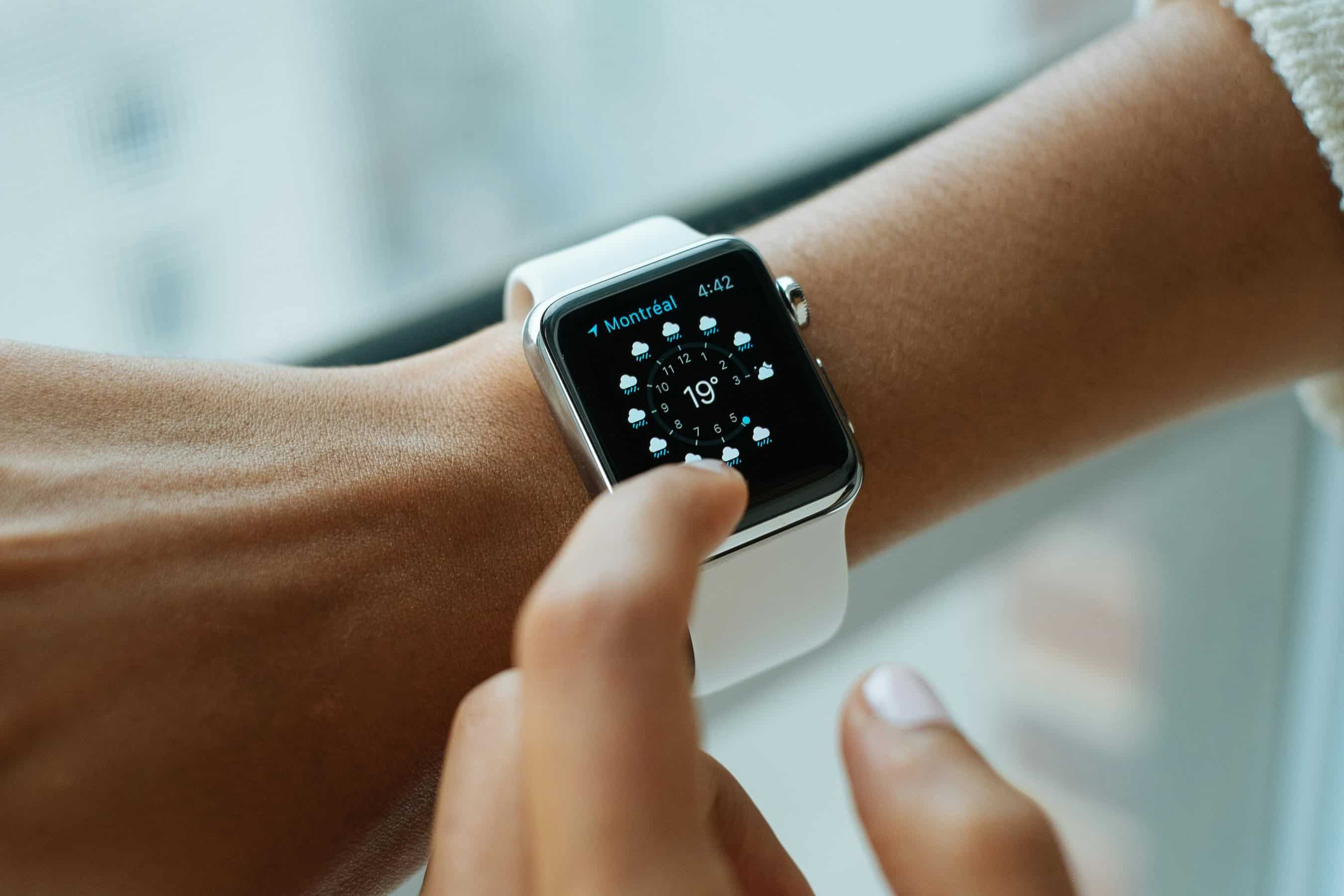
Wearable devices come in a variety of shapes and sizes, including smartwatches, sports watches, fitness trackers, head-mounted displays, smart jewelry, smart clothing, and even implantable devices.
Advances in technology have given manufacturers access to low-cost, low-power sensor technology, enabling them to develop this wide range of devices. At minimum, wearable devices are equipped with sensors, software, and connectivity technology.
Sensors collect information from the person wearing the device, and software gathers the data and transmits it via wireless connectivity to a device with processing capability. The ecosystem in which wearable technology functions is known as the Internet of Things (IoT). This is the same principle as smart technology used in the home—such as thermostats and smart speakers that can be controlled from mobile devices outside the home—but applied at the individual level. It's important to note that it's not the mobile device that processes the data; instead, the data is typically sent to and processed in the "cloud," with the mobile device merely displaying it to the user.
What makes IoT solutions even more compelling is the interpretation of the data collected by the sensors. For example, the Oura Ring and Oura Membership allow users to monitor their sleep, manage stress, and predict when they're likely to get sick, all by monitoring body temperature and heart rate. This is all made possible through analysis of the data collected by the ring.
With advances in artificial intelligence (AI), health tracking is expected to flourish in 2024.
Pros and Cons
Smart rings are equipped with sensors similar to those found in smartwatches. However, because fingers have larger blood vessels close to the surface, smart rings can use capillaries (small blood vessels) in the finger to obtain readings, allowing them to provide more accurate measurements than smartwatches. Another advantage of smart rings is that they have longer battery life than smartwatches. However, smart rings are unlikely to feature GPS or a screen.
As for price, the cheapest version of the Oura Ring starts at £299 (approximately ¥57,000), and users must also pay a monthly membership fee of £5.99 (approximately ¥1,100). This is required to unlock all the benefits of the data analysis. That said, the ring works in conjunction with the Oura mobile app. By comparison, the most affordable version of the Apple Watch, the SE, starts at ¥34,800, and the Samsung Galaxy Watch6 Bluetooth starts at ¥45,000.
Smart rings cannot—and likely never will—replicate the full range of features offered by smartwatches. However, for users interested in health management who want a simple device with minimal features, they represent an appealing option. As Bryan Ma, Vice President of Device Research at International Data Corporation, put it: "The idea behind rings like this isn't necessarily that they're cheaper than a smartwatch, but that they're a much smaller and less obtrusive device to wear for use cases like sleep tracking."
The Future of Wearable Technology?
Wearable technology will continue to evolve, with a strong focus on health monitoring. For example, Microsoft has been exploring smart tattoos as next-generation wearable technology since 2016. However, because the manufacturing process for the gold foil used in the tattoos is labor-intensive, researchers are now focusing on more robust, advanced, and affordable materials.
Researchers at the University of Washington have also developed thermal earrings. These can measure the wearer's earlobe temperature, and also hold promise for monitoring other areas such as diet and exercise. While not yet commercially available, this device shows that engineers are developing new ideas for wearable devices.
Under Armour already sells running shoes with built-in Bluetooth and sensors. These shoes also measure running metrics such as cadence (steps per minute), ground contact time, foot strike angle, and stride length.
The app provides real-time audio coaching, though it currently focuses solely on cadence. Looking ahead, we can expect further developments in areas such as smart contact lenses, smart nails, and smart buttons.
Is Wearable Technology Worth It?
The expected growth of this technology's market size shows that users are interested in monitoring their health and improving their lifestyles. In general, developments in the Internet of Things are improving the way we live and supporting our wellbeing.
Connected devices collect, track, and store user data, and this is the primary purpose of the technology. What users need to know is that many wearable devices share data with third-party apps and services, and it's often unclear how this data is being used. Data could potentially be sold to other companies or used for other purposes without users' knowledge or consent. Furthermore, wearable devices can also be hacked.
With this in mind, as they have with all new technologies, users must weigh the benefits of wearable technology and decide for themselves whether the risks are worth taking. If security and data privacy are a concern, it's recommended that users protect their devices by following all security advisories provided by experts and manufacturers, and take the time to research how their data is used and shared.