

On September 23, 2026 (US time), YouTube announced more than 30 updates at its annual event, Made On YouTube 2026, covering everything from viewer recommendations to how creators produce and monetize videos. New additions include custom feeds where you describe what you want to watch, AI that edits videos through conversation, and real-time dubbing for live streams. YouTube also announced a feature that presents Shorts as serialized series, and a system that points international viewers to local products.
Not everything is available today, though. Some features have already begun rolling out, some launch first in the US, and others will start limited trials in 2027. Rather than just tracking feature names, the useful question is what changes for viewing and production, and who can use it and when.
When can you use the main features?
The September 23 announcements mix features that are already live, features rolling out in phases this year, and limited trials planned for 2027. Cross-checking YouTube's individual announcements against its creator guidance, the schedule looks like this:
| Main feature | Status / schedule at announcement | Who it's for and caveats |
|---|---|---|
| Serialized Shorts | Rolling out from September 23 | Global rollout. Viewable on web, mobile and TV |
| Image posts and carousels in the Shorts feed | Available now | iPhone and Android. Display of posts on TV will come over the next few months, starting in some markets |
| Custom Feeds | This fall in the US | Web, mobile and TV. Japan launch date not announced |
| Ask Studio on mobile | Global rollout planned within 2026 | Individual new Studio features will be added in phases through 2027 |
| Thumbnail refresh for older videos | Global rollout planned early 2027 | Suggestions and testing via Ask Studio |
| Video A/B testing | Global rollout planned in 2027 | Compare up to 3 edited versions |
| Conversational editing in Shorts / YouTube Create | Global rollout planned from early 2027 | Android and iPhone |
| Comment management tailored to individual judgment | Experiment planned within 2026 | Desktop Studio. Opt-in by the user |
| Watch With extended to long-form videos | From late 2026, global by year-end (planned) | Eligible videos. Original creators control usage |
| Matching with creators who are live | Early 2027 | Expansion of Go Live Together |
| Live showdowns | Global rollout planned in 2027 | Combines battles during co-streams with viewer support |
| Automatic live dubbing | Limited trial in early 2027 | Starting with English and Spanish. Japanese support not announced |
| Expanded Shopping affiliate program | 35 markets by end of 2026 | Amazon integration to expand to India and Brazil after the US |
Timings were checked against the official Creator Hub, TeamYouTube's feature-by-feature guide, the live features announcement and the event FAQ. All are plans as of the announcement, and availability varies by region and channel eligibility. "Global rollout" does not mean immediate access for every account or support for every language.
For users in Japan, the practical dividing line is not to treat Shorts series and next year's live dubbing trial as the same kind of "new feature." The announcement alone also doesn't settle Japanese launch dates for Ask YouTube or the music-related features.
A home screen where you say what you want, and Shorts you can binge
Custom Feeds: telling recommendations your purpose
"Custom Feeds" lets you create your own recommendation tabs based on mood or interest. You type in what you want in words, such as a long documentary to unwind with at night, or new DIY creators you'd like to discover. You can save multiple feeds, and their contents refresh with new recommendations.
The same person wants different videos on a commute and on a day off. The aim is to make that difference explicit and let people switch between feeds from the home screen. It's best understood not as letting viewers directly control the recommendation algorithm's code or ranking, but as adding an entry point for telling YouTube what you're looking for. It launches first in the US on web, mobile and TV.
Ask YouTube: from search to product comparison and understanding footage
"Ask YouTube," which lets you find videos through conversation, gains shopping-assistance features. When searching for product reviews, it organizes videos, for example in comparison tables based on your criteria, and after you open a video you can ask follow-up questions about the product on the playback screen. On TV, voice questions are also envisioned.
The official feature list also includes the ability to understand what's in the video itself. YouTube says it can identify products on screen, how-to methods and complex equations even without a transcript. The direction is to let people ask about things that are hard to find by following the spoken content alone. Details on accuracy and supported languages were not given in this list.
Bringing questions about products and checks on reputation and price closer to the viewing screen could reduce the need to search again while watching reviews. But getting answers to your questions is not the same as being able to complete the entire purchase within YouTube.
Shorts in seasons and episodes
"Shorts series" splits short videos into seasons and episodes so they can be watched in order. You can set your own thumbnails, and a "watch series" button in the feed takes viewers into the serialized work. Creators organize them in YouTube Studio on desktop, and viewers can continue watching on smartphones or TV.
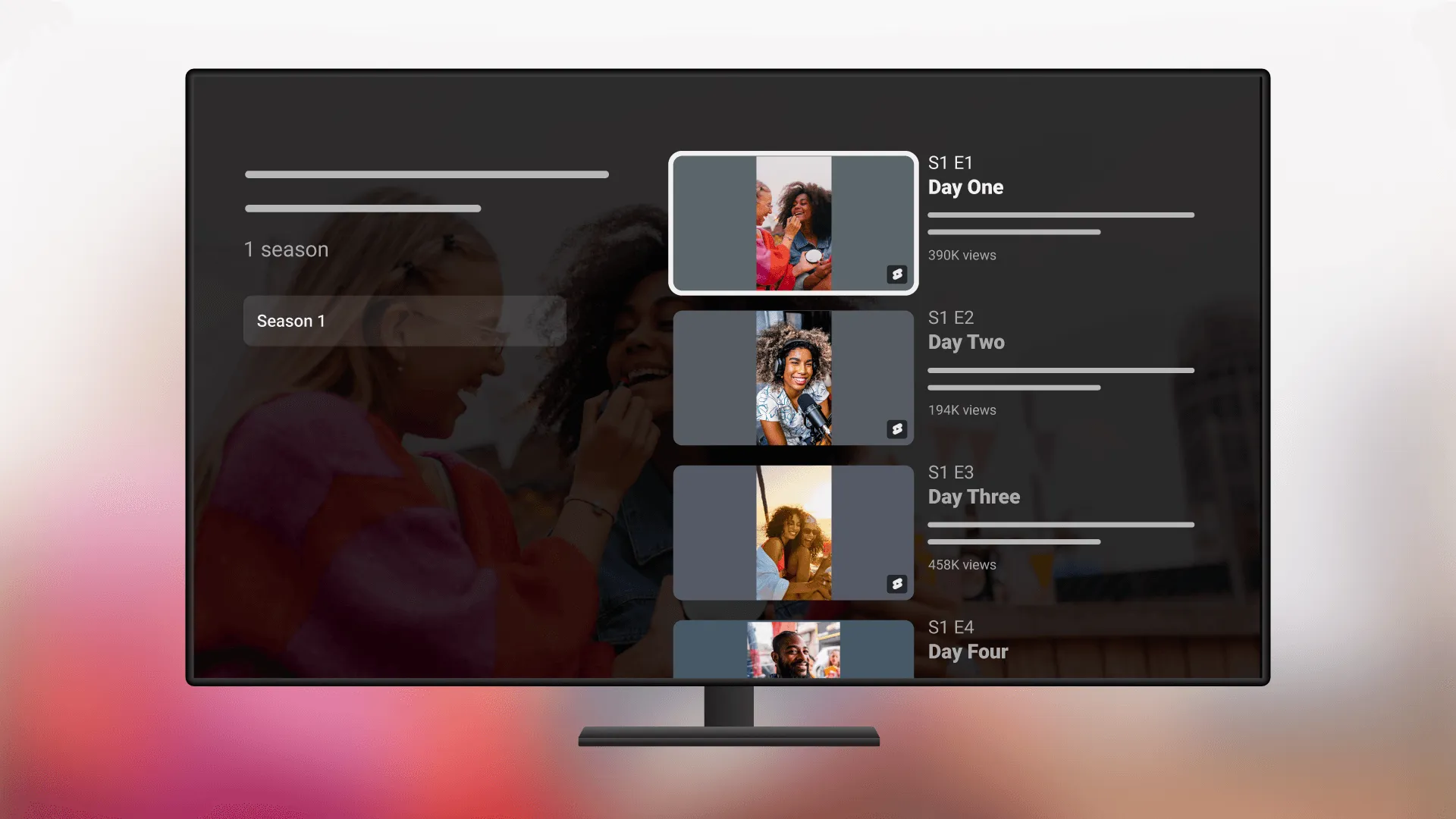
This change reduces the burden of hunting for the next video after a standalone Short. For serialized drama, beyond the discoverability of individual videos, what matters is whether people who find a work midway can be guided to the whole. YouTube cites Japan's GOKKO CLUB, among others, as an example of serialized production.
According to YouTube, short-form drama on the platform was played more than 6.5 billion times in the first half of 2026, with total watch time up more than 50% year over year. TV views rose more than 90%. The former is a rise in "time" and the latter in "views," so the figures aren't the same metric, but they help explain the push to let people continue on a big screen what they discovered on their phones.
Comments from TV, and image posts in Shorts
On TV, a feature for posting comments by voice input is also being added, so viewers can leave a reaction on the spot without switching to a smartphone. Creators' image posts and carousels will also extend to TV, where they can be viewed and interacted with from channel pages.
Image posts are already available in the Shorts feed on iPhone and Android. Display of posts on TV, meanwhile, will roll out to some markets over the coming months. Behind-the-scenes photos and updates that aren't worth making a full video for now have more places to reach viewers.
AI for editing, comparing and managing channels
Build a first draft by conversation, then refine by hand
Shorts and YouTube Create get conversational editing powered by Gemini. You choose photos or videos and create a rough edit from suggested prompts or your own words. From there you continue the conversation to trim silences, reorder clips or add text. Edits synced to the beat of music are also envisioned.
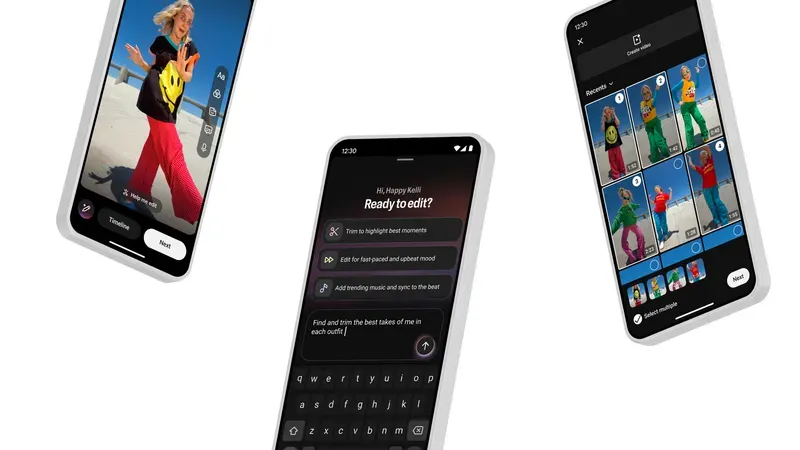
Because you can return to manual timeline editing, you don't have to leave every detail to the AI. The workflow is to assemble material through conversation and finish the timing and order yourself. YouTube has already brought Gemini Omni to Shorts and elsewhere, and this announcement moves that toward iterative editing by dialogue. The rollout to Android and iPhone begins in early 2027.
Ask Studio: linking pre-publish advice with post-publish improvement
In Ask Studio, you can get advice on titles, scripts, structure and more for video ideas before publishing. It also offers generation of thumbnails that suit the channel's look. Mobile support is planned for a global rollout within the year, so creators can bring production questions even when they don't have a computer open.
Studio also gains "Insights" and "Research." The former is a place to read a channel's performance, and the latter a place to look for ideas for the next project from standout videos and other examples. Ask Studio will also examine past videos and suggest and test opportunities to update thumbnails and reach new viewers. This help for improving older videos is planned for a global rollout in early 2027.
Video A/B tests versus audience-specific thumbnails
Two things in this round of production support are worth distinguishing: A/B testing of the video itself, and audience-specific thumbnails.
| Feature | What is compared or changed | What the creator can judge |
|---|---|---|
| Existing thumbnail A/B testing | Up to 3 thumbnails | Which image suits viewers |
| New video A/B testing | Up to 3 edited versions | Which edit, such as how the opening is presented, keeps viewers interested |
| Audience-specific thumbnails | Up to 3 images shown to match audience segments | Change the entry point depending on the viewer rather than fixing on one image |
Thumbnail comparison is an existing feature that also appears in the official March 2025 feature list. This time the comparison expands to edited versions of the footage. Video A/B testing is planned for a global rollout in 2027, and audience-specific thumbnails are described as coming later.
Different images change who clicks, and a different opening changes whether people keep watching. The aim is to let creators verify these separate production decisions inside Studio. However, details of the evaluation metrics and how much viewing would actually grow cannot be judged from this announcement alone.
Comments held for review based on personal judgment, not auto-deleted
AI comment management is an experimental feature that creators enable themselves. It learns tendencies from the history of comments they have removed manually and sends similar new comments to a tab awaiting review. A seven-day summary is also provided, but nothing is automatically deleted without the creator's consent. A trial is planned to begin within the year in desktop Studio.
The same wording can land differently depending on a channel's atmosphere. The design reflects each operator's judgment in selecting candidates to hold, reducing the effort of reviewing. The operator makes the final decision on whether to keep or remove a comment.
Likeness detection gets voice and mobile support
"Likeness detection," which looks for AI-generated content imitating a person, is also being expanded. From within the year, voice detection will be combined with face detection to improve matching accuracy. A feature will also be added to register from the mobile app, review match candidates and take action.
YouTube frames this as improved accuracy from combining face and voice, and as preparation for protecting audio further in the future. It would be premature to take it as a finished system that catches every unauthorized use of a voice alone. Being able to review detection results is also distinct from having them removed automatically.
Expanding live streaming and fan interaction
Watch With extends to long-form videos, with control for original creators
"Watch With" is a feature that lets creators add live reactions while watching a video. After trials at large live events and live co-viewing among streamers, it will extend to regular long-form videos that meet eligibility conditions. It can be started from "React live" on eligible videos.
The reacting creator receives the live stream's ad revenue and fan support. The original video's creator gets source attribution and credit toward viewing performance in YouTube Studio, and can also manage which videos may be reacted to. It was not announced that ad revenue from reaction streams is automatically shared with original creators.
Because this feature carries past videos into a new viewing setting, who receives revenue and how the original video is handled become practical conditions.
Finding co-stream partners, and lively viewer battles
"Go Live Together" is expanding toward finding partners who are already streaming. Previously you sent a link to invite guests who weren't streaming, but in early 2027 there will be a way to pick creators who are live and a way to be automatically matched with similar creators.
"Live showdowns," used during co-streams, is planned for 2027. Streamers compete against each other, and viewers' support through chat, gifts and Super Chat is reflected in on-screen scores. It is a format in which viewers can join the competition, turning fan support into an event shared by both communities.
Automatic live dubbing starts with English and Spanish trials
For live streams, a trial will also begin that turns what is being said into audio in another language in real time. It starts in early 2027 as a limited release, first with English and Spanish. It is separate from automatic dubbing of recorded videos.
Delivering translated audio during a stream would make it easier for viewers speaking different languages to take part at the same time. In live settings, however, there is no room to check a translation before it goes out. Japanese support and the delay and accuracy of translation have not yet been shown, and the results of this trial will be the basis for judging its practicality.
GIFs, members-only communities and group messaging
For fan interaction, YouTube also announced a comment feature that lets you post reactions from a GIF library, exclusive communities for paying members, and in-app group messaging. "Hype with Jewels" was introduced as a system in which viewers use Jewels to cheer on videos and creators earn Rubies.
These features add opportunities beyond per-video comment sections to interact continuously and support particular creators. The official list we could check does not include Japan launch dates or detailed conditions for each, so they can't be assumed to be uniformly available already.
From brand deals to shopping and music, connecting what comes after viewing
Studio support from pitching brands to using videos in ads
"YouTube Creator Partnerships," which handles brand deals, is now available in 20 countries. Ask Studio helps write pitches that fit a company's request and also helps adjust the Media Kit that conveys a channel's characteristics. These pitch-support features are rolling out in some markets and are planned to expand worldwide in early 2027.
Sharing access so companies can see a video's performance or promote the video as an ad will also be made easier through codes. Rather than AI automatically concluding contracts, it reduces the work involved in pitching and sharing results.
YouTube will also continue testing features for brand-mention segments within videos. Creators can bulk-insert a brand mention into up to 20 long-form videos and set targeting by region, and a product shelf with a call-to-action button is also provided. It makes previously uploaded videos easier to use for deals, but the condition remains that it is still in testing.
Shopping expands to 35 markets, with wider Amazon integration
The YouTube Shopping affiliate program is planned to expand to 35 markets by the end of 2026. Tagging of Amazon products, which began in the US, will expand to India and Brazil in the coming weeks, with more countries added by year-end.
With the new "Affiliate Campaigns," retailers and brands can request promotion of specific products and offer commission rates or bonuses that differ from the norm. Creators get more chances to weigh the products and terms they cover in their videos.
However, more supported countries is a separate matter from being able to sell the same product to viewers in any country. So this time YouTube is strengthening a mechanism that matches product tags to the viewer's location.
Local products for overseas viewers, with local commission rates
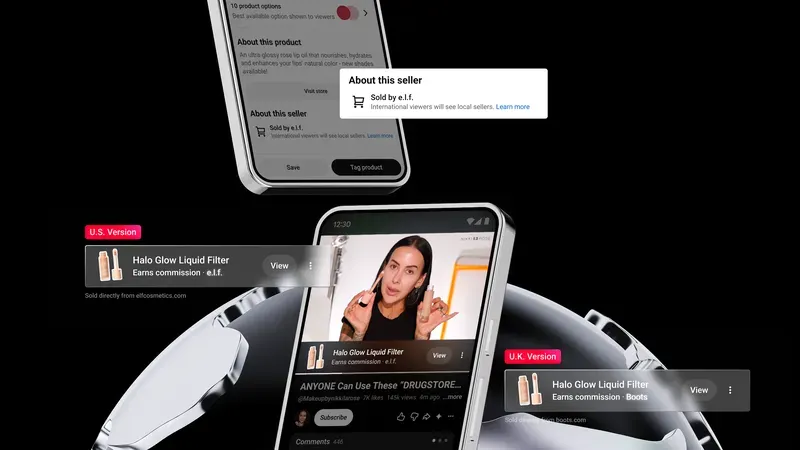
In handling international product tags, rather than passing the original retailer's URL straight to overseas viewers, YouTube maps it to the same product handled by a local retailer participating in YouTube Shopping. Beyond matching the product, YouTube says it checks local prices and stock and shipping availability based on retailer data.
One thing creators can't overlook is that the commission rate of the local retailer also applies, and it may differ from that of the original store. Also, for videos set as "paid product placement," sponsored product tags are not changed or localized. Performance by country and by retailer can be checked in Studio's detailed analytics.
Even if a video is watched abroad, a purchase is unlikely if the featured product can't be delivered. This change absorbs the differences in retailers and shipping conditions in between. But you can't assume commissions will grow at the same rate as views. Overseas results need to be judged by looking at sales by country together with actual commissions.
Ask Music, and a weekly audio guide to podcasts
YouTube Music is also expanding conversational controls. "Ask Music" adds the ability to adjust your queue and ask about an artist's background. Beyond finding songs, the direction is to take requests to change how you listen on the spot.
"Your podcast lineup" introduces recommended shows by voice each week, explaining why they might suit you before moving on to the recommended episode. It is not a feature that summarizes an entire show and plays it in place of the show; it is a guide for choosing what to listen to next. Both are said to be coming soon worldwide for YouTube Music paid users and YouTube Premium members.
Production, discovery and monetization gather in one place
What this set of features shows is a push to let decisions after a video is made be handled inside YouTube. AI drafts an edit, different edits are compared, and series encourage continued viewing. Beyond that, it connects to pitches to brands and product promotion overseas. For creators, that means less back-and-forth between tools, but also more production and revenue decisions entrusted to YouTube's features.
In Japan, first check whether your own account has access in Studio or the app; for video comparison, verify the evaluation metrics, and for product promotion, the retailers and commission rates. How useful next year's conversational editing and live translation will be in each language and production setting also remains to be judged. If usage conditions and actual results line up, this announcement would cut the effort of making new videos while widening the options for getting existing work in front of different viewers.