

テクノロジー
GoogleのDreambeansは、個人AIを「毎朝届く有限のストーリー」に変える実験だ
Googleの新実験「Dreambeans」は、ユーザーのGmailやカレンダー等の情報を基に、パーソナライズされた日々のストーリーを毎朝自動生成する。明示的な質問を待たず、AIが個人の文脈を先回りして編集・視覚化する新たな体験の構築を目指している。

Google AI Ultraは、Googleが提供する生成AIサービス群の中で最上位に位置する個人向けサブスクリプションプランであり、月額249.99ドルで提供される。GeminiやNotebookLM、Google Workspace、Chromeなど、Google全体に広がるAI機能に対して最も高い利用上限と最先端モデルへの優先アクセスを提供する位置づけにある。中位プランであるGoogle AI Proの上位互換として設計されており、AIを日常的かつ高頻度に利用するパワーユーザーや専門職を主な想定利用者としている。
Ultraプランの中核は、Geminiの最上位モデルへのアクセスと、各種プロダクトにおける利用回数上限の大幅な拡張である。Google検索のAIモードやNotebookLMのリサーチ機能、Workspace内の文書生成支援、Chromeブラウザの自動操作機能など、テキスト生成に限らず動画生成や画像生成、エージェント型のタスク代行まで幅広い機能が一つの契約でまとめて提供される点が特徴だ。無料プランや下位有料プランでは制限される利用回数や機能の一部が、Ultraでは実質的に解放される構造になっている。
Google AI Ultraは単体の技術ではなく、Googleが展開する複数のAI技術を統合的に消費するための契約上の枠組みである。基盤となるのはGoogle DeepMindが開発するGeminiシリーズであり、その最新かつ最も計算資源を要するモデルへの優先的なアクセス権がUltra利用者に付与される。加えて、検索、ブラウザ、オフィスソフトウェア、リサーチツールといった既存プロダクト群にGeminiを組み込む形でAI機能が拡張されており、Ultraはこれらすべてを横断的に、かつ高頻度で利用したいユーザー向けの受け皿として位置づけられている。
Google AI Ultraを取り巻く一連の動向として、Googleは2025年7月にGeminiの上級版が国際数学オリンピックで金メダルに相当する成績を収めたと発表し、Ultraプランで提供される最上位モデルの性能の高さを印象づけた。同年9月上旬には、Geminiの利用制限が公式ヘルプページで初めて具体的な数値として公開され、無料プランと有料プラン(Google AI ProおよびUltra)の間で利用上限がどの程度異なるかが明確化された。12月16日には、Google Labsが実験的なAIエージェント「CC」を発表し、メールという既存の手段を通じて日々のタスクを支援する新しい体験を示した。2026年に入ってからは、1月29日にChromeへGemini 3を基盤とした自動操作機能「オートブラウズ」が追加され、ブラウザがユーザーの代わりにページを操作する仕組みが導入された。4月には検索のAIモードにエージェント機能が加わり180カ国へ展開されるとともに、NotebookLMには「Cinematic Video Overviews」機能が実装され、リサーチ支援ツールが映像生成まで担うようになった。6月にはGoogle Workspace全体でGemini統合が大幅に更新され、文書やスプレッドシート作成へのAI活用が進んだほか、実験的サービス「Dreambeans」が公開され、ユーザーの文脈を先回りして日々のストーリーを自動生成する試みも始まっている。これら一連の機能拡充は、いずれもGoogle AI Ultraが提供する利用価値を高める要素として位置づけられている。
Googleの新実験「Dreambeans」は、ユーザーのGmailやカレンダー等の情報を基に、パーソナライズされた日々のストーリーを毎朝自動生成する。明示的な質問を待たず、AIが個人の文脈を先回りして編集・視覚化する新たな体験の構築を目指している。
Googleが発表したGoogle Workspace(ドキュメント、スプレッドシート、スライド、ドライブ)全体にわたるGeminiの大幅なアップデートは、オフィスソフトウェアの進化におけるひとつの到達点を示している。 […]
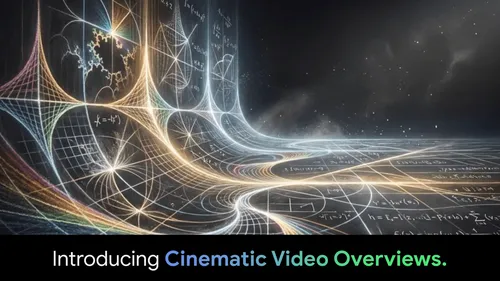
Googleが提供するリサーチ支援ツール「NotebookLM」は、最早テキスト要約ツールの域を完全に逸脱し、次世代のマルチメディア・ナレッジハブへと変貌を遂げつつある。そして今回同社は、ユーザーがアップロードした膨大な […]

Googleは2026年1月29日、同社のWebブラウザ「Chrome」に対して、最新のAIモデル「Gemini 3」を基盤とした大規模なアップデートを開始した。 これまでのブラウザにおけるAI機能が、ページの要約や文章 […]

2025年12月16日(米国時間)、Googleのイノベーション部門であるGoogle Labsは、私たちの「朝の習慣」を根本から覆す可能性を秘めた新たな実験的AIサービスを発表した。その名は「CC」。 これは、単なるA […]

これまで「限定的」「拡張的」といった曖昧な言葉のベールに包まれていたGoogleの生成AI「Gemini」の利用制限について、Googleは2025年9月上旬、公式ヘルプページを更新し、無料プランから有料の「Google […]

Googleが検索エンジンの未来を再定義する大きな一歩を踏み出した。同社は検索機能に実験的に追加していた「AIモード」に新たなエージェント(自律型AI)機能を追加し、レストラン予約といった具体的なタスクの自動化を開始する […]
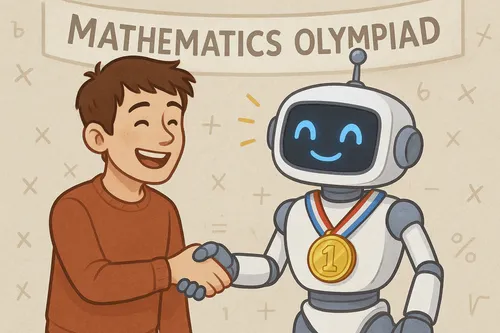
2025年7月、AIの歴史に新たな一章が刻まれた。Google DeepMindが開発したAIモデル「Gemini」の上級版が、世界で最も権威ある若き数学者のための競技会「国際数学オリンピック(IMO)」において、金メダ […]

月額200ドル。この価格は、もはや最先端AIサービスにおける一つの「標準」となりつつある。AI検索の急先鋒、Perplexity AIが発表した新プラン「Perplexity Max」は、まさにこの潮流のど真ん中に位置す […]

Google I/O 2025で発表された数々の新技術の中でも、ひときわ大きな注目を集めているのが、ビデオ会議サービス「Google Meet」に搭載されるAIを活用したリアルタイム音声翻訳機能だろう。これは単なる文字起 […]

Googleは、開発者会議「Google I/O 2025」において、動画・画像生成AIモデルのアップデート、そしてそれらを統合する新たな制作ツール群を発表した。特に注目されるのは、音声生成まで可能になった動画モデル「V […]

Googleは、年次開発者会議「Google I/O 2025」において、主力AIモデル「Gemini 2.5 Pro」に新たな「Deep Think」モードを導入すると発表した。この画期的な機能は、AIの推論能力を飛躍 […]
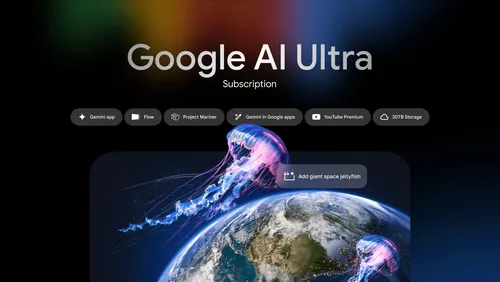
Googleが年次開発者会議Google I/O 2025の壇上で、同社のAI技術の粋を集めた新たなサブスクリプションプラン「Google AI Ultra」を発表した。月額$249.99(日本円で約3万7千円 ※1ドル […]
Abstract Increasing evidence suggests that high consumption of ultra-processed foods (UPF) is associated with an increase in non-communicable diseases, overweight and obesity. The present study systematically reviewed all observational studies that investigated the association between UPF consumption and health status. A comprehensive search of MEDLINE, Embase, Scopus, Web of Science and Google Scholar was conducted, and reference lists of included articles were checked. Only cross-sectional and prospective cohort studies were included. At the end of the selection process, twenty-three studies (ten cross-sectional and thirteen prospective cohort studies) were included in the systematic review. As regards the cross-sectional studies, the highest UPF consumption was associated with a significant increase in the risk of overweight/obesity (+39 %), high waist circumference (+39 %), low HDL-cholesterol levels (+102 %) and the metabolic syndrome (+79 %), while no significant associations with hypertension, hyperglycaemia or hypertriacylglycerolaemia were observed. For prospective cohort studies evaluating a total population of 183 491 participants followed for a period ranging from 3·5 to 19 years, highest UPF consumption was found to be associated with increased risk of all-cause mortality in five studies (risk ratio (RR) 1·25, 95 % CI 1·14, 1·37; P < 0·00001), increased risk of CVD in three studies (RR 1·29, 95 % CI 1·12, 1·48; P = 0·0003), cerebrovascular disease in two studies (RR 1·34, 95 % CI 1·07, 1·68; P = 0·01) and depression in two studies (RR 1·20, 95 % CI 1·03, 1·40; P = 0·02). In conclusion, increased UPF consumption was associated, although in a limited number of studies, with a worse cardiometabolic risk profile and a higher risk of CVD, cerebrovascular disease, depression and all-cause mortality.
BACKGROUND Amidst the increasing use of AI in medical research, this study specifically aims to assess and compare the accuracy and credibility of openAI's GPT-4 and Google's Gemini in their ability to generate medical research introductions, focusing on the precision and reliability of their citations across five medical fields. METHODS We compared the two models, OpenAI's GPT-4 and Google's Gemini Ultra, across five medical fields, focusing on the credibility and accuracy of citations, alongside the analysis of introduction length and unreferenced data. RESULTS Gemini outperformed GPT-4 in reference precision. Gemini's references showed 77.2 % correctness and 68.0 % accuracy, compared to GPT-4's 54.0 % correctness and 49.2 % accuracy (p < 0.001 for both). This 23.2 percentage point difference in correctness and 18.8 in accuracy represents an improvement in citation reliability. GPT-4 generated longer introductions (332.4 ± 52.1 words vs. Gemini's 256.4 ± 39.1 words, p < 0.001) but included more unreferenced facts and assumptions (1.6 ± 1.2 vs. 1.2 ± 1.06 instances, p = 0.001). CONCLUSION While Gemini demonstrates significantly superior performance in generating credible and accurate references for medical research introductions, both models produced fabricated evidence, limiting their reliability for reference searching. This snapshot comparison of two prominent AI models highlights the potential and limitations of AI in academic content creation. The findings underscore the critical need for verification of AI-generated academic content and call for ongoing research into evolving AI models and their applications in scientific writing.
Intelligent edge vision tasks encounter the critical challenge of ensuring power and latency efficiency due to the typically heavy computational load they impose on edge platforms. This work leverages one of the first “Artificial Intelligence (AI) in sensor” vision platforms, IMX500 by Sony, to achieve ultra- fast and ultra-low-power end-to-end edge vision applications. We evaluate the IMX500 and compare it to other edge platforms, such as the Google Coral Dev Micro and Sony Spresense, by exploring gaze estimation as a case study. We propose TinyTracker, a highly efficient, fully quantized model for 2D gaze estimation designed to maximize the performance of the edge vision systems considered in this study. TinyTracker achieves a 41x size reduction (~ 600Kb) compared to iTracker [1] without significant loss in gaze estimation accuracy (maximum of 0.16 cm when fully quantized). TinyTracker's deployment on the Sony IMX500 vision sensor results in end-to-end latency of around 19ms. The camera takes around 17.9ms to read, process and transmit the pixels to the accelerator. The inference time of the network is 0.86ms with an additional 0.24 ms for retrieving the results from the sensor. The overall energy consumption of the end-to-end system is 4.9 mJ, including 0.06 mJ for inference. The end-to-end study shows that IMX500 is 1.7x faster than Coral Micro (19ms vs 34.4ms) and 7x more power efficient (4.9mJ VS 34.2mJ).
Nutrition is vital for athletic performance, especially in ultra-endurance sports, which pose unique nutritional challenges. Despite its importance, there exist gaps in the nutrition knowledge among athletes, and emerging digital tools could potentially bridge this gap. The ULTRA-Q, a sports nutrition questionnaire adapted for ultra-endurance athletes, was used to assess the nutritional knowledge of ChatGPT-3.5, ChatGPT-4, Google Bard, and Microsoft Copilot. Their performance was compared with experienced ultra-endurance athletes, registered sports nutritionists and dietitians, and the general population. ChatGPT-4 demonstrated the highest accuracy (93%), followed by Microsoft Copilot (92%), Bard (84%), and ChatGPT-3.5 (83%). The averaged AI model achieved an overall score of 88%, with the highest score in Body Composition (94%) and the lowest in Nutrients (84%). The averaged AI model outperformed the general population by 31% points and ultra-endurance athletes by 20% points in overall knowledge. The AI model exhibited superior knowledge in Fluids, outperforming registered dietitians by 49% points, the general population by 42% points, and ultra-endurance athletes by 32% points. In Body Composition, the AI model surpassed the general population by 31% points and ultraendurance athletes by 24% points. In Supplements, it outperformed registered dietitians by 58% points and the general population by 55% points. Finally, in Nutrients and in Recovery, it outperformed the general population only, by 24% and 29% points, respectively. AI models show high proficiency in sports nutrition knowledge, potentially serving as valuable tools for nutritional education and advice. AI-generated insights could be integrated with expert human judgment for effective athlete performance optimization.
Ultra-low-field magnetic resonance imaging (ULF-MRI), operating below 0.2 Tesla, is gaining renewed interest as a re-emerging diagnostic modality in a field dominated by high- and ultra-high-field systems. Recent advances in magnet design, RF coils, pulse sequences, and AI-based reconstruction have significantly enhanced image quality, mitigating traditional limitations such as low signal- and contrast-to-noise ratio and reduced spatial resolution. ULF-MRI offers distinct advantages: reduced susceptibility artifacts, safer imaging in patients with metallic implants, low power consumption, and true portability for point-of-care use. This narrative review synthesizes the physical foundations, technological advances, and emerging clinical applications of ULF-MRI. A focused literature search across PubMed, Scopus, IEEE Xplore, and Google Scholar was conducted up to August 11, 2025, using combined keywords targeting hardware, software, and clinical domains. Inclusion emphasized scientific rigor and thematic relevance. A comparative analysis with other imaging modalities highlights the specific niche ULF-MRI occupies within the broader diagnostic landscape. Future directions and challenges for clinical translation are explored. In a world increasingly polarized between the push for ultra-high-field excellence and the need for accessible imaging, ULF-MRI embodies a modern “David versus Goliath” theme, offering a sustainable, democratizing force capable of expanding MRI access to anyone, anywhere.