
テクノロジー
Palantir CEO「AIが大量移民を不要にする」:ダボス会議で語られたホワイトカラーの終焉と肉体労働の復権
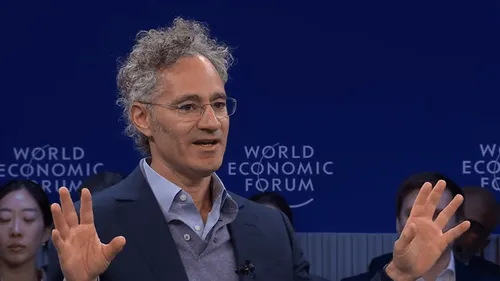
スイス・ダボスで開催されたWorld Economic Forum (WEF)。世界の政財界トップが集うこの場所で、データ分析企業Palantir TechnologiesのCEO、Alex Karp氏が放った一連の発言 […]

別名: Alexander Karp
データ分析企業Palantir Technologiesの共同創業者でありCEO。スタンフォード大学で法務博士、フランクフルトのゲーテ大学で社会理論の博士号を取得。AIの社会的影響や地政学、市民的自由に関する挑発的な発言で知られる。
Summary: Microbes drive most ecosystems and are modulated by viruses that impact their lifespan, gene flow and metabolic outputs. However, ecosystem-level impacts of viral community diversity remains difficult to assess due to classification issues and few reference genomes. Here we establish a ~12-fold expanded global ocean DNA virome dataset of 195,728 viral populations, now including the Arctic Ocean, and validate that these populations form discrete genotypic clusters. Meta-community analyses revealed five ecological zones throughout the global ocean, including two distinct Arctic regions. Across the zones, local and global patterns and drivers in viral community diversity were established for both macrodiversity (inter-population diversity) and microdiversity (intra-population genetic variation). These patterns sometimes, but not always, paralleled those from macro-organisms and revealed temperate and tropical surface waters and the Arctic as biodiversity hotspots and mechanistic hypotheses to explain them. Such further understanding of ocean viruses is critical for broader inclusion in ecosystem models.
EcoCyc (http://EcoCyc.org) is a model organism database built on the genome sequence of Escherichia coli K-12 MG1655. Expert manual curation of the functions of individual E. coli gene products in EcoCyc has been based on information found in the experimental literature for E. coli K-12-derived strains. Updates to EcoCyc content continue to improve the comprehensive picture of E. coli biology. The utility of EcoCyc is enhanced by new tools available on the EcoCyc web site, and the development of EcoCyc as a teaching tool is increasing the impact of the knowledge collected in EcoCyc.