
サイエンス
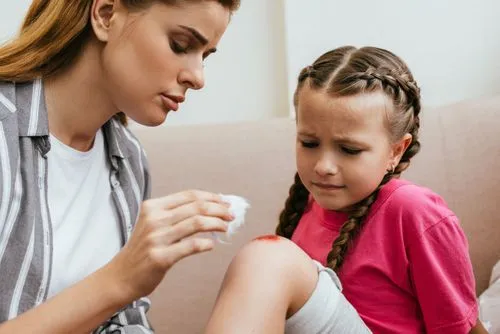
慰めるべきか、それとも我慢させるべきか?親が子どもの痛みへの反応を形作る方法
それはスローモーションで起こる。6歳の娘が学校の送迎時に遊び場を全速力で走っていて、つま先が不規則な地面に引っかかる。彼女は激しく転ぶ。 遊び場は静まり返る。彼女は固まり、あなたをまっすぐ見上げる。その一瞬、彼女はあなた […]

別名: ジョシュア・パテ
シドニー工科大学(UTS)で理学療法学の上級講師を務める研究者。子供の痛みに関する認識や、痛みの科学教育を専門としており、親の反応が子供の痛みの経験にどのように影響するかについての知見を発信している。
Harvard T H Chan School of Public Health, Boston, MA, USA (M E Kruk MD, A D Gage MSc, C Arsenault PhD, H H Leslie PhD, S Roder-DeWan MD); New York University College of Global Public Health, New York, NY, USA (K Jordan MSc); The World Bank, Washington, DC, USA (O Adeyi MD); Institute for Healthcare Improvement, Cambridge, MA, USA (P Barker MD); WHO, Geneva, Switzerland (B Daelmans MD, E Kelley MD); Mexican Institute of Social Security, Mexico City, Mexico (S V Doubova MD); KEMRI—Wellcome Trust Research Programme, Nairobi, Kenya (M English MD); Institute for Clinical Effectiveness and Health Policy, Buenos Aires, Argentina (E G Elorrio MD); Inter-American Development Bank, Washington, DC, USA (F Guanais PhD); WHO Collaborating Centre for Research and Training in Mental Health, Neuroscience, Drug and Alcohol Abuse, University of Ibadan, Ibadan, Nigeria (Prof O Gureje PhD); Northwestern University Feinberg School of Medicine, Chicago, IL, USA (Prof L R Hirschhorn MD); National Centre for Cardiovascular Disease, Beijing, China (L Jiang MD); Federal Ministry of Health of Ethiopia, Addis Ababa, Ethiopia (E T Lemango MD); Bill & Melinda Gates Foundation, Seattle, WA, USA (J Liljestrand MD); Malawi High-quality health systems in the Sustainable Development Goals era: time for a revolution
Pain science education can be used as part of treatment and prevention for chronic pain in children. We assessed the effectiveness of pain science education on knowledge, beliefs, attitudes, and behaviors in children and the people that care for children. We set a minimum criterion for education to address pain biology knowledge. We included studies aimed at both treatment and prevention of chronic pain. We conducted searches using five databases. We assessed the risk of bias using the Cochrane Risk of Bias 2 tool. Data were pooled using a random-effects meta-analysis or assessed using a narrative synthesis. The certainty of evidence was assessed using the GRADE. We screened 14505 records and included seven studies involving 351 caregivers and 1285 children. Four studies were included in meta-analyses. We found low certainty evidence that PSE has a large beneficial effect on caregiver knowledge and beliefs compared to alternative education (SMD=1.14 (95%CI: 0.88 to 1.42; I²=0%). We found no difference in functional disability in children with chronic pain after PSE (FDI score MD=0.73 (95%CI: -0.81 to 2.27; I=0%). Narrative syntheses showed low certainty evidence for improved knowledge and beliefs in children with preventative and treatment effects. Overall we found few studies, and along with high risk of bias, this significantly contributed to the low certainty of findings. The effect of learning pain science for both preventative and treatment effects in children, carers and the child/carer dyad remain mostly unknown. This review was prospectively registered with PROSPERO (CRD42022344382) on 22 July 2022. PERSPECTIVE: This review examines the effect of pain science education (PSE) on pain-related knowledge, beliefs, attitudes, and behaviors in children and the people that care for children (0-18). The findings contribute to knowledge about pain treatments and health promotion for caregivers of children with and without chronic pain. Clear recommendations for improving the quality of evidence in future studies are outlined.
Limited research has evaluated the validity of claims‐based definitions for deprescribing.