

テクノロジー

Proton is a collection of tools, including a modified version of Wine, developed by Valve to allow Windows-exclusive video games to run on Linux-based operating systems like SteamOS. It is a core component of the Steam Deck's software stack.
This paper describes the reconstruction of electrons and photons with the ATLAS detector, employed for measurements and searches exploiting the complete LHC Run 2 dataset. An improved energy clustering algorithm is introduced, and its implications for the measurement and identification of prompt electrons and photons are discussed in detail. Corrections and calibrations that affect performance, including energy calibration, identification and isolation efficiencies, and the measurement of the charge of reconstructed electron candidates are determined using up to 81 fb−1 of proton-proton collision data collected at √ s = 13TeV between 2015 and 2017.
Solid-state proton conductors (SSPCs), which are a key component for the safety and efficiency of fuel cells, have received much attention due to their broad application in electrochemical devices. In particular, the development of new materials with high conducting performance and an understanding of the conduction mechanism have become critical issues in this field. Porous metal-organic frameworks (MOFs) or porous coordination polymers (PCPs) have recently emerged and have been extensively studied as a new type of proton conductor due to their crystallinity, designability, and high porosity. These properties are able to adsorb the guest molecules working as conducting media. During the past decade, major advances in proton-conductive MOFs have been achieved with high performance (>10-2 S cm-1), comparable to the conventional material, via various synthetic strategies, and the veiled conduction mechanism has been elucidated through structure analysis and spectroscopy tools such as NMR, X-ray diffraction, and neutron scattering measurement. This Review aims to summarize and provide a comprehensive understanding of proton transport in MOFs. Here, we discuss the fundamental principles and various design strategies and implementations aimed at enhancing proton conductivity with representative examples. We also deal with characterization methods used to investigate proton-conductive MOFs and computational/theoretical studies that aid in understanding the conduction mechanism. Finally, future endeavors are suggested regarding the challenges of research for practical SSPCs.
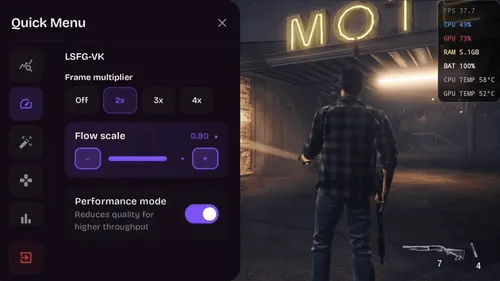
AndroidデバイスでPCゲームをネイティブ実行するGameNativeが、フレーム生成技術「LSFG-VK」を統合した。これにより、従来の重いPCゲームも高フレームレートで動作可能となり、モバイルデバイスの高リフレッシュレートディスプレイを最大限に活用できるようになった。

Valveは、Linux上でWindowsゲームを動かす互換レイヤー「Proton 11.0 Beta 1」を公開した。これはWine 11.0ベースへの更新に加え、Proton Experimentalで先行していた多くのゲームタイトルや修正がベータ版に移行し、安定した互換性改善をより広いユーザーに提供する。特にX-Plane 12のような重量級タイトルへの対応や、周辺コンポーネントの広範な更新により、単なるゲーム追加に留まらない実利用での安定化と将来的なARM対応への布石が示された。

Electronic Arts(以下EA)が、自社のマルチプレイヤーゲームにおける根幹システムに構造的な転換をもたらそうとしている。同社が新たに公開した「シニア・アンチチート・エンジニア(ARM64)」の求人情報から、同 […]

PCゲーム配信のGOG.com(以下、GOG)が、大きな変化を遂げようとしている。長年、Linuxコミュニティから熱望されながらも実現に至らなかった「GOG Galaxy」のLinuxネイティブ対応がついに動き出したのだ […]

2025年のPCゲーミング業界は、こと“Linux”においては、かつてない躍進が見られている事は間違いない。 そして今回、Fedoraをベースとしたゲーミング特化型Linuxディストリビューション「Bazzite」の開発 […]

2000年代初頭のPCゲームシーンを彩った数々の名作。その多くが採用したグラフィックスAPI「Direct3D 7」。現代のOSでは動作が困難なこれらのタイトルを、最新のLinux環境で蘇らせる画期的なオープンソースプロ […]

Valveが運営する世界最大のPCゲームプラットフォーム「Steam」が、最新のベータ版クライアントに「セキュアブート」および「TPM」の有効状態を検出する機能を追加した。これは、今後の大型タイトルでチート対策としてこれ […]

長年、IT業界の片隅で囁かれ続けてきたジョークがある。「来年こそが、デスクトップLinuxの年だ」。それは、期待と自嘲が入り混じった、オープンソースコミュニティの合言葉のようなものだった。だが、2025年の夏、そのジョー […]
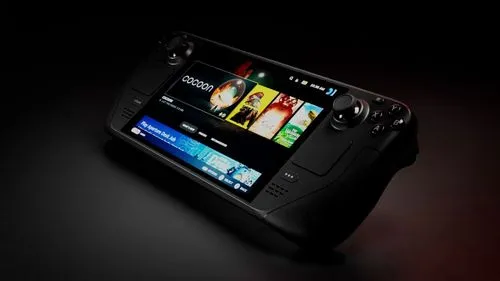
Ars Technicaが公開した最新のベンチマークテストが、業界に衝撃を与えている。Lenovoの携帯ゲーミングPC「Legion Go S」において、ValveのSteamOSがMicrosoftのWindows 1 […]
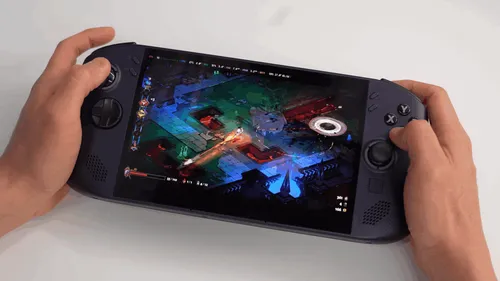
Lenovoの携帯ゲーミングPC「Legion Go S」において、搭載OSによる性能差が大きな注目を集めている。人気YouTuberのDave Lee氏(Dave2D)が実施した詳細な比較テストにより、Valve社のL […]