


There's little doubt that TSMC now dominates cutting-edge semiconductor manufacturing, but this situation may be about to change. According to a recent report from analyst Jeff Pu, Apple and NVIDIA—two of the biggest names driving today's tech industry—are showing strong interest in adopting Intel's next-generation process, "14A." If this comes to fruition, it could reshape not only the fate of Intel, a company that has struggled for years and now stands on the edge of a cliff, but also the entire power structure of the semiconductor industry, currently topped by TSMC.
Intel on the Edge: The Last Trump Card Called "14A"
To understand this story, we first need to grasp just how dire Intel's situation has become. The company that once ruled the semiconductor market has fallen significantly behind TSMC and Samsung in process miniaturization in recent years, and its prestige has plummeted. Its stock price has languished, dropping 8.5% following its most recent Q2 earnings report. There's no denying that the company is losing the market's confidence.
Amid this adversity, the future of Intel's foundry business rests entirely on "Intel 14A," a 1.4nm-class process targeting mass production by 2028. Built on the backside power delivery technology "PowerVia" introduced with Intel 20A, this process integrates the next-generation transistor architecture "RibbonFET (2nd generation)" with a new power delivery technology called "PowerDirect"—truly a distillation of the company's technical prowess. The stated goals are a 15-20% performance improvement and a 25% reduction in power consumption compared to the preceding 18A process.
However, this future is by no means guaranteed. New CEO Lip-Bu Tan, who took office in April, issued an extremely stern ultimatum to investors: "If we cannot secure major external customers for Intel 14A, we may withdraw entirely from cutting-edge manufacturing (Japanese)." This means that 14A isn't just a new technology—it's the "last trump card" upon which the very survival of Intel's foundry business hinges. Failure is no longer an option; the company has its back against the wall.
Why Is Apple Looking to Intel Now?
It might be one of history's great ironies that Apple's name is now emerging as the leading candidate for this "major customer." Why would Apple—the very company that eliminated Intel chips from its products and achieved the transition to "Apple Silicon"—be looking to move closer to Intel once again? Behind this lies, it seems, three extremely calculated and strategic reasons.
1. The "Invisible Risk" of TSMC Over-Concentration
Currently, the heart of Apple's products—the A-series for iPhone and M-series for Mac—are all manufactured exclusively by TSMC. There's no question that TSMC's technical prowess and production capacity are the best in the world. However, this over-concentration carries a "geopolitical risk" that Apple cannot ignore. Rising tensions surrounding the Taiwan Strait could, in a worst-case scenario, shake Apple's supply chain to its core. Diversifying production sites to hedge against this risk is simply a natural conclusion for corporate management.
2. The Strategic Value of "Made-in-America Chips"
The fact that Intel's fabs are located on U.S. soil now carries decisive importance. As seen in the "CHIPS Act" promoted by the previous Biden administration and the tariff policies of the current Trump administration, the United States has made bringing the semiconductor supply chain back home a matter of national strategy. For Apple to partner with Intel means riding this major wave and reaping the benefits of supply chain stability and national security. This isn't merely a cost issue—it's a strategic investment aimed at securing future business continuity.
3. Securing Negotiating Power and Driving Technological Competition
Continuing to depend solely on TSMC as an irreplaceable partner could weaken Apple's position in price negotiations and production allocation. By having Intel as a powerful alternative, Apple can negotiate more advantageously with TSMC. Furthermore, a situation where TSMC and Intel compete in technology development to win over a massive customer like Apple would ultimately benefit Apple itself, allowing it to obtain higher-performance chips on better terms.
For these reasons, the scenario in which Apple manufactures a portion of its "M8" generation chips—expected to arrive around 2028—using Intel 14A becomes extremely plausible.
Is NVIDIA Joining In Too? New Rules of the Game in the AI Era
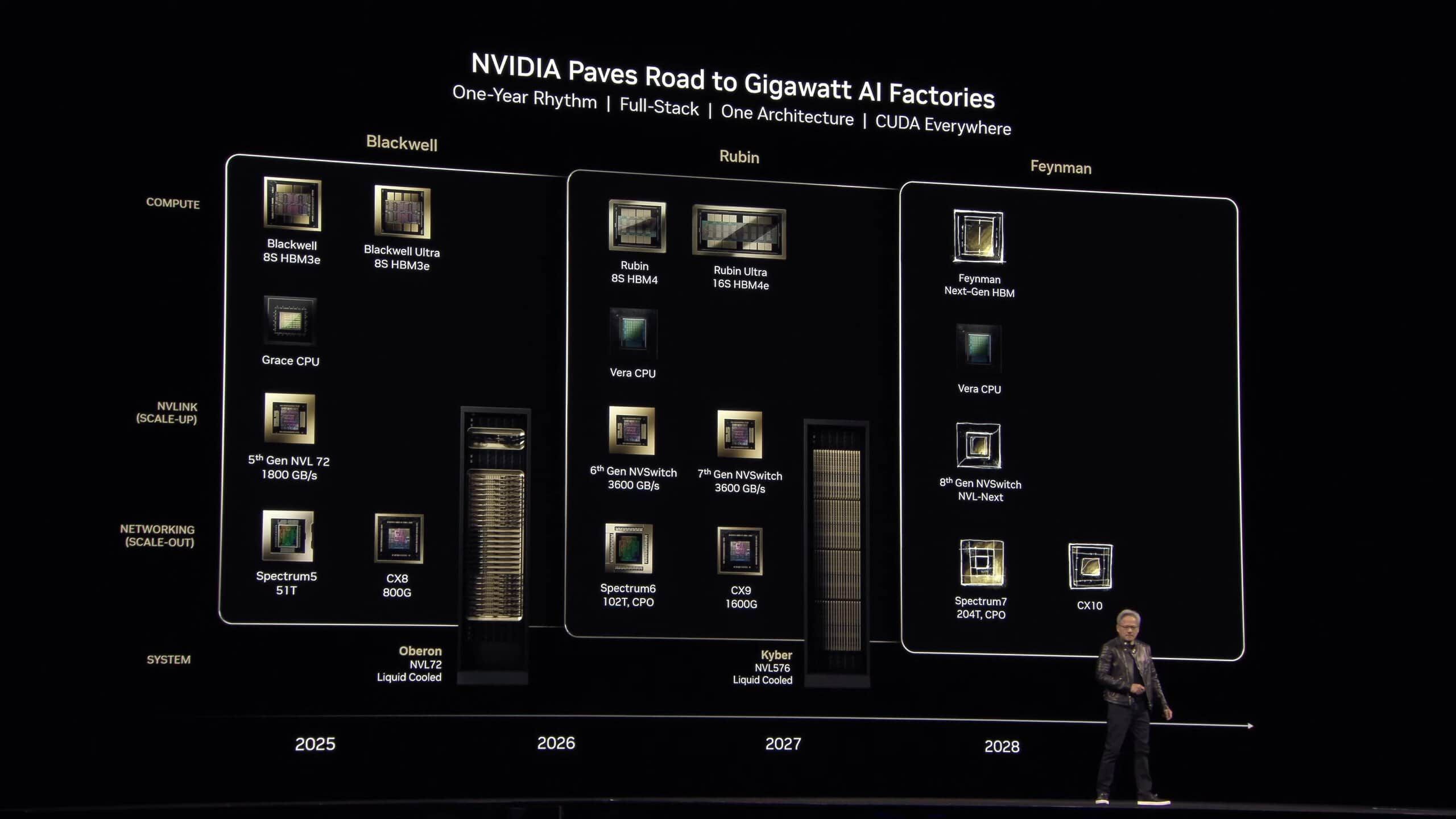
Even more intriguing is the report that NVIDIA is showing interest in this same move. NVIDIA's AI accelerators are now in extremely high demand across data centers worldwide. Relying on TSMC alone to meet this explosive demand carries inherent limitations and risks.
According to the report, NVIDIA is first considering adopting Intel 14A for its "budget-tier gaming GPUs." Rather than immediately taking a risk with its most critical product—AI chips—it's reasonable to view this as a "pilot program" to first test Intel's capabilities and reliability. If Intel can prove it delivers the expected performance and yield here, the path could open for the company to eventually be entrusted with manufacturing NVIDIA's flagship products, such as the rumored "Feynman" architecture AI chips expected in 2028.
This suggests that the rules of the game in the semiconductor industry are shifting. Traditionally, fabless companies (Apple and NVIDIA) chose their foundry (TSMC). But now, as we enter the AI era, foundries with strong manufacturing capacity themselves are becoming scarce strategic assets—and fabless companies are increasingly competing to secure them.
The Battle for Supremacy in 2028: Intel vs. TSMC, and the Dark Horses
If things proceed as expected, the advanced process market in 2028 will become the stage for a fierce battle for supremacy, with Intel's "14A" going head-to-head against TSMC's planned "A14" (1.4nm), set to launch around the same time.
What will determine the winner? It won't be catalog specs alone.
- Yield: What percentage of chips produced meet the designed performance specifications as functional products?
- Capacity: Can the scale required to meet massive demand be secured?
- Reliability: Can high-quality chips be supplied consistently and on schedule?
These are precisely the areas where Intel has struggled over the past several years. To win back the trust of extraordinarily demanding customers like Apple and NVIDIA, the company will need not just technical breakthroughs but rock-solid execution.
Meanwhile, this competition isn't a closed game between just two players. South Korea's Samsung is also eagerly eyeing a comeback, and Japan's newly formed Rapidus, backed by strong government support, is aiming to enter the market with its 2nm process. The geopolitical multipolarization of the semiconductor supply chain may only accelerate further from here.
More Than Just Rumors: The Prelude to Semiconductor Industry Realignment
The news that Apple and NVIDIA are showing interest in Intel 14A isn't merely gossip about the rise and fall of one company. It's a challenge to TSMC's dominance, a manifestation of the broader trend toward reshoring American manufacturing, and nothing less than the prelude to an industry realignment triggered by the structural shift in semiconductor demand brought about by AI.
Of course, Intel's revival is far from guaranteed. Given the company's history of repeated delays, deep-seated skepticism remains understandable. However, with a potential partnership with Apple—arguably the best possible partner candidate—there's real potential for this giant, backed into a corner, to unlock its full capabilities.
Will Intel manage to regain lost trust and rise once again to stand shoulder-to-shoulder with TSMC? And what final decisions will Apple and NVIDIA, who hold the keys to this fateful outcome, ultimately make?
Sources