


Has the iPhone become "boring" in recent years? Each new model unveiled every autumn has steadily evolved with faster chips and more capable cameras. Yet at the same time, major design transformations have receded into the background, and it's true that many users have come to see it as "a repetition of minor tweaks." But that period of silence may be about to end. According to information reported by Bloomberg's Mark Gurman, Apple is preparing what may be the most ambitious plan in the product's history: a large-scale redesign of the iPhone for three consecutive years, from 2025 through 2027.
Why a "Three-Year Design Revolution" Now? The Future Beyond Stagnation and Urgency
Behind Apple's decision to embark on such a bold plan lies a structural shift in the smartphone market in recent years. The flat-edge design introduced with the iPhone 12 was refined, but its basic framework has been maintained across several subsequent generations. This "design stagnation" signified product maturity, while also symbolizing an innovator's dilemma.
Meanwhile, rival Samsung has pioneered the foldable smartphone market, demonstrating the possibilities of a new form factor. Chinese manufacturers have followed suit, accelerating hardware diversification. Furthermore, in the software realm, the integration of AI features has become a new axis of competition, and Apple has been under pressure to deliver its "next move" on both the hardware and software fronts.
Under these circumstances, it seems Apple has chosen to once again rewrite the rules of the game in the area it excels at most: the integration of hardware design and user experience. Indeed, last October, Apple's engineering chief John Ternus stated that the iPhone 17 lineup would be "the most ambitious ever" in the product's history—and this latest report substantiates that statement. The iPhone 16 series was the "calm before the storm" preceding the coming major transformation, with Apple quietly laying the groundwork for the future behind the scenes.
Prologue (2025): The Arrival of the Ultra-Slim "iPhone 17 Air" and Its Trade-offs
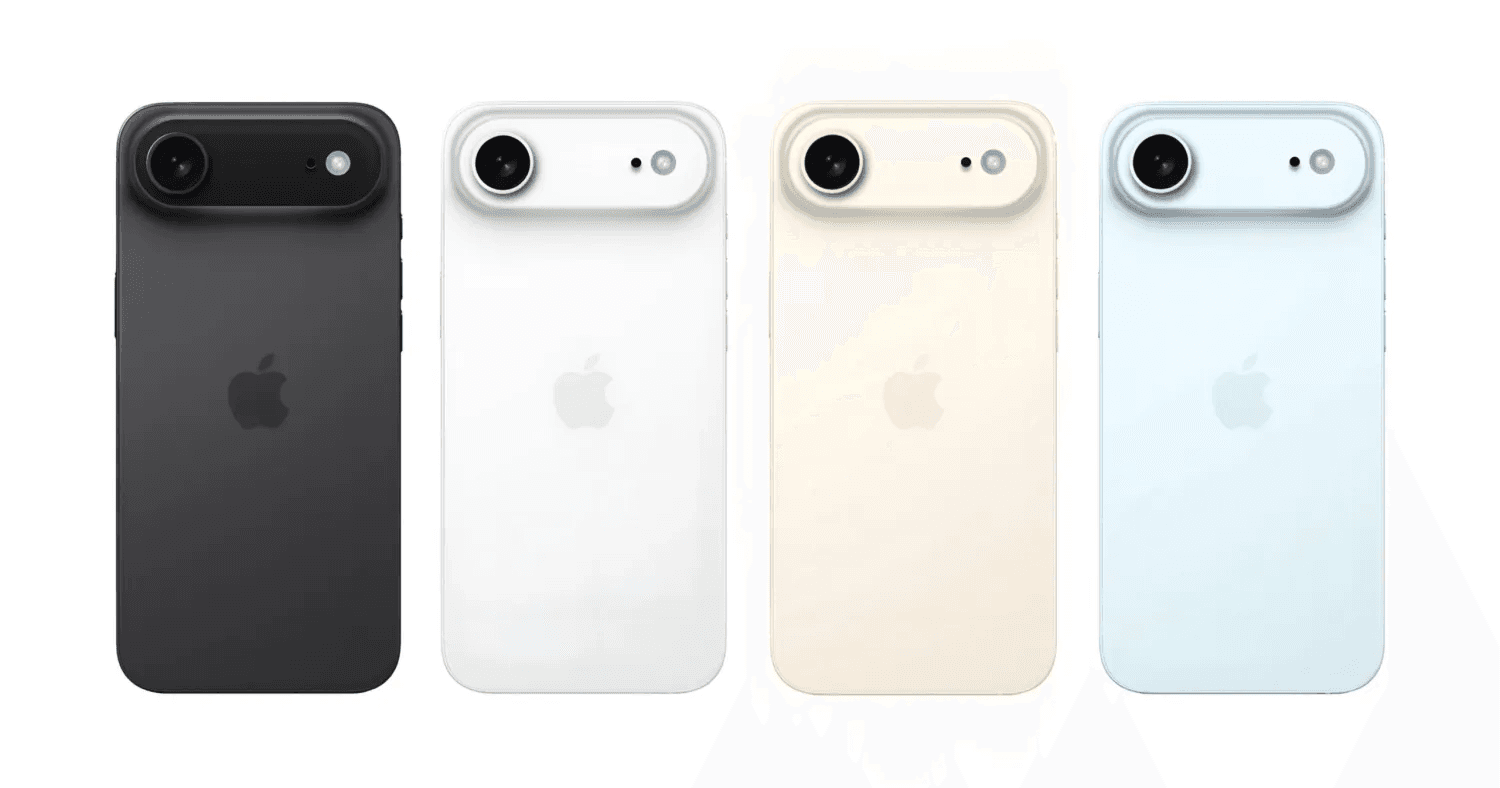
The revolution's opening act begins with the iPhone 17 series, set to be announced in September 2025. The star of this year is not the Pro model, but the newly added "iPhone 17 Air."
What "Air" Means: Inheriting a Philosophy from the MacBook
Within Apple's product lineup, the name "Air" carries special significance. Just as the MacBook Air emerged from an envelope in 2008, "Air" represents a philosophy of bringing new value standards of "thinness" and "lightness" to an existing product category, and elevating that into an appealing package for general users. The iPhone 17 Air will replace the current Plus model and bring this philosophy into the world of the iPhone.
A thinner, lighter body will surely be a major draw for users seeking both a large screen and portability. However, one cannot defy the laws of physics. This pursuit of "thinness" comes with certain trade-offs—that is, certain costs.
What Gets Sacrificed for Thinness
According to reports, the iPhone 17 Air may have a smaller battery capacity compared to the Pro models. There are also reports that its camera system will be simplified to a single lens. This can be seen as a strategy targeting users who don't require advanced photography features, prioritizing design and portability above all else.
Also worth noting is that the physical SIM card slot will reportedly be eliminated. This will further accelerate Apple's complete transition to eSIM (a SIM built into the device). While this offers benefits such as improved internal space efficiency and enhanced water/dust resistance, it may also pose a barrier to transition in regions where eSIM has not yet become widespread, or for users who frequently swap SIM cards.
The Strategic Significance of the In-House "C1" Modem
And from a technical standpoint, the most important development is the reported inclusion of Apple's own in-house-developed modem chip, the "C1." Breaking away from years of dependence on Qualcomm is not merely about cost reduction.
- Deepening Vertical Integration: For Apple, which develops hardware and software in-house from end to end, the modem has been one of the last major externally-sourced components. Bringing it in-house opens the possibility of optimizing power efficiency and enabling deeper integration with the OS, potentially further improving overall iPhone performance and battery life.
- Laying Groundwork for Future Technology: As wireless communication technology evolves from 5G toward future 6G, the ability to design modems in-house is a powerful weapon for introducing new technologies ahead of competitors and creating a unique communication experience.
The iPhone 17 Air is not merely a thin model. It represents an important stepping stone toward the major leap of 2026 and beyond—a new development of design philosophy, a complete transition to eSIM, and a declaration of independence in communication technology.
Act Two (2026): From Market Follower to Disruptor? Apple's First Foldable iPhone
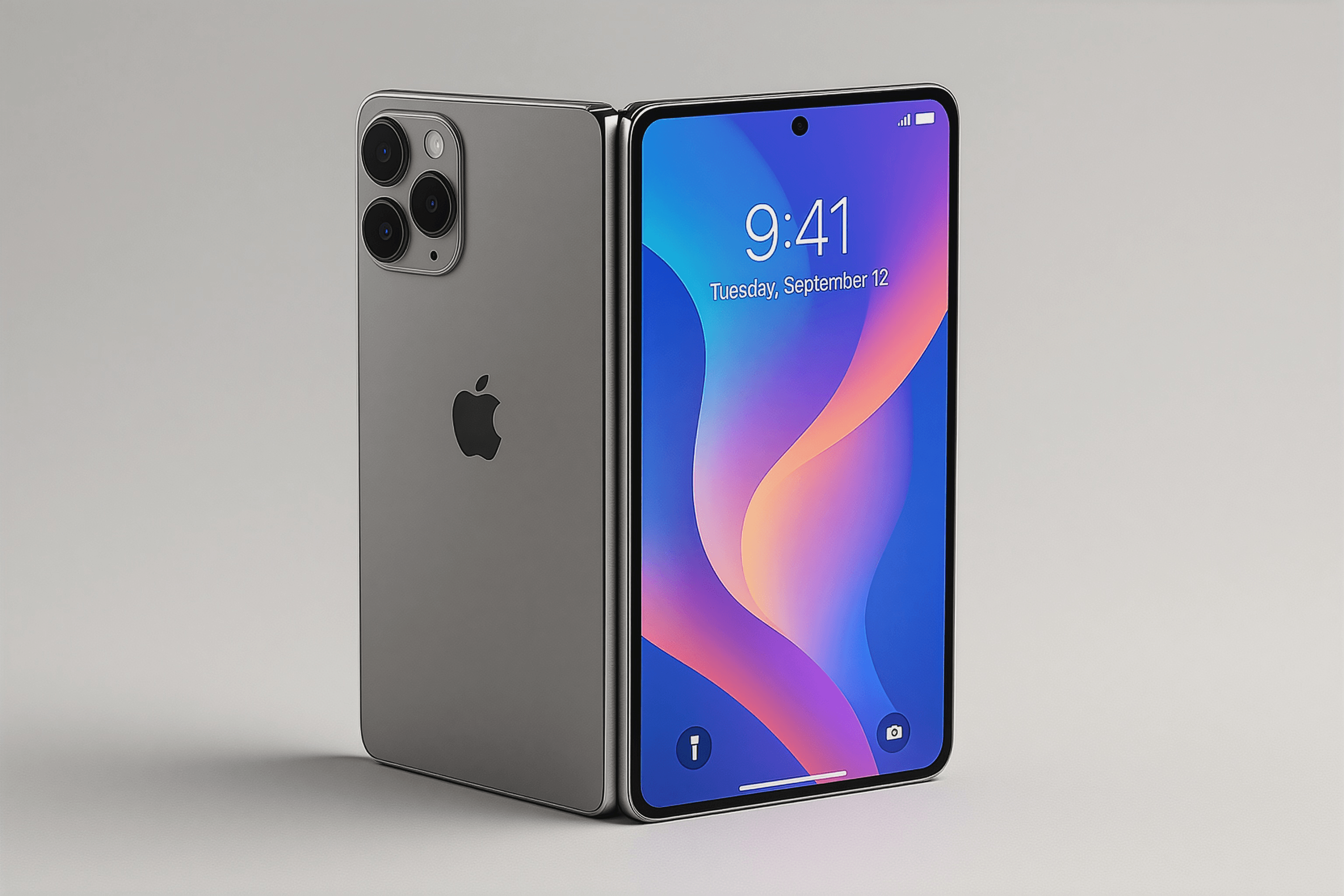
What could be called the highlight of the three-year plan is the arrival of Apple's first foldable smartphone, planned for 2026. Known by the codename "V68," this device will finally put an end to years of rumors and deliver a fresh shock to the smartphone market.
Apple's Standard Strategy of Leveraging the Late-Mover Advantage
Apple will enter the book-style foldable market, where Samsung has taken the lead, as a "follower." This is Apple's standard strategy, just as it was with the iPod (predecessors existed) and the iPhone (smartphones already existed). By carefully observing the path pioneered by market frontrunners, identifying technical challenges and points of user dissatisfaction, Apple aims to seize market dominance by presenting an overwhelmingly refined "finished form."
This is exactly what's expected of the foldable iPhone. How will Apple solve existing challenges such as display creases, hinge durability, and software optimization? The answer will be key to reshaping the competitive landscape.
Reading Apple's Strategy Through Its Specs: The Mystery of Touch ID's Return
The reported specifications are extremely intriguing for deciphering Apple's intentions.
- Camera Configuration: A total of four cameras—two on the back, one on the cover display, and one on the inner main display. This is thought to reflect an aim to deliver an uncompromising camera experience whether the device is open or closed.
- Design: Initially expected to launch in two colors, black and white, with no physical SIM slot, following the iPhone 17 Air.
- Display Technology: According to TechSpot, Apple initially considered an "on-cell" touch panel, which tends to make creases more visible, but switched to an "in-cell" method (a technology that integrates the touch sensor into the display layer) similar to that used in current iPhones. This is an important decision aimed at minimizing the visibility of the crease—the biggest challenge for foldable devices—and enhancing visual immersion.
And the biggest surprise is the reported possibility that Touch ID (fingerprint authentication) will make a comeback instead of Face ID (facial recognition) for biometric authentication. What could this mean?
Several reasons are conceivable. One is a technical constraint: the technology to embed a high-quality Face ID sensor under the screen may not yet meet Apple's standards. Another is that an authentication method usable seamlessly whether the device is folded or unfolded—such as a power-button-integrated Touch ID—may have been deemed optimal. Or perhaps the decision prioritized cost or freedom in internal design. In any case, this choice is a factor that will greatly affect the device's usability, and attention is focused on exactly how Apple will "reinvent" Touch ID.
The High-Performance "C2" Modem and Software Evolution
This foldable iPhone, along with the iPhone 18 Pro series arriving the same year, is expected to feature the more powerful in-house modem "C2." This is said to bring Apple's modem performance up to a level matching Qualcomm's high-end products for the first time, with significant improvements expected in communication speed and stability.
Additionally, to make the most of the larger display, iOS will undoubtedly undergo a major evolution as well. Multitasking features honed on iPadOS and Apple Pencil support will likely be offered, delivering a software experience that opens up possibilities as a new tool for productivity and creativity—not merely an "iPhone that opens."
Final Act (2027): A Return to Origins Fused with the Future—The "iPhone 20" Reveals the Ultimate Form of the Smartphone
The three-year revolution reaches its climax in 2027—the momentous year marking 20 years since the original iPhone's debut. The iPhone arriving that year will likely be given a special name such as "iPhone 20," and may once again redefine the design language of the smartphone.
"Liquid Glass": The Complete Fusion of Hardware and Software
Its defining feature is a complete break from the angular, flat design that has continued since 2020. Reports describe a seamless design in which the front, back, and sides of the device are all covered in smooth curved glass. It will likely resemble an object with no perceivable physical seams, as if carved from a single block of glass.
This design is not merely a pursuit of visual beauty. It fully echoes "Liquid Glass," the new design language introduced starting with iOS 26. The software UI melts and merges into the hardware's curved glass surface as if it were liquid. Icons and widgets seem to drift smoothly across the glass surface, delivering a user experience on a level never seen before. This is arguably the ultimate form of design philosophy achievable only by Apple, a company that develops both hardware and software in-house.
This iPhone 20 could represent a culmination point in the maturity of the device we know as the "smartphone," while also serving as a milestone heralding the beginning of a new interface with an eye toward the next 20 years.
Ecosystem Deepening Progresses Behind the Three-Year Plan
Alongside this ambitious iPhone redesign plan, Apple will steadily continue strengthening its other product lineups as well. Numerous new products await, including a new Apple Watch, iPad Pro and MacBook models featuring the M5 chip, AirPods Pro with heart rate monitoring capability, and a HomePod with a display.
These updates are not independent from one another—all of them work together to enhance an ecosystem experience centered on the redesigned iPhone. For example, as the all-glass iPhone 20 works in concert with a more powerful Apple Watch and a HomePod with a new UI, our entire living space will be transformed into a more seamless information environment. What Apple envisions is not the future of a single device, but the future of a larger ecosystem in which all devices work together in harmony.
The three years Apple is about to embark upon are not simply an update to the product cycle. It is a grand challenge by a massive company seeking to break through the sense of stagnation in the smartphone market and once again astonish and delight people through the power of design and experience. The thin, lightweight "Air"; the "Fold," a challenge into a new form factor; and the "all-glass" design aiming for the ultimate fusion of hardware and software. Each step is calculated based on a clear vision.
For us as users, this will be three years in which we once again get to feel our hearts race with major transformation, after a long period of stagnation. What kind of future will Apple show us at the end of this reform? The day we get to witness the answer is not far off.
Sources