

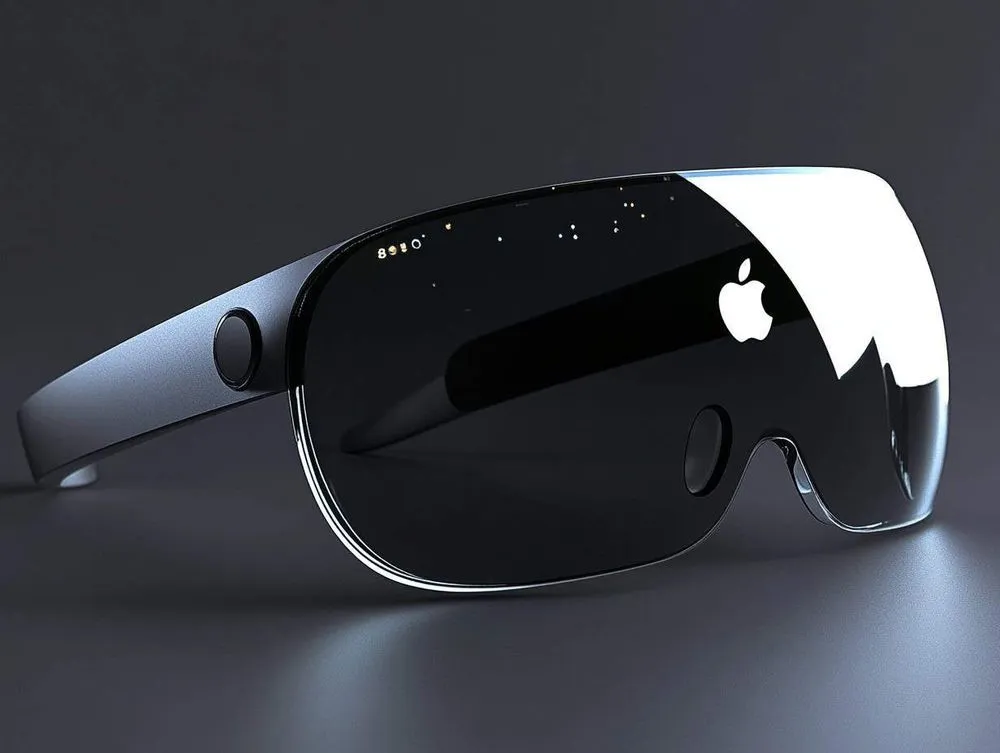
Apple has reportedly halted development of a cheaper version of its highly anticipated spatial computer, the Vision Pro, and is redirecting those resources toward smart glasses development, an area where Meta currently leads. Bloomberg's renowned reporter Mark Gurman, citing multiple sources, reported the news, suggesting that Apple's strategy for next-generation computing dominance in the post-smartphone era has reached a major turning point. Why would Apple choose to rapidly enter the smart glasses market—where it trails Meta—over a mass-market version of the Vision Pro, in which it had already invested heavily?
The Shocking Details of the "Plan Change" Reported by Bloomberg
At the heart of this report is a reallocation of resources within Apple. According to Mark Gurman's report, Apple has effectively shelved development of a cheaper, lighter Vision Pro (commonly known as the Vision Air), which had been in development under the codename "N100." This model was expected to launch around 2027, designed to overcome the two major barriers of the current model—its steep $3,500 price tag and roughly 600g weight—to appeal to a broader consumer base.
However, the engineers who had been working on that project have reportedly been instructed to shift to the newly prioritized smart glasses development. Apple's accelerated smart glasses development reportedly consists of at least two product lines.
- A display-free model (codename: N50): Audio glasses equipped with a camera and microphone that leverage AI features, directly competing with Meta's Ray-Ban lineup. Designed to work in tandem with the iPhone, Apple reportedly aims to preview this as early as 2026, with a launch targeted for 2027.
- A display-equipped model: This is the more significant product—a more advanced pair of smart glasses capable of displaying information within the lens. Originally planned for release in 2028, Apple reportedly intends to accelerate this development as well. This move is almost certainly a direct response to Meta's display-equipped "Meta Ray-Ban Display," announced last month.
Meanwhile, updates to the current Vision Pro have not come to a complete standstill. There are indications that a minor update featuring the faster M5 chip could arrive later this year, though no major changes to the design or price are expected.
Why Did Apple Abandon Its "Wait-and-See Strategy"? Three Underlying Factors
Historically, Apple has succeeded by entering new product categories only after other companies have pioneered the market, then introducing a "finished form" product with refined design and superior user experience—as seen with the smartphone and smartwatch. However, this time, Apple appears to have abandoned that traditional "wait-and-see" approach and is instead scrambling to chase rival Meta. Behind this unusual decision lie three pressing circumstances.
1. The Vision Pro's Confrontation with the "Too Heavy" Reality
The Vision Pro, which launched with great fanfare, stunned the industry with its technical sophistication, but it faces significant challenges in achieving commercial success. First, its starting price of $3,500 is simply too expensive for the average consumer, appealing mainly to a niche of enthusiasts and developers. Second, its weight makes extended use difficult, preventing it from becoming an everyday device. Numerous reviews reported discomfort after about an hour of use.
Apple was surely aware of this "too heavy" reality and had likely viewed the cheaper, lighter "Vision Air" as the key to popularizing spatial computing. However, even this budget model was expected to be priced at $1,500 to $2,000—still expensive in a market where Meta's Quest series sells for around $500. It remains uncertain how much impact this could have had. Apple may have concluded that the headset form factor itself has inherent limitations in capturing the mass market in the near future.
2. Meta's Rapidly Materializing "Glasses Strategy"
While Apple spent time refining its headset, its biggest rival, Meta, steadily built its foothold in the smart glasses market. Starting with the original Ray-Ban Stories in 2021 and iterating since, Meta finally announced the "Meta Ray-Ban Display," capable of displaying information within the lens last month. At $800, it's a far more realistic price point than the Vision Pro.
Meta's smart glasses are still far from perfect. But what matters is the fact that Meta has already brought a device shaped much like ordinary glasses to market and has begun collecting massive amounts of data on how users engage with AI assistants and camera features in the real world. This data will become an irreplaceable asset in the development of full-fledged AR glasses down the road. Apple likely felt a strong sense of urgency that allowing Meta to maintain this lead could result in a critical disadvantage in the competition for the next-generation platform.
3. AI: The "Invisible Main Battlefield"
The competition surrounding smart glasses isn't simply about which hardware is superior. At its core, it's a battle for supremacy over the "vehicle" that keeps AI assistants embedded in users' daily lives and collects behavioral data. What users see, hear, and where they go—all of it becomes valuable training data for strengthening AI models.
Apple unveiled "Apple Intelligence" in late 2024, just beginning its pursuit of Google, OpenAI, and Meta. However, the evolution of Siri, which is supposed to be at the core of this effort, has been delayed, with a full-scale update reportedly not expected until spring 2026. No matter how powerful the AI Apple develops, it means little without a device to fully leverage it. Always-on smart glasses are the ideal "eyes and ears" for AI, and it's likely that Apple wanted to avoid, at all costs, allowing Meta to establish a beachhead in this critical battleground. Smart glasses that "stay close" to daily life are far better suited for collecting AI data than an "immersive" device like the Vision Pro.
Redrawing the Industry Map: Three Ripple Effects of This Move
Apple's strategic pivot isn't confined to the company alone. It's likely to have a significant impact on the future of the entire AR/VR, wearables, and AI industries.
1. Clarifying the Division of Roles Between "Headsets" and "Glasses"
This decision has increased the likelihood that, at least for the foreseeable future, the future of personal computing will develop along two distinct paths.
One is the "spatial computer" path pioneered by the Vision Pro. This is a powerful but expensive device "worn" for specific purposes—to conduct work, entertainment, and communication in a fully immersive 3D space.
The other is the path smart glasses are pursuing: an "always-connected AI assistant." This is a lightweight, fashionable device "worn on the body" to overlay information onto the real world and assist with daily activities.
Apple's move has strongly impressed upon the entire industry the importance of the latter market. As a result, the VR/MR headset market may increasingly specialize into a higher-end, niche category geared toward professionals.
2. The Starting Gun for the "Post-Smartphone" Development Race
For years, the tech industry has continued searching for "what comes after the smartphone." Smart glasses have been regarded as one of the leading candidates, yet no definitive product had emerged. However, now that Apple, a giant in the market, has officially signaled its full-scale entry, this race will likely accelerate rapidly.
Meta leads the way, Apple is now in pursuit, and Google is also eyeing entry, armed with its Android XR platform and Gemini. The kind of fierce ecosystem battle over platforms once seen in the smartphone market is poised to begin anew in the realm of smart glasses.
3. Further Expansion of the iPhone Ecosystem
It's almost certain that Apple's smart glasses won't function as a standalone device, but rather as an extension of the massive iPhone-centered ecosystem. By having the iPhone handle much of the processing power while the glasses focus on sensors and display, Apple can achieve lighter weight and lower cost.
This represents a powerful strategy to bind users even more tightly to Apple's ecosystem. Just as the Apple Watch became an extension of the iPhone's health and notification features, the Apple Glasses (tentative name) will likely become an extension of the iPhone's AI and vision capabilities. This tight integration poses a major threat to competitors aiming for standalone adoption.
Has the Dream of Vision Pro Faded?
So does this decision mean that Apple has abandoned the "dream of spatial computing" it envisioned with the Vision Pro? Not exactly—rather, it should be seen as Apple restructuring its strategy into a more realistic, long-term two-front campaign.
The Vision Pro, through its technical sophistication, has fully fulfilled its role of showing the world "what spatial computing is." Apple will likely continue developing it as a high-end product, continuing to offer a glimpse into the future of computing for professional markets and dedicated early adopters. The technology and know-how cultivated in this process will eventually feed back into the smart glasses as well.
Smart glasses, meanwhile, will become the strategic device for reaching a broader user base, collecting the data essential to the AI era, and seizing control of the ecosystem in the post-smartphone age.
In other words: "Show the vision of the future with Vision Pro, and capture the real market with smart glasses." This may well be the core of Apple's new strategy.
Of course, Apple faces numerous challenges ahead. It trails Meta by several years, and closing that gap won't be easy. Additionally, since the performance of smart glasses depends heavily on the capabilities of the Siri AI assistant, a fundamental evolution of Siri is an absolute prerequisite for success.
Still, Apple has powerful weapons at its disposal: design and brand strength, along with the world's most powerful iPhone ecosystem. If Apple can successfully present smart glasses to the market as a "cool fashion item," the balance of power in the tech industry could once again shift dramatically.
This strategic pivot may come as a disappointment to those who were eagerly awaiting a budget Vision Pro. But viewed from a broader perspective, this could be seen as a historic step—Apple advancing into a more realistic yet far more ambitious battlefield, betting on the next decade of growth. We may be witnessing the opening act of that grand battle.
Sources