

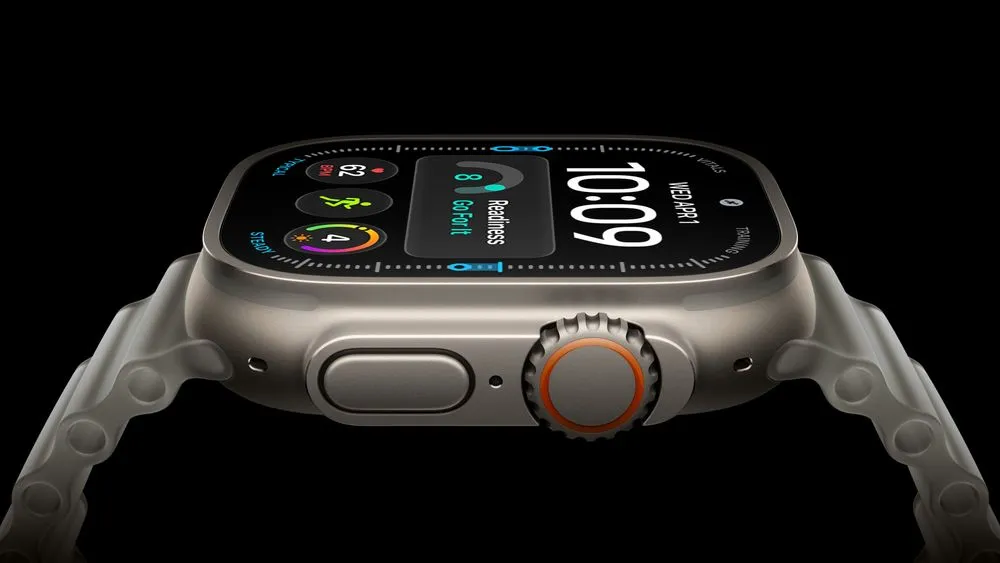
Apple announced the Apple Watch Series 12 and Apple Watch Ultra 4 on September 9, 2026 (US time). The biggest change is a new health sensing system that combines new optical and electrical heart sensors with the S11 chip. It measures heart rate every 5 seconds during everyday wear and heart rate variability (HRV) as often as every 5 minutes, so Readiness reflects changes through the day rather than a single snapshot taken in the morning. Apple calls it "the most accurate heart rate measurement in a wearable," but how broad is the evidence, and where do exceptions remain? Apple released a 9-page study report at the same time, and reading it reveals both the strengths and the limits of the new features.
5-second heart rate readings drive Readiness
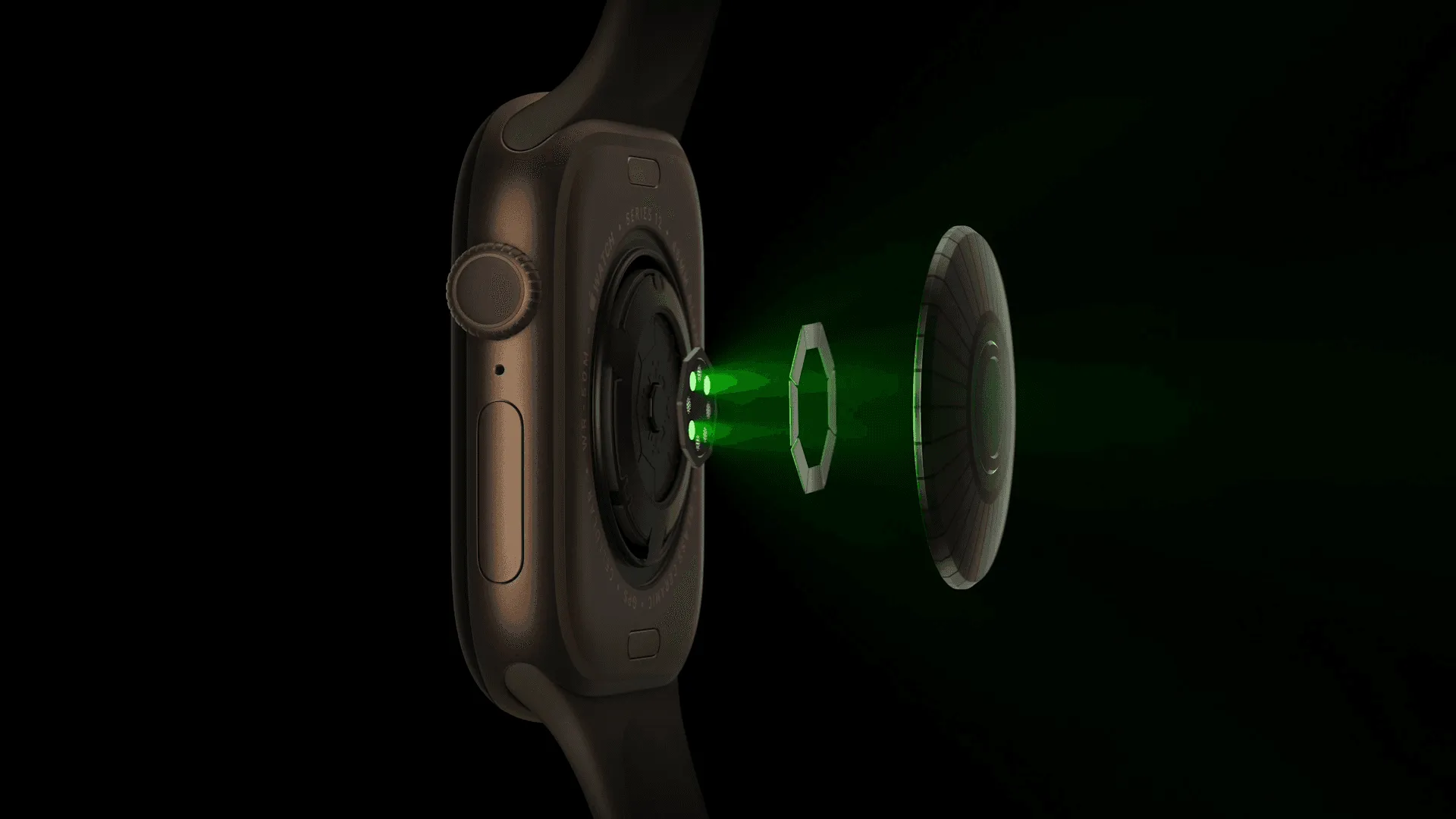
The Series 12 and Ultra 4 use larger, more power-efficient green LEDs in the optical sensor and measure heart rate every 5 seconds during everyday wear. Apple's Series 12 product page describes this as 60 times as frequent as Series 11. HRV is also measured as often as every 5 minutes, 24 times more often than on the previous generation. What Apple calls "continuous" measurement does not mean constantly recording an ECG waveform; it means the heart rate value shown to the user is updated every 5 seconds.
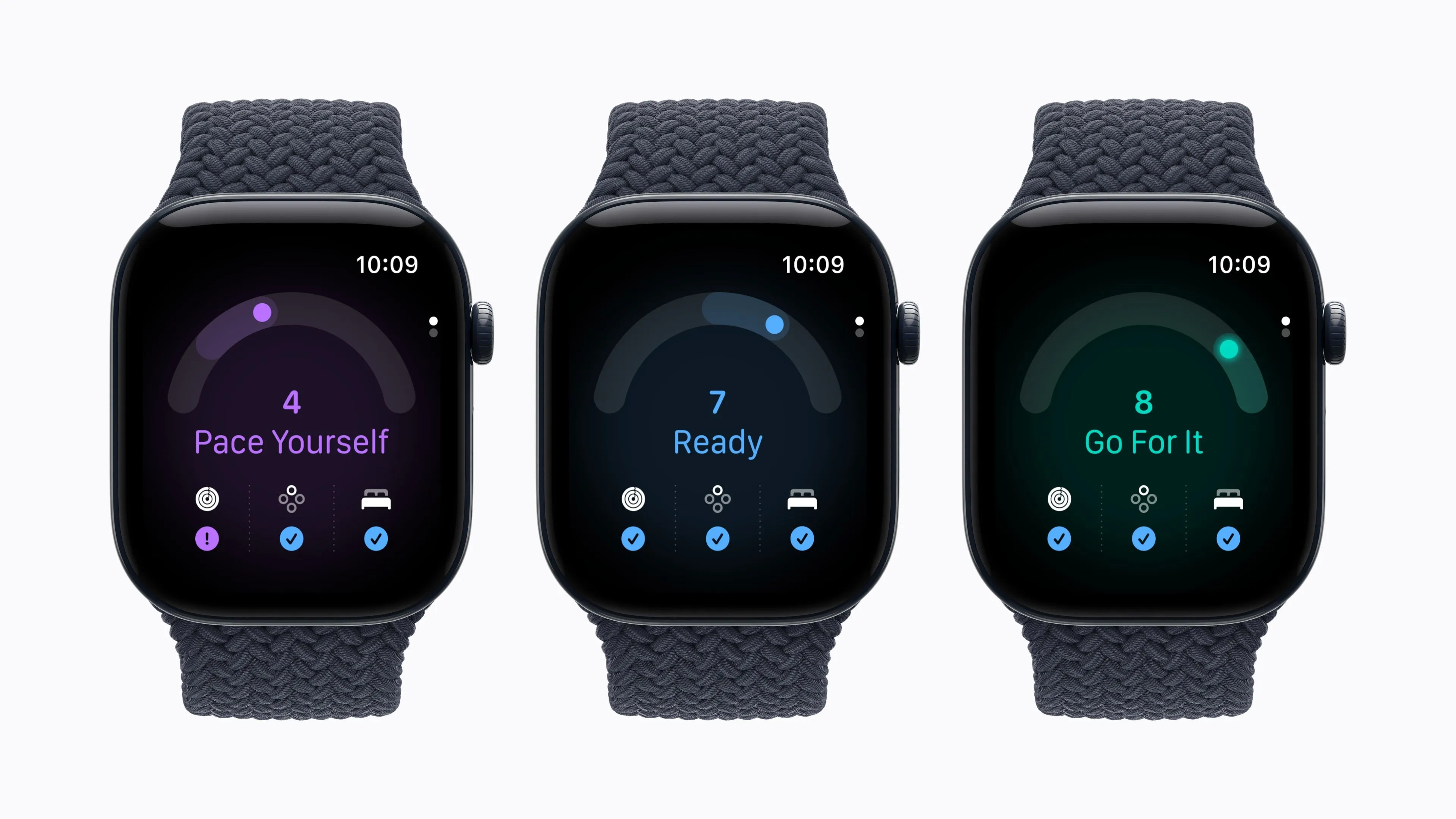
The payoff for the extra measurements is Readiness, a 0-to-10 score of how much capacity you have for the day. It combines recent activity and training load with vitals and sleep score, then returns one of four suggestions: "Rest," "Take it easy," "Ready," or "Peak." The score updates after hard exercise or when daytime vitals change. Rather than fixing the morning score, the design feeds changes in daytime activity and vitals into the day's guidance.
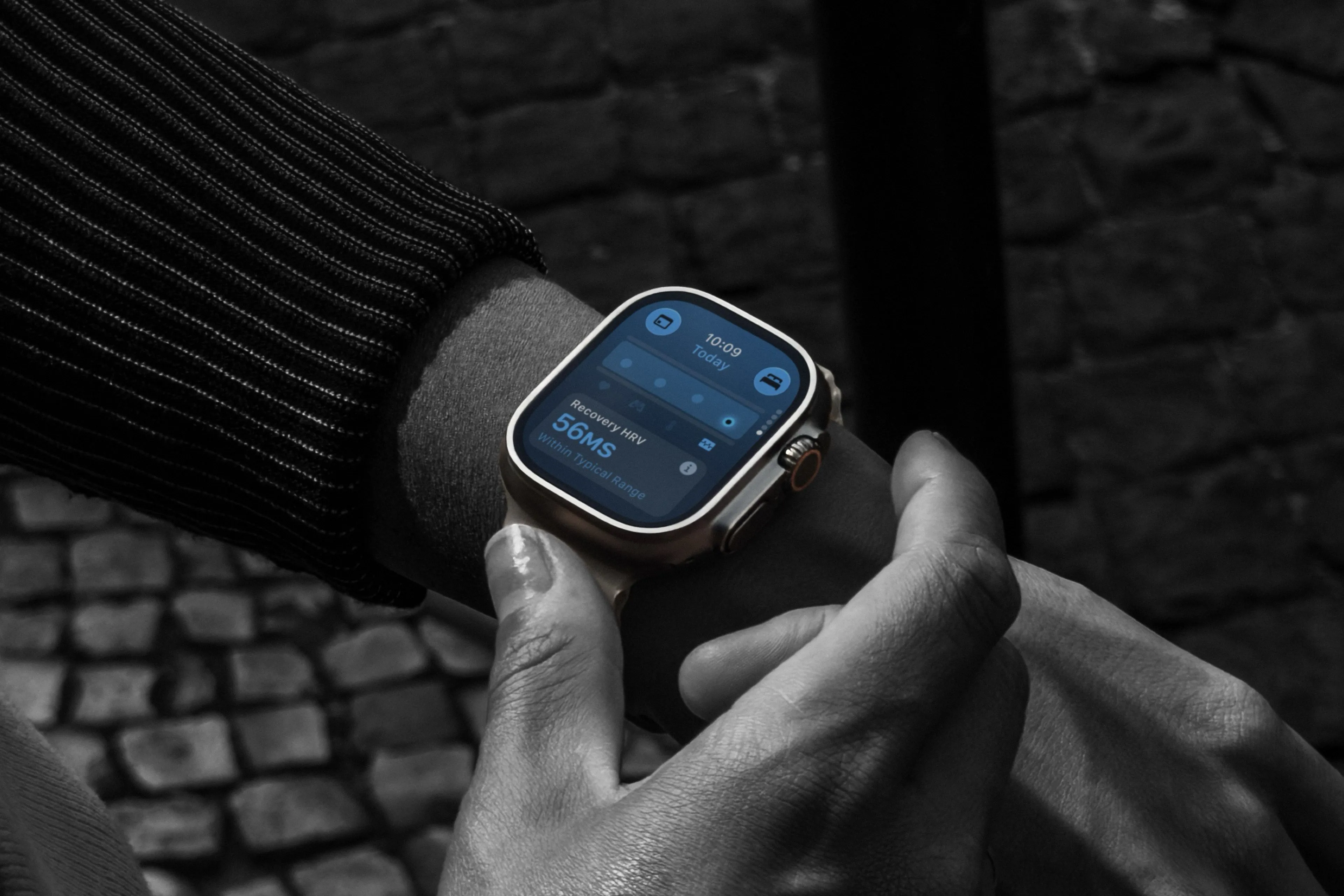
However, this is not a feature that diagnoses health from a single HRV reading. Apple itself compares recovery-oriented HRV against a personal baseline and treats it separately from HRV used to track long-term trends. Apple has not disclosed the formula behind Readiness, the weight given to each input, or how well it predicts illness or injury. More frequent measurement is not the same as better accuracy for medical decisions.
What does the S11 do? Published specs against the S10 show the boundary
The Series 12 and Ultra 4 both use the S11 chip. The configuration confirmed in Apple's spec sheet is a 64-bit dual-core processor, a 4-core Neural Engine, and 64GB of storage. But the S10 in Series 11 was also publicly listed as 64-bit dual-core with a 4-core Neural Engine and 64GB. Apple positions the S11 as "Apple's most powerful wearable chip," yet it has not given numbers for CPU, GPU or Neural Engine gains over the S10, nor clock speeds, manufacturing process, or power consumption. The same core count does not mean the same performance, but a new model name alone says nothing about how much faster it is.
For health tracking, Apple says the S11 powers the health sensing system and links high-frequency heart rate and HRV to Readiness and daytime vitals. But 5-second measurement works together with the new optical sensor, which has larger, more power-efficient green LEDs. The accuracy study also evaluated the finished Series 12, not a comparison that swapped only the S11 for the S10. So while it is clear that the S11 is the processing foundation for high-frequency data, it is not clear how much of the accuracy improvement the chip produced.
Step counting is where the S11's role is spelled out more concretely. Apple says it redesigned the step-counting model with a new machine learning algorithm, and that the S11 enables all-day step tracking and a step complication that shows live counts on the watch face. However, for the claim of "the most accurate step count among smartwatches," Apple has not provided comparison conditions or statistical methods equivalent to the 9-page heart rate report. Here too, the contribution of the new machine learning model and that of the S11 cannot be separated into a single performance figure.
Another new feature, separate from health tracking, is audio processing. In Audio Intelligence, due later this year, the Japan version lists Shazam and Sound Recognition. The S11's Secure Exclave processes raw audio in a compartment isolated from the OS and apps, then deletes it immediately, according to Apple. What Apple describes for this isolation is audio; it cannot be extended to health sensor data in general.
Nor does all advanced processing, including Siri AI, finish on the watch. Apple's English materials state that the built-in microphone and S11 are combined with Apple Intelligence models on the iPhone and Private Cloud Computer. It is reasonable to see the S11 as the core that handles health sensor signal processing and step estimation, applies isolated processing to audio via the Secure Exclave, and shares larger Apple Intelligence workloads with the iPhone and Private Cloud Compute as needed.
159 comparisons back "most accurate," but 18 remain inconclusive
The heart rate accuracy study Apple cites was conducted at five sites in the US and Malaysia in July and August 2026. Alongside the Apple Watch Series 12, it tested the Garmin Forerunner 970, Google Pixel Watch 4, Huawei Watch 5, Samsung Galaxy Watch 8 and WHOOP 5 on the wrist, and the Oura Ring 5 on the finger. The reference device was the Polar H10 chest strap, widely used to evaluate heart rate measurement.
Participants did outdoor runs, indoor interval runs and outdoor cycling, plus HIIT and strength training, with each exercise lasting 15 to 20 minutes. There was also a daily-life protocol that included rest and desk work, and activities from meal preparation to walking, each about 20 minutes. Apple randomized wearing the Apple Watch on the dominant hand to about 50%, and set in advance a plan to recruit at least 50 people for each combination of exercise type and competing device. Of 1,460 people enrolled, 1,254 contributed to at least one paired comparison.
Error was assessed in three ways: root mean square error (RMSE), which is sensitive to large outliers; mean absolute error (MAE); and session-average heart rate. Across the 159 activity- and metric-specific comparisons in Apple's heart rate accuracy study, the Apple Watch was superior in 139 at a 99% confidence level, 18 were inconclusive, and competitors were superior in 2.
データを表で見る
| Outcome at 99% confidence level (comparisons) | |
|---|---|
| Apple Watch superior | 139 |
| Inconclusive | 18 |
| Competitor superior | 2 |
The 2 competitor-superior results came from resting RMSE and MAE, where the Pixel Watch 4 had a smaller error than the Apple Watch by less than 0.5 bpm. Comparing point estimates alone, regardless of statistical significance, the Apple Watch had the smaller error in 155 of 159 cases. Apple's claim is therefore strongly supported as an overall assessment across the devices tested, but it cannot be said to hold as "always the best in every activity."
The test conditions also deserve attention. Each device differs in how heart rate data shown to users is obtained and in its reporting interval; for the Apple Watch, an internal recording app extracted the same single value every 5 seconds as shown on the display. The interval at which everyday data is written to HealthKit is 30 seconds, for memory management. The Samsung Galaxy Watch 8's everyday data had no individual timestamps and was treated as interval averages. The design compares the experience each company's product actually shows users against a chest strap, but it is not a sensor-level test that extracted raw data through the same path from every device.
Who ran the study should also be stated. Apple operated two sites in Cupertino and one in Austin, while third-party contract research organizations handled San Diego and Selangor, Malaysia. Although 59% of analyzed participants were enrolled at third-party-run sites, the study itself was led by Apple and is not a result reproduced by an independent body under the same conditions. Covering a range of skin tones, sexes, ages and BMIs is commendable, but it does not replace independent verification after launch.
Series 12 and Ultra 4 differ in value by battery, despite the same health system
The Series 12 and Ultra 4 share the health sensing system, the S11 chip, 5-second heart rate, HRV as often as every 5 minutes, and Readiness. There is no need to choose the Ultra 4 just for the core of health tracking. The big differences show up in the battery that supports long workouts, and in outdoor specs such as GPS, durability and underwater use.
| Model | Normal use | Outdoor workout | 15-minute fast charge |
|---|---|---|---|
| Series 12 | Up to 24 hours | Up to 10 hours | Up to 12 hours' worth |
| Series 11 | Up to 24 hours | Up to 8 hours equivalent (10 hours ÷ 1.25) | Up to 8 hours' worth |
| Ultra 4 | Up to 50 hours | Up to 25 hours in extended mode | Up to 18 hours' worth |
| Ultra 3 | Up to 42 hours | Up to 20 hours in Low Power Mode, maintaining GPS and heart rate | Up to 12 hours' worth |
Series 12's 24 hours of normal use is unchanged from Series 11, but outdoor workout time is up 25%, and the use time gained from a 15-minute charge is up 50%. The 8-hour outdoor workout figure for Series 11 in the table is an equivalent value calculated as 10 ÷ 1.25 from Apple's stated "10 hours, 25% more than the previous generation." The Ultra 4 extends normal use from 42 to 50 hours and Low Power Mode from 72 to 84 hours. Extended workouts that maintain GPS and heart rate last up to 25 hours, and in the maximum extended workout mode, which acquires GPS every second, it can record running, walking and hiking for up to 45 hours.
This difference separates use for checking Readiness through the day from use for recording tens of hours of competition without interruption. The Series 12 comes in two case sizes, and the Ultra 4 has a large titanium case with dual-frequency GPS, high water resistance, and support for recreational diving. With the same heart rate measurement frequency, the extra cost of the Ultra 4 buys battery and environmental durability, not a better health score.
Separating the new sensor, watchOS 27, and the later Health app
Both models are available to order in more than 50 countries and regions including Japan, with in-store sales starting September 18. US prices start at $399 for the Series 12 and $799 for the Ultra 4. Meanwhile, watchOS 27 will be available on September 14 for Series 9 and later, Apple Watch SE 3, and Ultra 2 and later. A broad list of OS update targets does not mean that 5-second measurement or Readiness, which depend on the new sensor, will necessarily reach older models.
The new Health app built around Apple Intelligence will not be complete at the same time as the watch. It will begin rolling out in late 2026, initially limited to US English. Health Age, which compares long-term data against age, and Insights, which spans heart, sleep, exercise and vitals, require a compatible iPhone or iPad and the latest OS, and conditions on region, language and age vary by feature. Buying the new watch does not mean the whole announced health experience will be available in Japanese from day one.
Post-launch evaluation needs to check how far 5-second display reduces data gaps outside exercise, and whether accuracy holds across skin tones, fit, cold, sweat and strength training, using the same chest strap and common procedures. For Readiness, it must also be verified separately how the score corresponds to users' subjective fatigue and next-day exercise capacity. The real advance of the Series 12 and Ultra 4 will be decided not by how many measurements they take, but by how rarely that dense data leads daily decisions astray.