

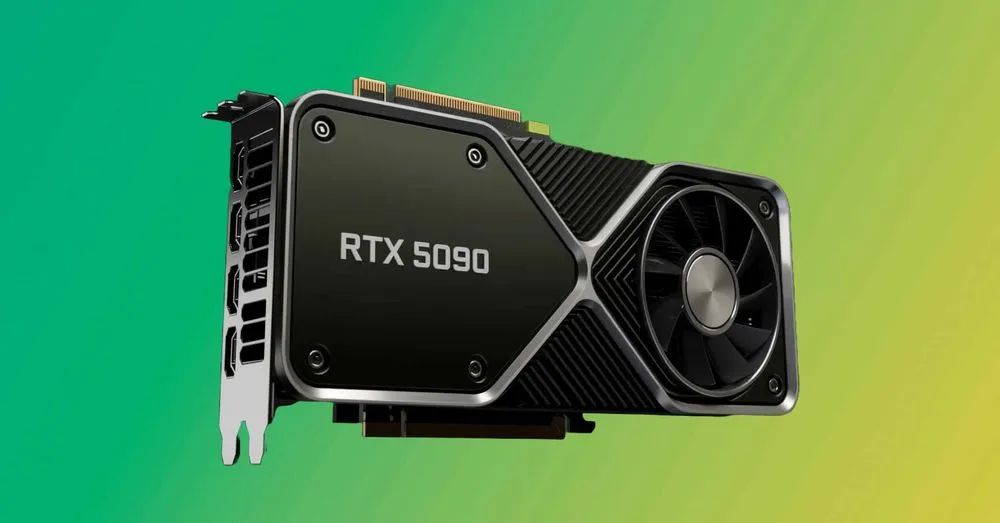
On August 4, Tom's Hardware reported on a revision to order prices for GIGABYTE VGA products posted on CFD Sales' business-to-business wholesale site, "CFD-BIZ.com," after confirming the announcement text and accompanying images. According to the notice, prices are expected to rise to roughly 120–140% of current prices for orders placed from August 1, 2026 onward, and the title also mentions the "cancellation of backlogged orders."
This is not a case of GIGABYTE graphics cards on Japanese retail shelves suddenly rising by 20–40% across the board. What CFD directly disclosed were order terms on a business-to-business wholesale site. Because the terms shifted to also cover how orders placed at the old prices would be handled, a change has appeared at the distribution stage, before cards reach retail.
On its official site, CFD handles graphics cards as GIGABYTE's authorized distributor in Japan and provides a link to CFD-BIZ.com. CFD's order price revision manifests as a change in order terms—encompassing both the 20–40% figure relative to current prices and the cancellation of backlogged orders.
The Distributor's Order Terms Changed First
The notice cited by Tom's Hardware states that, in line with a manufacturer price revision, prices for GIGABYTE VGA products will rise starting with orders placed on August 1. The notice explains that the rate of revision differs by product. The specific model numbers affected and the new order prices cannot be confirmed from publicly available materials.
The simultaneously announced cancellation of backlogged orders is a different matter from simply swapping in a new price tag. It indicates the possibility that some orders already placed may not be fulfilled under the old terms. However, the notice does not clarify which orders are affected, why they would be canceled, or whether alternative arrangements exist.
CFD-BIZ.com is a business-to-business wholesale site. The prices changed here cannot simply be equated with actual consumer retail prices. Even if a distributor's order price is revised, if shipped inventory or old-priced stock held by retailers remains, the timing and extent of any effect on store shelves will vary.
The Denominator Behind the 120–140% Figure Is CFD's Current Order Price
The phrase "approximately 120–140% of current prices" is expressed relative to CFD's order price at the time of the announcement. Converted into a price increase, that comes to roughly 20–40%, but this is not a figure applied uniformly across all products. It is also not a comparison against the manufacturer's suggested retail price, the MSRP at launch, or prices from other distributors.
This distinction matters. Even if the upper-bound figure of 140% is cited, it does not necessarily mean every affected SKU rises by 40%. The notice itself explicitly states that the rate differs by product, and the specific revision rate, new price, and list of affected models for each model number remain unpublished.
Furthermore, "orders placed" does not refer to shipped inventory or in-store stock. Only after retailers receive notice of the price revision, restocking occurs, and retailers decide how much of the increase to pass on, can this potentially affect the price consumers actually pay. What can be confirmed at this point is limited to the wholesale terms partway along that path.
From GPU KITs to Retail, Prices Move in Stages
The flow of pricing continues from the memory supplier's contract price, to the GPU KIT, to the AIC manufacturer's card price, to the distributor's order/wholesale price, to the retail price, and finally to the price consumers actually pay. Each stage can be linked to the others, but no single change at one stage alone can determine the next price or the extent of any revision.
On July 23, BenchLife reported, in an exclusive story, that NVIDIA had notified AIC partners of a price increase for GPU KITs—which combine the GPU with VRAM. While the report states this includes both GDDR7 and GDDR6, the rate of increase, absolute amounts, effective date, and affected model numbers have not been disclosed, nor has any official NVIDIA document been shown.
According to NVIDIA's current comparison chart, flagship models from the RTX 5090 down to the RTX 5060 use GDDR7, while the RTX 5050 uses GDDR6. However, this is merely an organization of which current products use which memory type, and does not identify the specific model numbers covered by the notice reported by BenchLife. There is also no documentation confirming that CFD's revision is a direct result of this GPU KIT notice.
The two events are close in timing and target overlapping markets. But there is insufficient information to link them as the same notice or the same instance of cost pass-through. It is necessary to individually verify at which stage of distribution, which component's cost, was reflected in which product.
Supply Allocation Pushing Up GDDR Prices
On July 3, TrendForce forecast that contract prices for general-purpose DRAM in Q3 2026 would rise 13–18% quarter-over-quarter. For graphics DRAM, the report explains that alongside GDDR7 demand for the RTX PRO 6000 Blackwell and weak notebook PC shipments, production capacity is being reallocated to other mainstream products, which is tightening supply of both GDDR6 and GDDR7 and supporting price increases.
GDDR prices are not determined by demand alone. Even if there are product categories with weak demand, if memory manufacturers redirect production capacity toward other mainstream products, prices can still rise from the supply side. This is why one must not look at GPU memory in isolation, but must also examine which DRAM products that capacity is being used for.
Micron also stated in its June 24 earnings call that industry demand for DRAM and NAND significantly exceeds supply, and that tightness driven by AI demand and structural supply constraints would continue beyond 2027. It also noted that the generational transition of HBM is further squeezing non-HBM supply. In fiscal Q3 2026, the company's DRAM business saw realized prices rise in the low-60% range quarter-over-quarter, while bit shipment growth remained in the low single digits.
However, this low-60% figure represents Micron's realized DRAM business pricing, not the contract price of GDDR6 or GDDR7. The information from TrendForce and Micron explains the backdrop of price pressure across the market, including memory for GPUs. Even so, it does not serve as a figure that directly proves the approximately 20–40% revision rate announced by CFD.
Once CFD's affected model numbers, new order prices, and the scope of backlogged order cancellations become clear, it will be possible to concretely track which products this revision affects and to what extent. Furthermore, only once retail prices after restocking and revisions from other distributors are confirmed will it be possible to judge how this change at the distributor stage has reached the consumer market.