

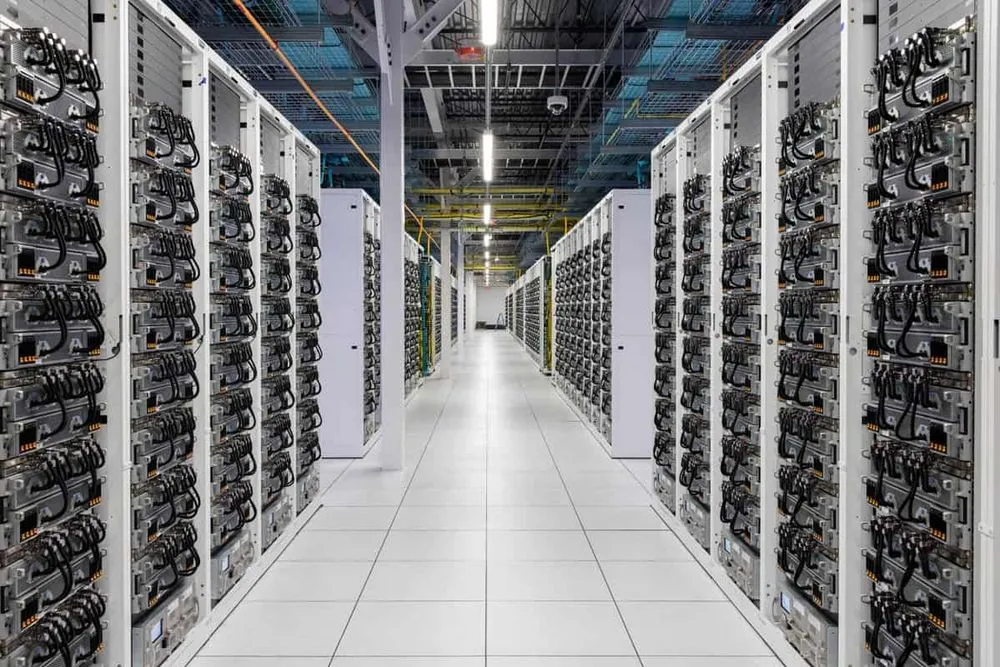
On September 25, Elon Musk of SpaceXAI revealed the GPU configuration of the AI computing cluster "Colossus 2" and its expansion plans through the end of the year.
He said the current configuration consists of 110,000 NVIDIA GB200 GPUs and 440,000 GB300 GPUs, for a total of 550,000. The plan is to add 220,000 GB300 GPUs three more times, which would bring the total to 1.21 million by the end of the year. However, Musk himself attached a condition to the final 220,000, saying it would come by the end of December "if we're lucky."
In other words, the "1.2 million GPUs" figure does not describe current operating capacity. It is the scale Colossus 2 would reach if every planned addition through year-end goes according to schedule. The 1.21 million figure also covers Colossus 2 only and does not include the existing Colossus 1.
SpaceX's filing shows that part of the expansion had been planned earlier. Whether the 660,000 additional GPUs now slated to come online will actually be operational on schedule remains to be confirmed.
550,000 GPUs now, up to 1.21 million planned by year-end
In a post on X, Musk broke down Colossus 2 as 110,000 GB200 GPUs and 440,000 GB300 GPUs, totaling 550,000.
He said 220,000 GB300 GPUs will be added next week, another 220,000 in November, and a further 220,000 by the end of December "if we're lucky."
He indicated that the additions coming next week will be "fully operational." As of this writing, however, that has not yet been confirmed.
| Timing | GB300 added | Colossus 2 total | Status |
|---|---|---|---|
| As of Sept. 25 | — | 550,000 | Current configuration according to Musk |
| After next week's addition | 220,000 | 770,000 | Scheduled |
| After November's addition | 220,000 | 990,000 | Scheduled |
| After the end-of-December addition | 220,000 | 1.21 million | Conditional plan |
Adding up Musk's figures as stated, Colossus 2 has 550,000 GPUs now, 770,000 once next week's batch is added, 990,000 after November, and 1.21 million if the December batch is also completed.
These are actual GPU counts combining GB200 and GB300. They are not figures converted to a common performance standard across different GPU generations.
For Colossus 1, Musk described a total of 230,000 GPUs: 150,000 H100, 50,000 H200, and 30,000 GB200.
Simply combining the two facilities, the current configuration totals 780,000 GPUs. If Colossus 2 reaches its December target, the combined total would be 1.44 million.
The difference between "1.21 million" and "1.44 million" comes down to whether Colossus 1 is included.
What SpaceX's filing shows about the expansion
A prospectus that SpaceX filed with the U.S. Securities and Exchange Commission (SEC) describes the state of Colossus 2's buildout.
According to the filing, the first cluster ran about 110,000 GB200 GPUs at roughly 210 MW of power, and the next cluster ran 110,000 GB300 GPUs at about 220 MW.
The filing also laid out a next phase: adding at least 220,000 GB300 GPUs and increasing power for computing equipment by more than 400 MW.
The 110,000 GB200 GPUs in Musk's September 25 post match the scale of that initial cluster.
His post, meanwhile, says GB300 GPUs alone now number 440,000, which means the buildout has advanced well beyond the first 110,000 described in the filing.
However, the filing and the September 25 post were produced at different points in time, so the two sets of figures cannot be compared as the state of the facility at a single moment.
Nor does the SEC filing guarantee that all 660,000 GPUs Musk cited for next week, November, and December will come online as planned.
"Colossus 2" is not just one building
The scope of the facilities also deserves attention.
As defined in SpaceX's prospectus, "COLOSSUS II" includes not only the facility in Memphis, Tennessee, but also a data center across the state line in Southaven, Mississippi.
The roughly 1.0 GW of computing power capacity cited in the prospectus covers Colossus and Colossus II combined.
That 1.0 GW therefore cannot be treated as Colossus 2's capacity alone. Nor is it a figure showing that the power needed for all the newly announced GPUs has already been secured.
GPUs are not usable as AI computing resources simply by being procured.
They must be installed in racks, supplied with sufficient power and cooling, connected by high-speed networking, and run stably as a complete system.
Adding GPUs in batches of 220,000 and getting them running on schedule requires power, cooling, networking, and other infrastructure to keep pace each time.
Musk's post does not say how much headroom the existing facilities have.
What matters going forward, then, is not only how many GPUs are delivered but how many are actually usable for computing by each deadline.
"1 million H100-equivalents" is not the same number as these GPU counts
It is also important to distinguish these figures from the "1 million GPUs" number xAI cited previously.
In its January 2026 funding announcement, xAI described the combined computing capacity of Colossus I and II at the end of 2025 as "over 1 million H100 equivalents."
That figure converts the computing power of different GPU generations into a common unit based on the NVIDIA H100.
It does not mean that 1 million H100s were actually installed, or that 1 million GPUs existed in total.
By contrast, the 550,000 and 1.21 million figures now cited are sums of the actual numbers of GB200 and GB300 GPUs.
| Figure | Meaning |
|---|---|
| Over 1 million | Computing power converted to an H100 baseline |
| 550,000 | Combined GB200 and GB300 GPUs in Colossus 2 now, per Musk |
| 1.21 million | Colossus 2 GPU total if all planned additions are completed by year-end |
In other words, the number did not fall from 1 million to 550,000, nor rise from 550,000 to 1 million. The two figures are counted differently in the first place.
SpaceXAI's Memphis page has also long carried a goal of "1 million GPUs by 2026."
However, it cannot be confirmed whether the facility scope on that page exactly matches what Musk called "Colossus 2" this time. A target figure is also not a track record of GPUs actually in operation.
It is therefore too early to conclude, from this expansion plan alone, that the earlier "1 million GPU" goal has been met or exceeded.
More GPUs do not mean all of them go to Grok
The number of GPUs alone does not determine the performance of an AI model, either.
Because Colossus uses several GPU generations, per-GPU computing performance differs. The actual benefit also varies with how that computing capacity is allocated among model training, inference, research, and services for outside customers.
In May, SpaceXAI announced an agreement to provide Colossus 1's computing resources to Anthropic. SpaceX's prospectus also refers to a business of offering computing capacity externally through Colossus and Colossus II.
It therefore cannot be assumed that every newly added GPU will be used to train Grok.
What Musk's statement makes clear is a concrete plan to expand Colossus 2 from the current 550,000 GPUs to as many as 1.21 million by year-end.
But for an AI computing platform, the final GPU count is not the only thing that matters.
The first thing to check is whether the planned GPUs actually come online at each stage: next week, November, and December. After that, the question is how the added capacity is used across Grok training and inference, external services, and other purposes.
Whether Colossus 2 reaches 1.21 million GPUs by year-end will first become clearer from whether the initial 220,000 come online as scheduled.