


Your phone shows a family member's name, and the voice even sounds just like theirs, yet the person on the line may be someone else entirely. Scams that combine caller ID spoofing with AI voice synthesis are spreading, and neither a displayed phone number nor a familiar voice is enough on its own to confirm who is calling.
In June 2026, Google began rolling out "Fake call detection" for Android. It does not analyze the content of the call. Instead, it checks whether the calling device really belongs to a saved contact.
NTT Docomo, meanwhile, was reported in January 2026 to have developed technology that uses generative AI to analyze recorded call content and judge whether it may be a special fraud call (tokushu sagi, the umbrella term in Japan for phone scams such as impersonation and "it's me" fraud). At the time, the company was aiming for practical use within fiscal 2026.
Both are countermeasures against scam calls, but they rely on different information. Google checks whether the call really came from that person's device. Docomo's technology examines whether the conversation itself looks like a scam. Understanding this difference clarifies which mechanism works against which kinds of calls.
Impersonation calls that combine spoofed numbers with AI voices
According to Google, as more people stop answering calls from unknown numbers, scammers are increasingly impersonating contacts that users trust.
The method broadly has two stages.
First, scammers use internet-based calling services and similar tools to spoof the caller ID so that a family member's or acquaintance's number appears on the incoming call screen. They then use AI deepfake audio to reproduce the voice of a relative, a boss, or someone else, and pretend there has been an accident or emergency in order to demand a money transfer.
The scale of the damage is not small. Google notes that INTERPOL, in a March 2026 assessment, named impersonation scams as one of the leading drivers of more than $400 billion in fraud losses worldwide.
In Japan, according to final figures from the National Police Agency, there were 27,832 recognized cases of special fraud in 2025, with damages of about 142.3 billion yen. Compared with the previous year, cases rose 32.3% and damages rose 98.0%.
These figures, however, cover special fraud as a whole. They do not count only scams that use caller ID spoofing or AI voices.
There are two broad ways to counter such scam calls.
One is to confirm that the call is really coming from the person it claims to be from. The other is to examine the call content itself for signs of fraud.
Google's Fake call detection handles the former; the call AI Docomo is developing handles the latter.
Google checks "whose device is this call coming from"
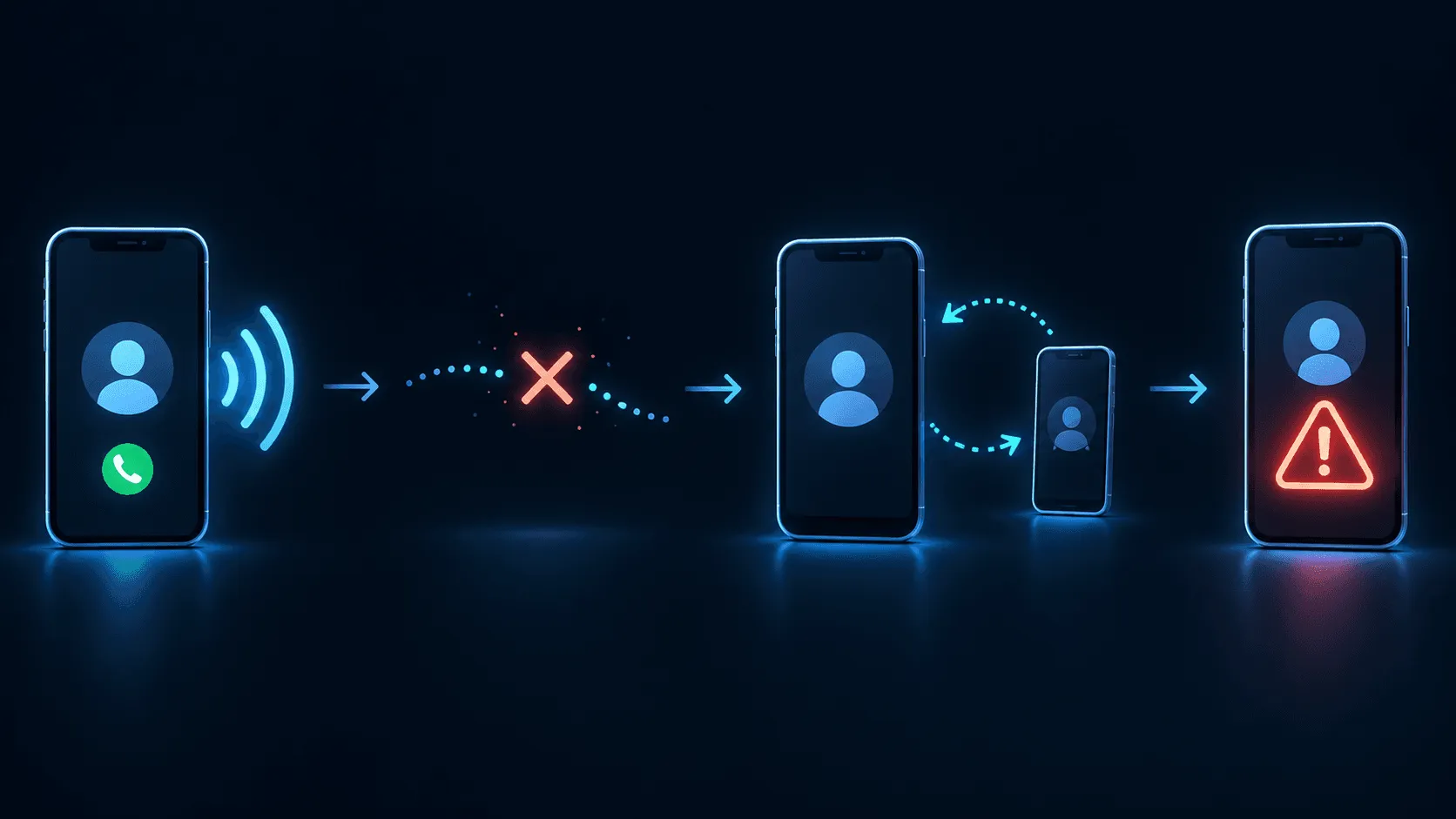
Google's Fake call detection verifies incoming calls from contacts when both the caller and the recipient use Google's phone app, Phone by Google.
When a call comes in from a saved contact, a verification signal is sent in real time from the caller's device to the recipient's device, separately from the call itself. Google describes this as a "digital handshake" between devices.
This verification uses end-to-end encrypted RCS (Rich Communication Services). Google says the exchange is kept private.
If a scammer spoofs only the caller ID to show a family member's number, the verification signal that a genuine device would send never arrives.
When the recipient's device detects that the signal is missing, it then asks the registered contact's actual device whether it is currently placing a call.
According to Google, if the real device replies that it is not currently making a call, a warning appears on the recipient's screen telling them to hang up immediately.
In human terms, this resembles hanging up on a suspicious call from someone claiming to be a relative and then calling back on the number you normally use to confirm their identity.
With Fake call detection, however, users do not call back themselves. The devices confirm automatically with each other over RCS.
Importantly, this check does not use the voice or the conversation content.
Google's official explanation does not list audio analysis or AI analysis of conversation content as inputs to the decision. Even if an AI-generated voice is so convincing that it cannot be told apart from the real person, it makes no difference to this check if the call does not come from the genuine device.
Rather than fighting AI voice spoofing with AI voice detection, the approach verifies the originating device itself.
The main operating conditions Google has described are as follows.
- The device runs Android 12 or later
- Phone by Google, Google Contacts, and Google Messages are installed
- RCS is available in Google Messages
- Both the caller and the recipient use Phone by Google
The feature is enabled by default and can be turned off in the Phone by Google settings.
In June 2026, Google announced that it would roll the feature out worldwide in stages, starting with Pixel and extending to devices running Android 12 or later.
In Japan, major carriers are moving to adopt Google Messages as the default messaging app. An environment in which RCS is easy to use is taking shape, but how far Fake call detection will work across Japanese carrier and device combinations needs to be checked individually.
Docomo's AI examines "what is being said"
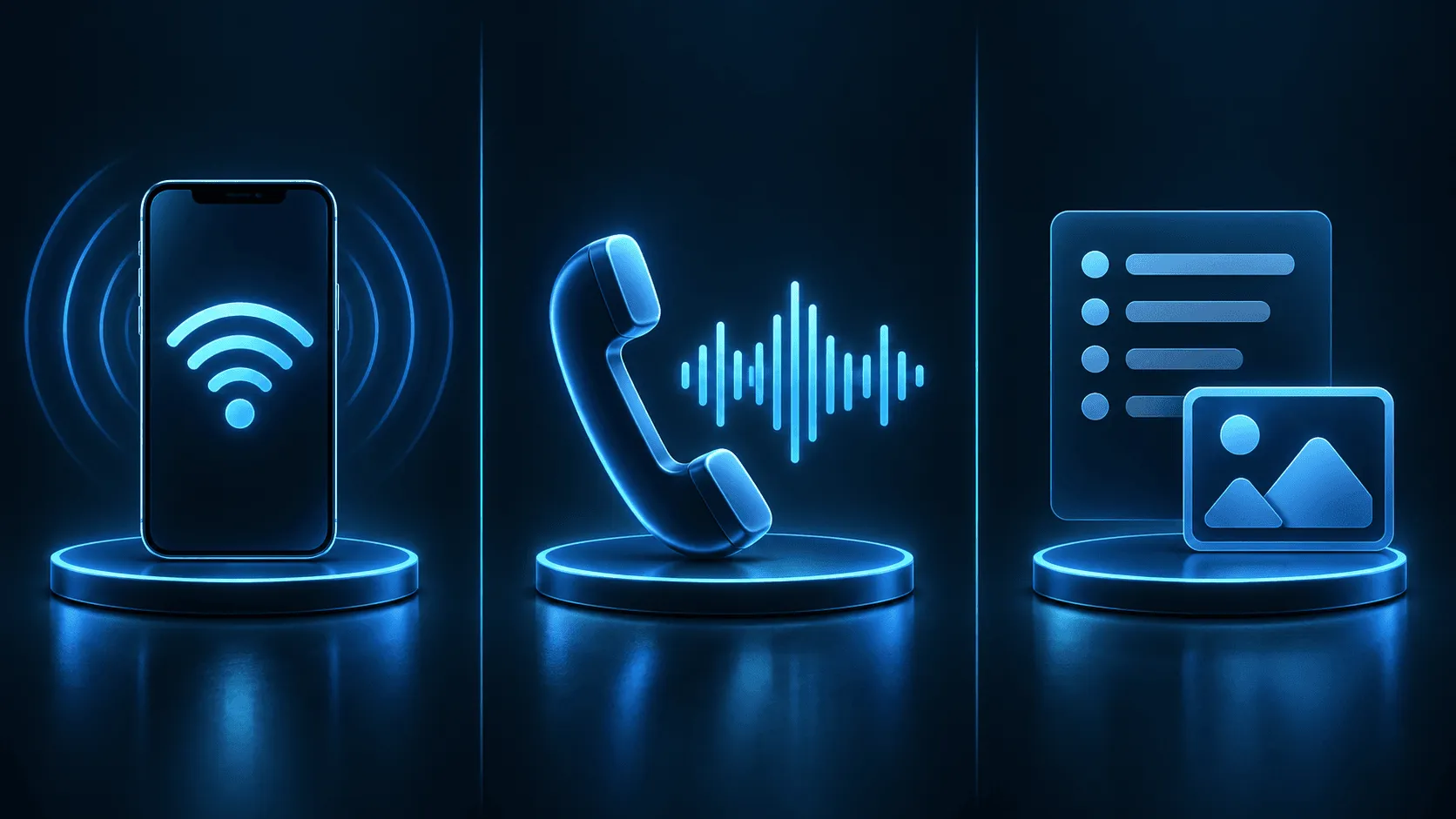
The technology developed by NTT Docomo was reported in January 2026. Generative AI analyzes recorded call content, determines the likelihood that it is a special fraud call, and warns the user.
At the time it was at the in-house trial stage, with the company aiming for practical use within fiscal 2026.
The determination uses RAG (retrieval-augmented generation).
RAG is a mechanism in which, before a generative AI gives an answer or makes a judgment, it searches an external database for relevant information and uses the results as source material.
In Docomo's technology, cases similar to the recorded call are retrieved from a database of special fraud cases, and the generative AI uses that information to judge the likelihood of fraud. A smartphone app handles the recording and the display of results.
Results indicate the fraud risk on three levels: high, medium, and low.
When the risk is judged to be "high," the app warns the user on screen and by voice and urges them not to hand over personal information or money.
The detail screen shows the type of scam it suspects, such as a "charity donation scam," along with the reasoning, for example, "requests for donations by phone are sometimes used in scams."
It is akin to an experienced counselor checking past fraud cases and explaining, "The way this conversation is going resembles past charity donation scams." The difference is that AI handles everything from searching cases to summarizing the reasons for its judgment.
Docomo said that in a test using an evaluation dataset that included new scam methods, the accuracy of its fraud determinations was 95% or higher.
However, that 95% was obtained on an evaluation dataset. This figure alone does not show whether the same accuracy would hold for the wide variety of calls real users receive.
In general, accuracy is the share of calls, scam and ordinary combined, that were judged correctly.
But the reported information does not say how many scam calls and ordinary calls the evaluation data contained, nor what share of scams were missed or what share of ordinary calls were wrongly flagged as scams.
A single figure of 95% cannot reveal the breakdown between missed scams and false warnings, which matters most to users.
The reports also do not say whether the warning appears during the call or after it ends, or whether the AI processing runs on the device or in the cloud.
On May 27, 2026, Docomo launched "Anshin Security Fraud Prevention Plus," but the three features added there are automatic blocking of nuisance calls, an AI scam check using screenshots, and fake image diagnosis.
It does not include a feature that analyzes call content itself, so it should be considered separate from the call AI reported in January.
Different checks protect against different calls
Comparing the Google and Docomo mechanisms, both the information used for judgment and the availability differ.
| Google Fake call detection | Docomo call AI (in development) | Docomo Fraud Prevention Plus | |
|---|---|---|---|
| Information used | Verification signal from the caller's device; if it does not arrive, an inquiry to the registered contact's actual device | Recorded call content and a database of special fraud cases | Nuisance call number database and screenshots submitted by the user |
| What it checks | Whether the call is really coming from the registered contact's device | Fraud risk level and the suspected type of scam | Nuisance numbers, likelihood that text is a scam, likelihood that an image is a deepfake |
| Main prerequisites | Both parties use Phone by Google and can use RCS | The app can record call content | Enrollment in the service |
| Availability | Rolling out in stages from June 2026 | Targeting practical use within fiscal 2026 (as of the January report) | Launched May 27, 2026 |
Of these three, the only one that uses call content itself as input is Docomo's call AI, which was still in development as of January 2026.
Google's Fake call detection uses verification of the originating device, not the voice or the conversation. Google also has a separate feature called "Scam Detection," which detects possible scams from conversation content and works differently from Fake call detection.
Because the inputs differ, so do the situations each handles poorly.
What Fake call detection verifies is whether a call displayed as coming from a registered contact is really being placed from that person's device.
Given this design, if someone else is actually using the person's own device to make the call, the genuine device will send the verification signal normally, so it cannot be detected as number spoofing.
Calls from numbers not saved in contacts are also outside its scope, because there is no real device to check against.
Fake call detection is unaffected by how good a voice sounds, but it also does not judge whether the conversation itself is fraudulent.
Docomo's call AI, by contrast, takes the conversation itself as input, so it can judge the likelihood of fraud from things like demands for money or how personal information is solicited, regardless of whether the caller ID is spoofed.
On the other hand, without a recording it has nothing to judge, and its performance depends on the fraud case database and the generative AI's judgment.
How well it handles new methods that differ greatly from past cases, or scams that are hard to distinguish from ordinary conversation, will need to be confirmed in real-world operation.
Google also has a separate feature that looks at call content
Google itself offers verification of the originating device and judgment of conversation content as separate features.
Apart from Fake call detection, Phone by Google has "Scam Detection," which warns of possible scams based on conversation patterns.
According to Google, Scam Detection processes call content with a Gemini model on supported devices and does not send the conversation off the device.
It is off by default, and even when the user turns it on, it operates on calls that may be scams. Calls with saved contacts are excluded.
In other words, Google also provides a mechanism that confirms whose device a call is coming from and a mechanism that judges whether the conversation looks like a scam as separate tools.
The call AI Docomo is developing is closer to the latter in terms of what it uses to judge.
Which protections you can use depends on family devices and availability
Which countermeasures are available depends not only on your own device but also on the device of the person calling you.
For Fake call detection to work, both you and the other party must use Phone by Google and be able to use RCS. Because Phone by Google is an Android app, this condition is not met if, for example, the other person has an iPhone.
If everyone in a family uses a compatible Android device, checking the Phone by Google, Google Messages, and RCS settings on each device may help defend against calls that spoof a family member's number.
On the other hand, calls from numbers not saved in contacts, or from people who suddenly claim to be police, government offices, or financial institutions, cannot be stopped by verifying registered devices alone.
In that area, nuisance number databases and mechanisms that detect fraud characteristics from the conversation itself become important.
There are two main points to watch in Japan going forward.
One is when Docomo's call AI will actually be offered, and at what price and on which devices. Beyond the "95% or higher accuracy" figure, it will also matter how far the company discloses the share of scams missed and the share of ordinary calls wrongly flagged.
The other is how far Google's Fake call detection will be usable across combinations of Japanese carriers and Android devices.
For calls claiming to be from registered family members or acquaintances, the device itself is verified; for calls from strangers, AI examines the conversation.
If such different countermeasures can be combined, devices could take over part of the burden now placed on users, who must decide for themselves whether to trust the number on the screen and the voice they hear.