

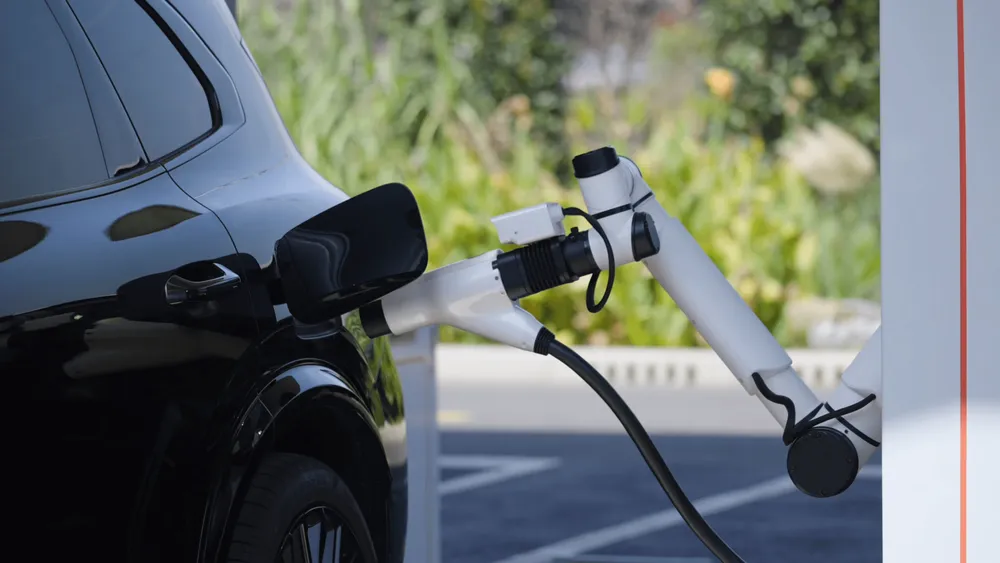
On September 23, 2026, Geely Auto Group announced "Geely Smart Charging," a system that combines AI-controlled charging with pulse-based battery "repair." The company says it can extend battery cycle life by 20%, even with repeated fast charging.
The technology goes beyond the race to shorten charging times and takes on the question of how to limit the degradation that repeated fast charging causes.
However, slowing battery degradation is not the same as recovering capacity that has already been lost. To understand what Geely means by "repair," it helps to separate the company's own explanation from related research.
AI predicts temperature and adjusts how the battery is charged
At the core of Geely Smart Charging is "Xingrui PowerMind," an energy management model developed jointly with the AI company StepFun.
The model adjusts charging current, cooling intensity, charging time and other factors according to the condition of the vehicle and battery. The system manages not only the vehicle but also charging equipment and energy storage facilities.
According to Geely's announcement, the AI predicts battery temperature up to 30 seconds ahead.
Rather than cutting charging power after the temperature has risen, the aim is to adjust charging power and cooling before overheating occurs. The design keeps the average temperature during charging below 55°C and the peak temperature below 65°C, using liquid cooling from the charging equipment through to the onboard battery.
The company also says it has developed a technology that uses weak, pulsed current to return lithium that has accumulated on the anode side through repeated fast charging to a state where it can take part in reactions again.
The idea is to improve the battery's internal condition by applying fine variations in current rather than passing a constant current.
However, the announcement does not disclose details such as the pulse waveform, frequency or the time the treatment requires.
Charging speed has also been raised significantly.
The fifth-generation charger has a peak output of 2,250 kW. In tests using batteries for the Lynk & Co 10 and Zeekr 001, the company says it charged from 10% to 70% in 4 minutes 30 seconds and to 97% in 8 minutes 40 seconds. The battery's peak charging rate is 12C.
C is a multiple expressing how large a current is used to charge or discharge relative to the battery's capacity.
But a peak of 12C does not by itself determine actual charging time. Nor does the charger's 2,250 kW maximum output flow to the vehicle from the start of charging to the end.
To compare real-world waiting times, you need measured values with matching starting and ending states of charge.
Research on "repairing" batteries takes several approaches
Research on improving battery condition by changing how current is applied predates Geely's announcement.
One line of work aims to bring lithium that has lost its electrical connection to the electrodes, and can no longer be used for charging and discharging, back into the reaction.
In a study published in Nature in 2021, a research team from the SLAC National Accelerator Laboratory and Stanford University showed that electrically isolated lithium moves during charging and discharging.
In SLAC's explanation of the research, the team observed this movement using an experimental cell with isolated lithium placed between an NMC cathode and a lithium metal anode.
Even if such lithium remains inside the battery, it cannot be used for charging and discharging unless it is electrically connected to an electrode.
The team showed a method of applying a brief, high-current discharge immediately after charging to move the isolated lithium to the anode and reconnect it to the electrode.
In the sense of regaining a lost electrical connection, this is one example of what "reactivation" can mean.
Other research does not restore degraded batteries but instead suppresses the degradation that occurs during charging.
In a peer-reviewed paper published in Advanced Energy Materials in 2024, Jia Guo and colleagues used commercial 18650 NMC532/graphite cells to compare constant-current charging with pulse charging.
Life-cycle tests were run at 35°C with the average charging current matched at 1C. In pulse charging, the on and off periods were equal in length, and the current was 2C while on.
Comparing 100 Hz and 2,000 Hz conditions, they reported that lithium ions were distributed more evenly within the graphite anode, growth of the solid electrolyte interphase (SEI) layer on the anode surface was suppressed, and structural changes in the electrode material were smaller.
What this shows is an effect that reduces degradation over repeated charge-discharge cycles. It is not an experiment that restored capacity lost by a worn-out battery.
Nor can the results of this experiment, run at an average of 1C, be applied directly to the 12C peak fast charging that Geely touts.
Such studies provide scientific background showing that changing how current is applied can affect a battery's condition.
But they do not show that Geely uses the same methods. The company's explanation that it "reactivates lithium accumulated on the anode" does not make clear which state of lithium is targeted or what kind of current is applied.
What does "20% longer life" mean?
The 20% figure Geely published is the extension in cycle life when AI charging control and the "repair" technology are combined.
It does not mean that pulse treatment alone extends life by 20%. Nor does it mean that the battery capacity available on a single charge, or driving range, increases by 20%.
Meanwhile, Geely's English-language announcement of September 23 does not disclose the comparison baseline, test temperature, the capacity threshold used to define end of life, or the number of batteries tested for the 20% result.
| Item needed for evaluation | What the Sept. 23 announcement shows | Caveat when reading the figure |
|---|---|---|
| Extension rate and technology | 20% extension from combining AI charge management and "repair" technology | The contribution of each technology is unknown |
| Comparison baseline | Not stated | Unclear whether compared with conventional fast charging or another condition |
| End-of-life criterion | Not stated | Unclear at what percentage of capacity loss life was judged to end |
| Life test temperature | Not stated | Cannot assess differences from real-world conditions |
| Number of batteries tested | Not stated | Cannot judge cell-to-cell variation or spread in results |
Source: Geely Auto Group's English-language announcement of September 23. Items marked "Not stated" cannot be confirmed in the announcement; this does not mean the tests were not conducted.
In particular, temperature control during charging and the conditions of life testing should be considered separately.
Even with a design target of keeping the average temperature below 55°C, that alone does not reveal the temperature at which the tests showing a 20% life extension were run.
Whether the comparison charging method was tested under the same temperature conditions is also important for judging how much the AI temperature control contributed to longer life.
Batteries also degrade for more than one reason.
The 2024 study mentioned above also deals with multiple degradation phenomena, including SEI growth, loss of electrode material and structural cracking.
Even if some lithium that could no longer take part in reactions were made usable again, not all degradation inside the battery would be reversed.
The word "repair," therefore, should be read together with which specific degradation phenomenon it is meant to improve.
Home charging time also used to improve battery condition
Geely says it has also developed a home charging method that uses a relatively low charging rate to gradually improve degradation caused by repeated fast charging.
The idea is to fast charge briefly while out, then spend time conditioning the battery at home, managing the battery over the long term by combining the two charging environments.
If time parked at home can be used to improve battery condition, it may be possible to shorten charging stops on the road while also curbing long-term capacity loss.
However, the English announcement reviewed does not give details such as which models support the "repair" function, how it would be provided to existing vehicles, or whether dedicated home charging equipment is required.
Even where the vehicles and batteries used in fast-charging tests are identified, that does not mean every user of those models can use the "repair" function.
To judge the technology's practicality, it will be necessary to see how much capacity is retained over a long period when fast charging and home charging are repeated in a way that resembles actual use.
Once supported models and required charging equipment are clarified, and results of long-term tests under the same conditions are presented, users will be able to compare not only "how fast it charges" but also "how long the battery lasts despite repeated fast charging."