

Robotics developer Genesis AI has announced a $500 million Series A round. According to Crunchbase News, the round values the company at $3.5 billion and brings its total funding to $605 million. The raise comes amid a surge of investment in physical AI, yet CEO Zhou Xian names hardware performance as the company's biggest challenge. Given that remark, what shapes Genesis's value from here may depend less on the performance of its AI models than on whether it can establish durable robot hands and a mass-production system.
What will the $500 million be used for?
TechCrunch reports that it watched a robot demonstration at Genesis's Silicon Valley site. Two off-the-shelf robot arms scanned two small boxes, packed them into a larger box and sealed it, then peeled a label off a roll of tape and applied it. In a second demonstration, however, the robot dropped a box and struggled to peel off a small label. Company executives call such failures "hiccup data" and explain that they serve as training data for improving the AI models.
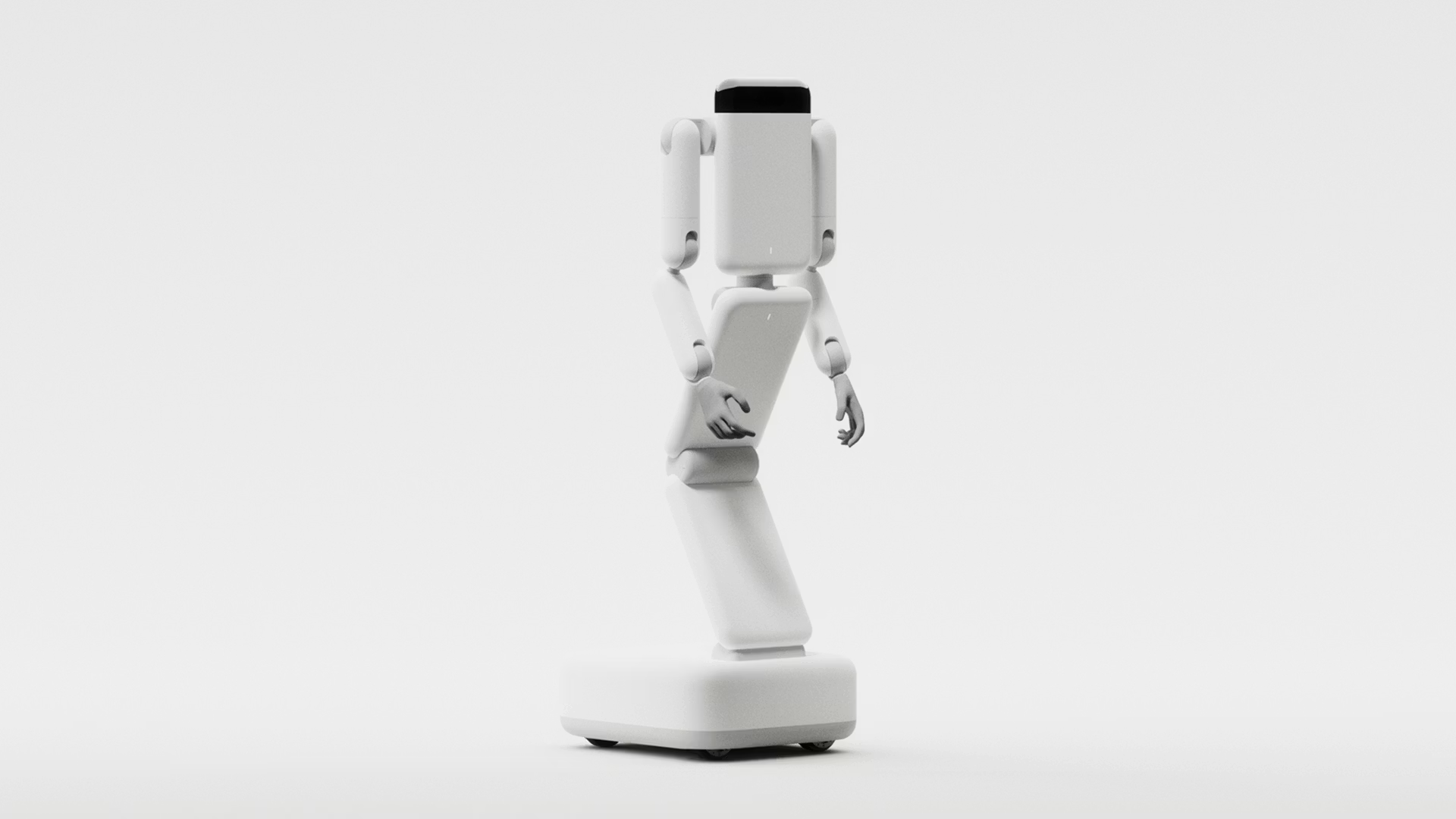
Genesis follows a vertically integrated strategy, handling everything from data collection to AI model development and the design and manufacture of humanoid robots. It collects most of its training data in-house, developing generative AI models and the robot hardware in parallel.
At the center of data collection is a sensor-equipped glove. More than 100 workers around the world wear the gloves and head-mounted cameras, recording their hand movements and the force they apply during everyday work. The robot's hands are also designed to mimic human hand proportions and wear the same kind of glove. Xian explains that a structure close to the human hand helps with fine tasks such as sorting items and handling wiring.
Xian told Crunchbase News that the mainstream approach has been to collect training data by having humans teleoperate robots. Genesis, by contrast, plans to collect data directly from people doing their regular jobs. It is also investing in simulation technology so that robots can learn skills before working in real environments. According to TechCrunch, the company uses a physics simulation algorithm co-authored by advisor Minchen Li to generate millions of high-fidelity models that reproduce robot movement experience.
The large raise also coincides with broader growth in robotics investment. Crunchbase data shows that robotics startups worldwide raised $9.9 billion in the third quarter of 2026, more than double the $4.3 billion in the same period a year earlier. Genesis plans to use the new funds to expand computing infrastructure, increase robot production, and hire. Its flagship model, "Eno," will first be sold for industrial uses, and the company is also considering a lease-style offering that bundles the robot with software. It has a partnership with South Korea's LG CNS, but has not disclosed revenue or the number of paying customers.
Huge funding, but only 30 to 40 units built
Since its $105 million seed round in July 2025, Genesis has raised its cumulative funding to $605 million in about 16 months. According to TechCrunch, however, the company has built only 30 to 40 Eno units so far. Deployment with customers is at the pilot stage, with a small number of companies whose names have not been disclosed. Planned production volume for 2027 has also not been revealed.
Another challenge is the durability of the robot hands. According to TechCrunch, the current hands need to be replaced after a few weeks of regular work. Xian himself says the biggest bottleneck is hardware performance, specifically the mechanical design and the supply chain that supports industrial machinery manufacturing.
This problem bears directly on the lease-style business model Genesis is considering. If hands need frequent replacement, the cost of replacement parts and maintenance work rises, squeezing the profitability of each robot. For Japanese manufacturers and logistics companies weighing adoption, how often parts must be replaced relative to operating hours would also be an important metric in estimating running costs. If hands continued to need replacing every few weeks, the supply of replacement parts and the number of maintenance staff would have to grow in proportion to the number of units deployed.
Genesis says it has already finalized the mass-production design and selected a manufacturer to build the robots. It plans to begin production in the United States in 2027. Even if the design is finalized and the production system progresses, however, the question remains whether the robot hands can withstand long hours of operation at industrial sites.
Is the competitive edge data or hardware?
There is a counterargument to the focus on hardware durability: that Genesis's advantage in training data will determine its future competitiveness. Indeed, Xian does not place much weight on architectural differences such as VLA (vision-language-action) models versus world action models. By his account, the model structure contributes "probably about 10%" to the final result, while the training infrastructure, data infrastructure, and data quality matter more. He also expresses the view that steadily implementing existing technology matters more than new leaps in basic research. From this perspective, Genesis's strengths lie in the force data collected through its gloves and its simulation technology, and the hardware problem can be seen as one that continuous improvement can solve.
Investors also value the fact that the company's robots can complete actual tasks. A partner at Premji Invest said they were drawn to seeing the robot carry out a task from start to finish in real time, rather than in a short, edited video. Such an assessment suggests that investors judged the maturity of the AI model and robot control technology to have already reached a certain level.
However, when assessing whether a company can generate continuous revenue in industrial uses, completing a task is not enough. The Premji Invest partner also cited companies being able to trust and rely on the product as an important condition. That requires robots not only to perform certain tasks but to keep operating stably over long periods. Hand durability is precisely the factor that determines this reliability.
Publicly available information on the demonstration stage is also limited. According to TechCrunch, Xian explained that the company's AI models perform best on the flagship Eno, but no Eno demonstration was given during the visit. What was shown was a demonstration by off-the-shelf robot arms in an environment prepared by the company, and a task failure was also observed in the second run. Although specific figures have been given for the number of units built and the operating period before hand replacement, information that third parties can use to independently verify performance remains limited.
Still, the view that hand durability will shape the company's valuation presupposes the industrial lease business Genesis is aiming for. If paying customers and shipments grow and contracts expand even without an improvement in replacement intervals, the impact of durability could be judged smaller than expected. Conversely, if mass production begins in 2027 as planned and production volumes and hand replacement intervals are disclosed, the company's viability can be assessed against concrete operating results.