

Looking back at the history of rare earth development on the North American continent, most of it has centered on competition over light rare earth elements (LRE) such as neodymium and praseodymium. Many mines currently operating or in development phases are dominated by light rare earths. Meanwhile, for heavy rare earth elements (HRE)—which support the manufacturing of superconductors, special alloys, and heat-resistant fine ceramics—dependence on overseas sources continues in terms of both quality and quantity. On July 23, 2026, exploration results announced by Idaho Strategic Resources (IDR) drove a wedge into this skewed procurement structure.
The company reported that at its Diamond Creek project, located about a 30-minute drive from the town of Salmon, Idaho, it had confirmed a high-concentration deposit of heavy rare earth elements, including yttrium. The exploration team conducted surface sampling along a 3.2-kilometer linear structure at four prospective sites named, from north to south, Contact, Lucky Gem, Simer, and Frank Burch. As a result, the total rare earth oxide (TREO) grade of the selected samples averaged approximately 1.8 percent. A perspective not to be overlooked here is the composition ratio of heavy rare earths relative to the total.
According to results from the independent analysis firm ALS Chemex, heavy rare earth oxide (HREO) averaged over 2,000 ppm, of which yttrium alone accounted for more than 1,300 ppm. Generally, in rare earth projects, cases where light rare earths make up more than half are overwhelmingly common. However, at Diamond Creek, yttrium appears at high frequency and high concentration, ranging from 800 to 2,000 ppm. This geological structure, primarily composed of the phosphate mineral known as xenotime, harbors a distinctive resource potential that sets it apart from North American competitors, which tend to be skewed toward light rare earth dominance.
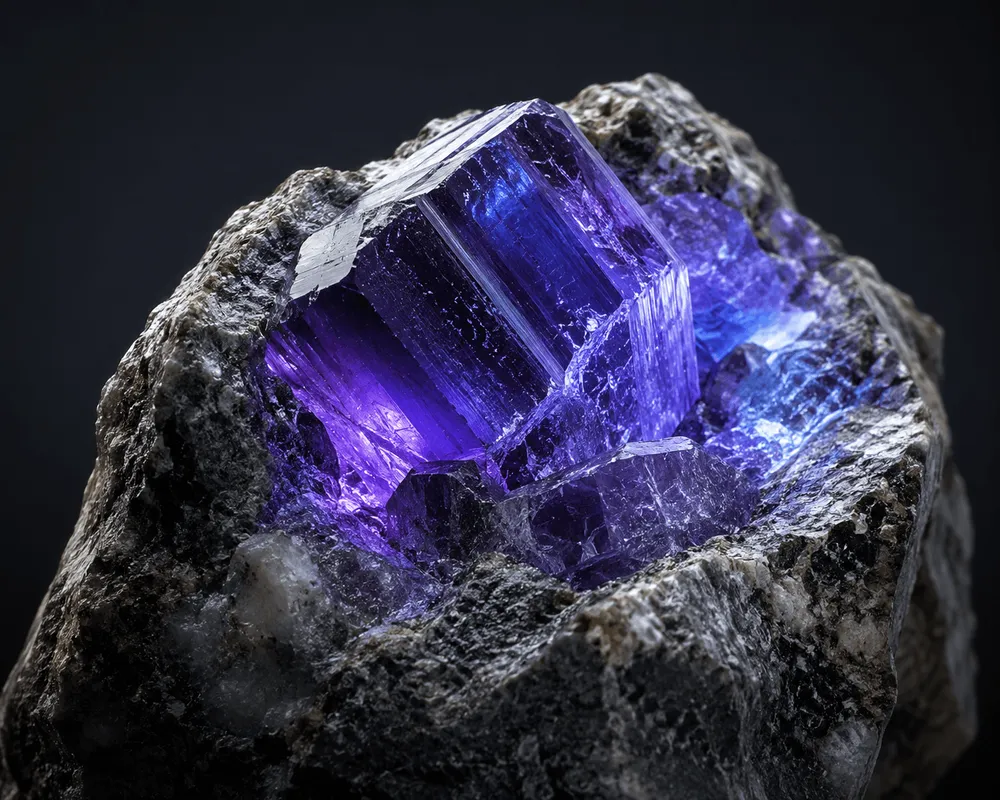
Representative rare earth minerals that Western nations have explored to date, such as monazite and bastnäsite, are primarily rich in neodymium and cerium, but their heavy rare earth content ratio is extremely low. In contrast, xenotime has the property of selectively concentrating heavy rare earths such as yttrium, dysprosium, and terbium. The confirmation that xenotime exists on the North American continent in a substantial scale from the surface to underground carries significant value not only in terms of geological rarity but also in building a foundation for self-sufficiency in strategic materials.
Trenches and Drill Holes Reveal 1.8 Percent Total Grade and Xenotime's Potential
Specific figures disclosed in the announcement concerned the Lucky Gem prospect, one of the four target areas where trench excavation and drilling surveys had already been conducted ahead of the others back in 2022. A previous surface trench survey spanning 32 meters in length recorded a total rare earth oxide grade of 1.5 percent, with heavy rare earth oxide reaching approximately 2,300 ppm. Of this, the yttrium grade showed a high level of 1,600 ppm. Data confirming underground continuity, not just the surface weathered layer, is also already accumulating.
Similarly, drill hole "DC 22-8" drilled at Lucky Gem captured a total rare earth oxide grade of 1.5 percent and heavy rare earth oxide exceeding 2,500 ppm across an 11.3-meter mineralized intersection underground. The yttrium grade in the subsurface sample was 1,700 ppm, showing strong agreement with the surface trench figures. The fact that heavy rare earths are uniformly concentrated from the surface to depths of over ten meters underground provides strong evidence supporting ease of mining and stability of ore quality.
Why have high-concentration zones of heavy rare earths not been prominent in North America until now? The reason lies in the difficulty of smelting and separation, as well as market cost structures. Light rare earths have a large market size, driven by demand for permanent magnets used in electric vehicle drive motors, making economies of scale easier to achieve. In contrast, heavy rare earths like yttrium are limited to extremely specialized fine chemical and specialty component applications. For a long period, new development in Western nations failed to reconcile profitability against the cheap supply volumes provided by China's massive smelting infrastructure.
The survey data revealed this time suggests the possibility of recovering high-grade ore using methods close to open-pit mining from near the surface. Unlike underground mining, which involves tunneling deep underground, open-pit mining can dramatically compress initial investment costs and development timelines. If the continuity of the vein is proven over a broader area through future surveys, a mining plan generating sufficient investment efficiency—even at small-scale operation—becomes realistic.
End-User Procurement Logic Shifting from Price Sensitivity to Physical Security
Currently, the conventional procurement logic that prioritized cost above all else is being fundamentally overturned. Behind this lies the manifestation of geopolitical risk and strict export controls by the Chinese government. Since China strengthened its export licensing system targeting heavy rare earths in April 2025, uncertainty in the supply chain has surged. According to industry data, as of June 2026, the volume of certain rare earth compounds exported from China to the United States has recorded zero for two consecutive months. For U.S. high-tech manufacturing and the defense industry, the issue is no longer about the magnitude of procurement costs but has shifted to how to avoid a physical shortage altogether.
John Swallow, President and CEO of Idaho Strategic, explained that the motivation behind this expanded exploration stems from a surge in dialogue with global end-product manufacturers (end users) who lack reliable sources of heavy rare earths and yttrium outside of China. In the past, moves seeking non-Chinese sources also existed, but many were constrained by financial profitability and price sensitivity. What is driving end users now is physical resilience in the supply chain—that is, a desperate survival need to ensure that materials actually arrive.
In the overall cost of end products such as superconductors, high-performance special alloys, phosphors, and fine ceramics, the proportion of raw material cost accounted for by yttrium and heavy rare earths is extremely small. Even if component prices surge, the impact on the overall financials of the product remains minor. Conversely, considering the risk that an entire system worth tens of millions of dollars could face a shipment halt simply because a few dozen grams of yttrium fail to arrive, customers cannot afford to be preoccupied with price. The existence of price-insensitive end users is rapidly lowering the profitability threshold for the small-scale yet reliable domestic operations that IDR is aiming for.
This shift in procurement logic is also driving a transformation in the business model of the rare earth industry. Previously, it was common for mining companies to sell mined concentrates at international spot market prices. However, now, cases are increasing where defense-related companies and automakers offer long-term offtake agreements or direct investment, on the condition that everything from mining to separation and smelting is completed domestically. The existence of a guaranteed buyer significantly lowers the hurdle for fundraising in mine development.
China's Grip on Over 70 Percent of Smelting Infrastructure and the Challenge of North American Domestic Processing
However, merely extracting quality xenotime ore from a mine does not complete the independence of the supply chain. The deepest bottleneck in the rare earth industry lies in the intermediate processing stage of separating specific elements from mined ore into single high-purity oxides. Currently, the industrial structure is such that China controls 70 to 90 percent of the world's total rare earth smelting and processing capacity. In particular, separating heavy rare earths, whose chemical properties closely resemble one another, requires a complex solvent extraction process spanning hundreds of stages along with advanced environmental management infrastructure.
While light rare earth separation facilities have begun operating in North America, commercial infrastructure capable of handling heavy rare earth separation and refining remains in a developmental stage, both in quality and quantity. If xenotime mined in Idaho were exported to Chinese smelters, it would ultimately fail to escape the net of geopolitical regulatory risk. For IDR's Diamond Creek project to truly demonstrate its strategic value, it must proceed in step with the development of intermediate smelting infrastructure on U.S. soil or within allied territories.
Fortunately, xenotime has an inherently higher concentration ratio of heavy rare earths compared to typical light rare earth minerals. This means the burden of pretreatment—removing unnecessary elements before feeding into a solvent extraction plant—can be reduced. Furthermore, within the United States, multiple demonstration tests of rapid heavy rare earth separation using proprietary new technologies are currently underway, leveraging federal government subsidies and Department of Defense procurement support. The development of the Diamond Creek deposit is also expected to play a role as an upstream pipeline supplying raw concentrate to these emerging domestic separation platforms.
Verification of the Conceptual Model Toward Formal Resource Estimation and Points to Watch in 2026
Integrating the exploration results to date, Idaho Strategic has constructed a preliminary, conceptual geological model regarding the deposit structure of the Lucky Gem prospect. According to the company's estimates, the prospective zone may contain approximately 20,000 tons of ore with a yttrium grade of 1,600 ppm. In the context of rebuilding domestic resource supply networks—supported in part by the U.S. State Department and other agencies—this scale carries sufficient impact as a commercial demonstration point. However, caution against excessive expectations is warranted.
As the company itself acknowledges, the current early-stage model is merely a concept based on limited exploration data. Measured against the guidelines of the U.S. Securities and Exchange Commission's (SEC) mineral resource disclosure standard "S-K 1300," this estimate lacks sufficient evidence to be formally recognized as a mineral resource. To prove it as a viable, confirmed resource, additional drilling surveys must be conducted and meticulous geological modeling must be built. Furthermore, independent scrutiny by third-party institutions will also be required.
As for specific points to watch going forward, three developments planned within 2026 deserve attention. First, the progress of additional exploration fieldwork and drilling across the entire Diamond Creek area. Second, the outcome of mineralogical beneficiation tests aimed at efficiently separating and extracting heavy rare earths from xenotime ore. Third, the results of the mining and evaluation of a bulk sample (demonstration test ore) planned from the Lucky Gem prospect. Only after clearing these verification steps will the yttrium mined from Idaho's mountains lay the cornerstone of an independent industrial foundation unshaken by China's export restrictions.