


On September 9 (U.S. time), Apple announced its first foldable iPhone, the "iPhone Duo." In Japan, pre-orders begin at 9:00 PM on October 16, with the release following on October 23. Priced from ¥364,800 including tax, the device opens to reveal a 7.6-inch screen that can display two apps side by side—a fundamentally different way of using an iPhone compared to previous models. Compared with the iPhone 18 Pro series, which shares the same A20 Pro chip, and with Android foldables that have been on the market longer, the case for choosing the Duo comes down not just to screen size but to how much of your daily workflow you want consolidated within iOS.
October 23 Launch: Pricing by Capacity and Pre-Order Details
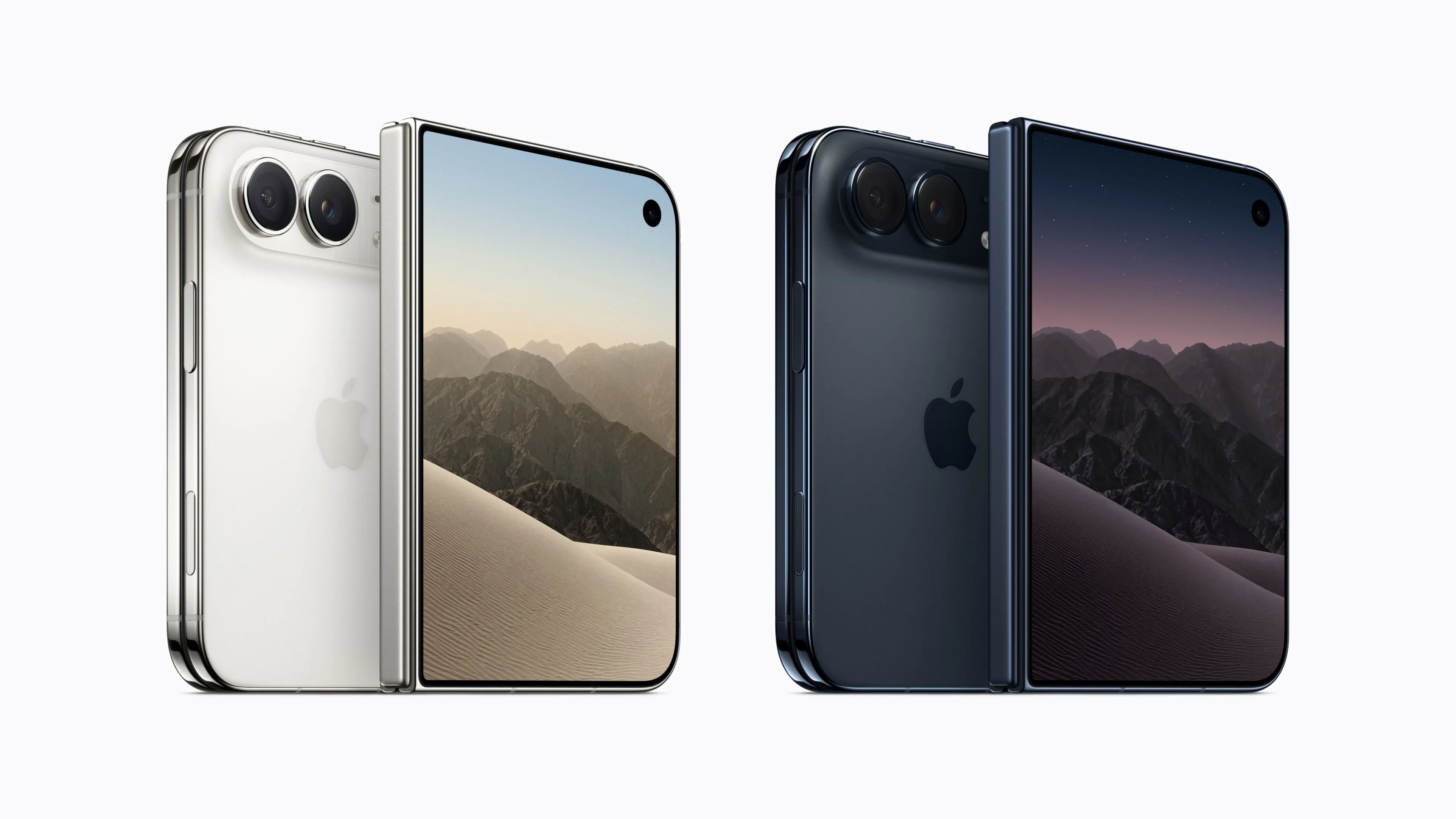
The iPhone Duo's Japan release date falls five weeks after the iPhone 18 Pro/Pro Max's September 18 launch. Duo pre-orders open at 9:00 PM on Friday, October 16, with release the following Friday, October 23. Japan is included among the initial launch markets. Apple has disclosed the difference in launch timing but has not explained the reason—such as manufacturing constraints.
| iPhone Duo Storage | Japan Price (tax included) |
|---|---|
| 256GB | ¥364,800 |
| 512GB | ¥399,800 |
| 1TB | ¥469,800 |
| 2TB | ¥574,800 |
These prices were confirmed on September 10, 2026, and do not include trade-in credits or carrier contract discounts. Two colors are available: Star White and Night Sky.
Higher-capacity models are worth considering only for specific use cases. If you plan to store large amounts of video or documents directly on the device, extra storage helps—but the core feature of opening the screen to use two apps is identical across all capacities, including the 256GB model. There's no need to jump to a higher-capacity model just to get the foldable multitasking experience.
An iOS Built for Opening Up, and the Engineering Behind the Crease
The Duo's inner display measures 7.6 inches, and the outer display 5.4 inches; both support ProMotion up to 120Hz. According to Apple, the outer screen's surface area is 90% that of the iPhone 18 Pro, while the inner screen is 50% larger than the Pro Max. Judging usability by diagonal measurement alone—treating the 5.4-inch outer screen as a "small iPhone" and the 7.6-inch inner screen as a "slightly bigger Pro Max"—would be a mistake, since the aspect ratios differ.
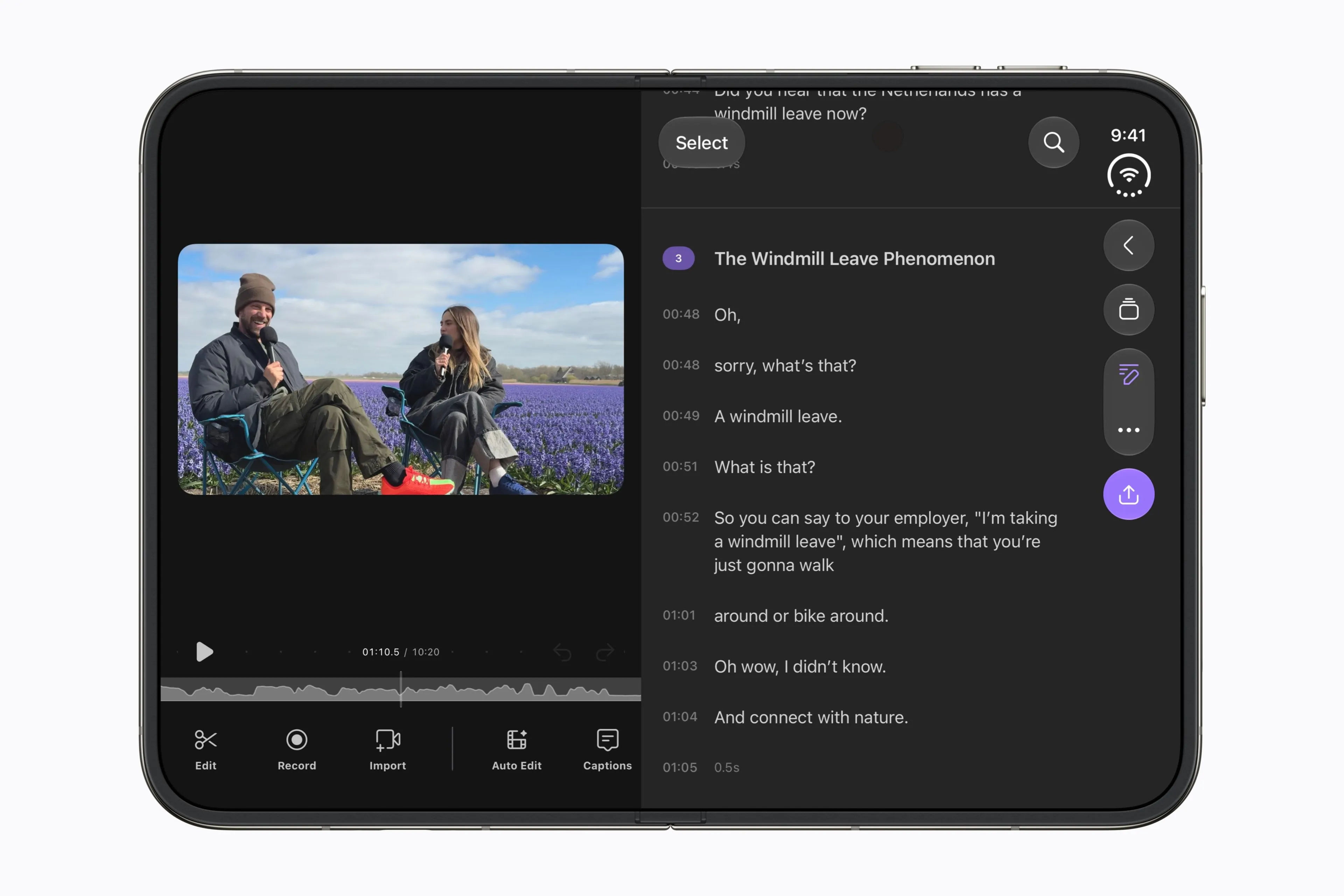
The feature that makes use of this extra space is iOS 27's "Split View." For the first time on iPhone, two apps can be displayed side by side, and in supported apps like Safari, two windows of the same app can be opened simultaneously. App combinations can also be saved and recalled later. For example, this lets you take notes while referencing a document in your browser, or compare two separate product pages, all while reducing how often you switch screens.
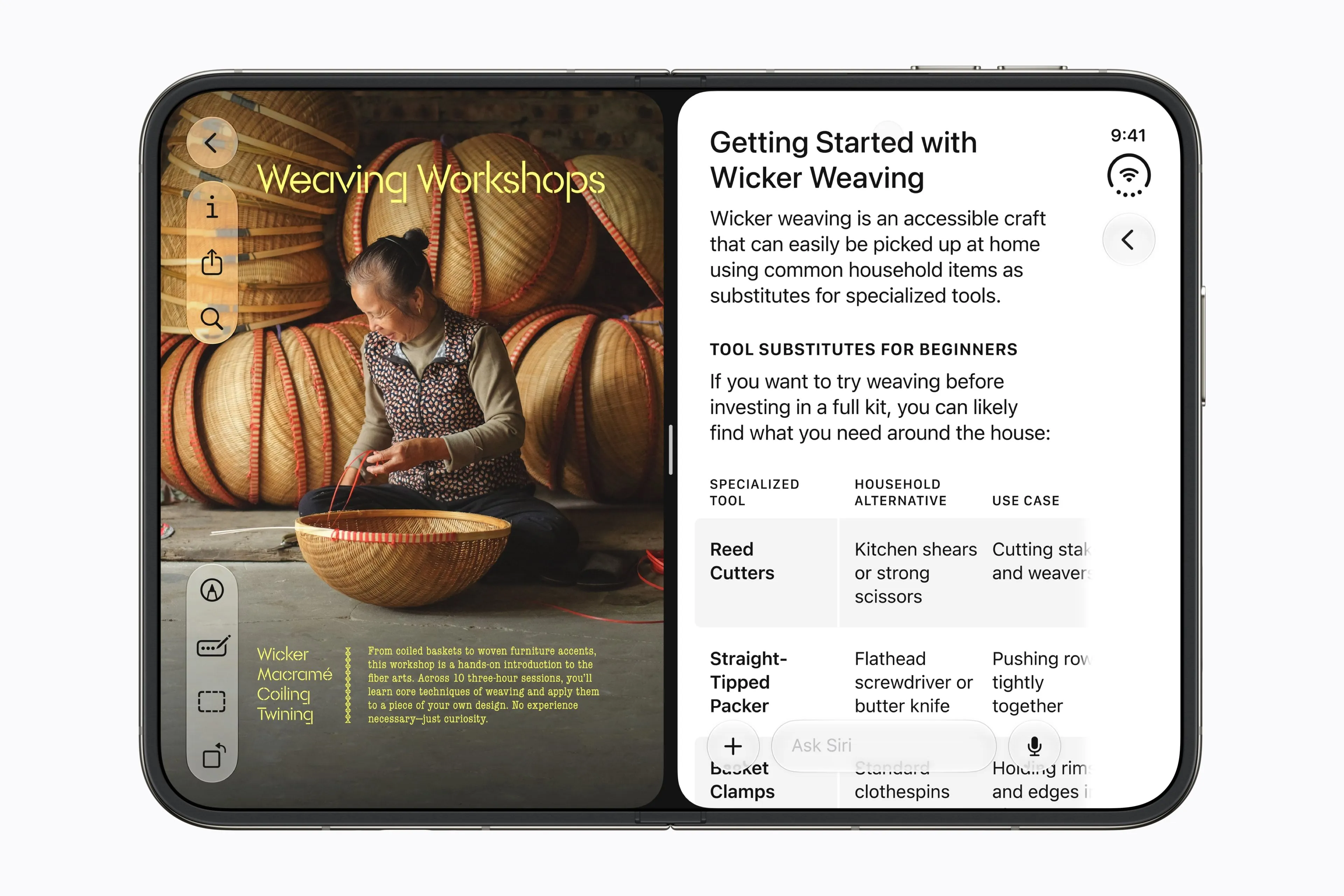
The control layout also adapts to the larger screen. The Dock and app control elements are positioned along the sides, freeing up vertical space for content. Apple states that it uses the same aspect ratio for both the inner and outer displays, so that content scales up or down proportionally when the device is opened or closed. Netflix, Zoom, and Slack were cited as examples of apps that support this. However, there's no guarantee that every third-party app you regularly use will be optimized in the same way.
The engineering behind the fold also affects display quality. According to Apple, a hinge supports the center of the open screen, and the glass layers inside the display slide against each other via an adhesive, easing friction during bending. The inner surface uses a Nano-texture polymer finish to reduce glare, with a titanium plate placed underneath. Rather than simply folding a rigid panel, the design allows movement between layers while still supporting the surface.
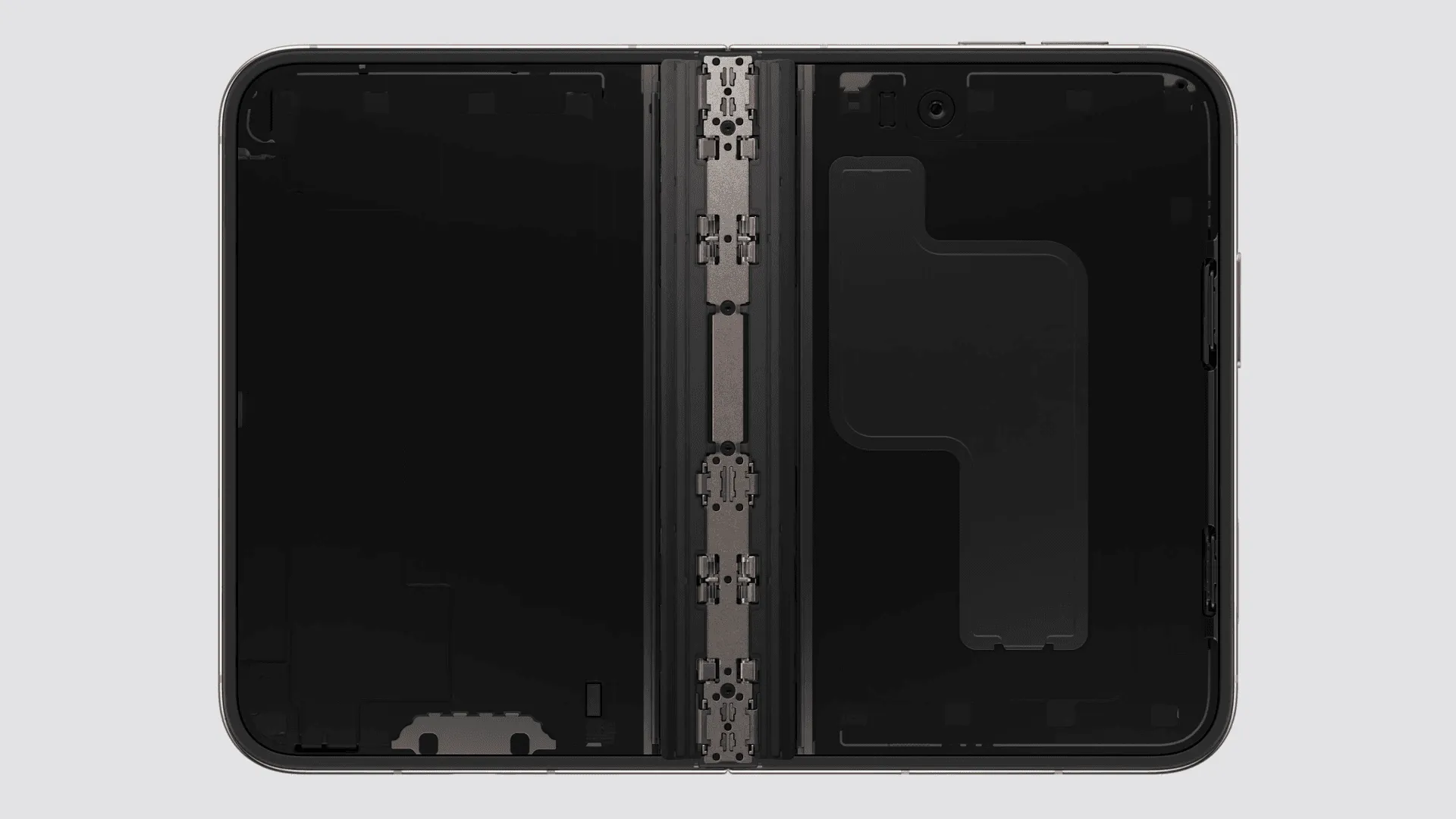
This construction doesn't prove that the crease will remain completely invisible over the long term. How the anti-glare surface treatment and the flat center-support structure actually affect visibility under different lighting and viewing angles is something worth checking on an actual unit. Apple Pencil (USB-C) is expected to work on both screens, but support is slated for later in 2026, with no guarantee it will be available at launch.
What Does the Price Difference Over the Pro Max Actually Buy You?
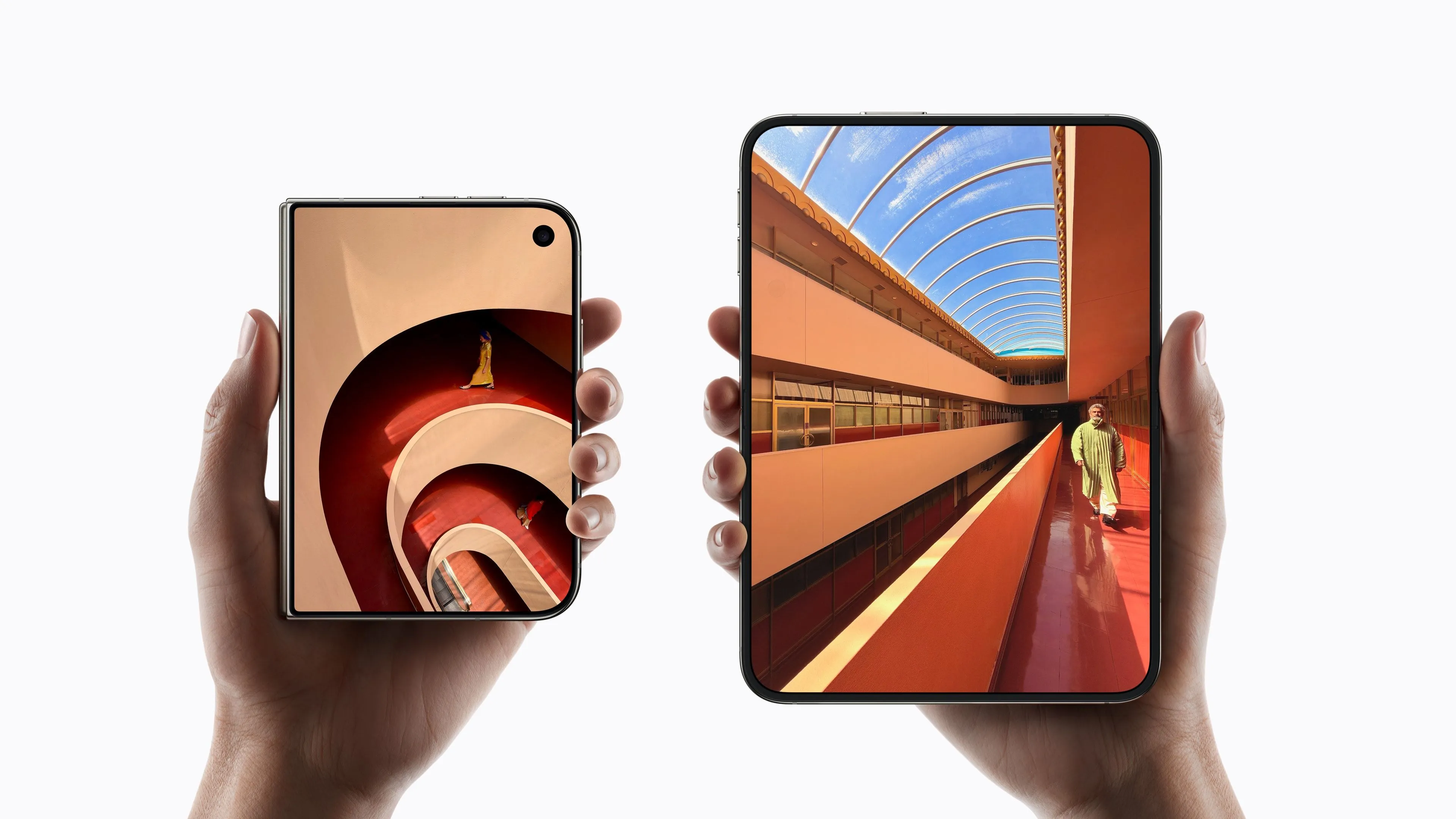
The 256GB iPhone 18 Pro costs ¥219,800, and the Pro Max costs ¥239,800. The Duo costs ¥125,000 more than the Pro Max, weighs 5g more, and is 6.1mm wider when closed. These figures come from ¥364,800 − ¥239,800 for price, 254g − 249g for weight, and 84.1mm − 78.0mm for width, all calculated from official specifications.
| Comparison | iPhone Duo | iPhone 18 Pro | iPhone 18 Pro Max |
|---|---|---|---|
| 256GB price (tax incl.) | ¥364,800 | ¥219,800 | ¥239,800 |
| Diagonal screen size | Inner 7.6 / Outer 5.4 in. | 6.3 in. | 6.9 in. |
| Width | 84.1mm (closed) | 71.9mm | 78.0mm |
| Height | 117.8mm | 150.0mm | 163.4mm |
| Thickness | 11.3mm closed / 5.2mm open | 8.75mm | 8.75mm |
| Weight | 254g | 211g | 249g |
| Chip | A20 Pro | A20 Pro | A20 Pro |
| Rear camera | 48MP wide + 48MP ultrawide | 48MP wide + ultrawide + dedicated telephoto | 48MP wide + ultrawide + dedicated telephoto |
| Main camera aperture | f/1.6 | Variable f/1.48–f/4.0 | Variable f/1.48–f/4.0 |
| Authentication | Side Touch ID | Face ID | Face ID |
| Rated video playback | Inner up to 31 hrs / Outer up to 44 hrs | Up to 36 hrs | Up to 45 hrs |
Prices reflect Apple Japan's 256GB base prices confirmed on September 10, 2026, excluding discounts, trade-ins, and accessories. Specifications are based on the official Duo and 18 Pro series spec pages, and prices on the Duo and 18 Pro series purchase pages. Dimensions and weight are official figures; battery life is based on Apple's own testing.
In terms of portability, the weight is nearly identical, but how the phone feels in hand differs. The Duo is shorter than the Pro Max but wider and thicker when closed. Apple's claim that it's "thinnest when open" shouldn't be mistaken for slimness in your pocket. Whether a shorter body that fits comfortably in your palm suits you, or whether the extra width gets in the way of thumb operation, becomes the deciding factor.
For those who prioritize the camera, the case for the Pro series is clear-cut. The Duo's "2x optical quality" claim refers to shots taken with the main camera, not the addition of a dedicated telephoto lens. This is a different capability from the Pro's 4x telephoto camera or the main camera's variable aperture. People who want to photograph distant subjects and people who want to take selfies with the rear camera while checking their composition on the outer screen have different priorities.
Even with the same A20 Pro chip, it's hard to attribute the Duo's extra cost to processing power alone. The Duo also includes a dedicated vapor chamber, but with a different chassis and cooling structure, sustained performance under load still needs to be verified separately. What you're really paying the premium for with the Duo is the foldable large screen and the parallel multitasking that iOS enables on top of it.
What Comparing Galaxy and Pixel Reveals
The Galaxy Z Fold8 packs a similarly 7.6-inch-class inner display into a body weighing about 201g. The Duo costs ¥94,920 more than the Fold8 and weighs 53g more. These figures come from ¥364,800 − ¥269,880 for price and 254g − 201g for weight, using Samsung's official direct-sales price at its August 7 Japan launch.
| Comparison | iPhone Duo | Galaxy Z Fold8 | Galaxy Z Fold8 Ultra | Pixel 11 Pro Fold |
|---|---|---|---|---|
| 256GB price (tax incl.) | ¥364,800 | ¥269,880 | ¥296,780 | ¥279,900 |
| Inner/outer screen | 7.6 / 5.4 in. | Approx. 7.6 / 5.5 in. | Approx. 8.0 / 6.5 in. | 8 / 6.5 in. |
| Width when closed | 84.1mm | Approx. 82mm | Approx. 73mm | 76mm |
| Thickness when closed | 11.3mm | Approx. 9.7mm | Approx. 8.9mm | 10.1mm |
| Weight | 254g | Approx. 201g | Approx. 215g | 239g |
| Dedicated telephoto camera | None | None | Yes, approx. 10MP | Yes, 10.8MP, 5x optical |
| Dust/water resistance rating | IP68 | IP4X/IPX8 | IP4X/IPX8 | IP68 |
Apple and Google pricing and specifications were confirmed on September 10, 2026; Samsung pricing reflects its August 7, 2026 launch price. All figures are for the Japan-market 256GB model and exclude promotions, trade-ins, and carrier contracts. Samsung's dimensions and weight are rounded official figures.
Among these four devices, screen size when open and body width when closed don't line up in the same order. The Duo and Fold8 both feature short, wide bodies, with the Fold8's inner display oriented horizontally in a 4:3 ratio. The Pixel's inner display, at 2,076×2,152 pixels, is closer to square. Diagonal measurement alone can't tell you how much space video content will occupy or how well two apps will fit side by side.
If light weight is your priority, the Fold8 becomes the natural comparison point; if you also want telephoto capability, the Fold8 Ultra or Pixel become candidates. Lumping Samsung's standard model together with the Ultra risks overlooking real differences in weight and camera options. Among this group, the Duo is both the most expensive and the heaviest. How much you value being able to open and arrange familiar iOS apps side by side ultimately determines the choice.
Ratings like IP68 also only indicate resistance to dust and water under specific conditions—they don't rank hinge durability or drop resistance. The Duo's water resistance rating covers depths up to 6 meters for up to 30 minutes. Durability against screen pressure or the device's condition after extended use through repeated opening and closing can't be judged from these ratings alone.
What to Weigh Before Buying: The Real Test of a Large Foldable Screen
The Duo splits its battery between the left and right sides, and Apple's rated video playback time varies significantly: up to 31 hours on the inner screen versus up to 44 hours on the outer screen. If you're buying the Duo to use its large screen, the inner-screen figure is the one that matters for your judgment. Seeing "up to 44 hours" alone shouldn't lead you to expect battery life close to the Pro Max's 45 hours—video playback and everyday use with multiple open apps are different conditions.
Charging via a separately sold 60W-or-higher adapter and USB-C cable reaches up to 50% in about 20 minutes. The device also supports wireless charging via MagSafe and Qi2. Rather than trying to estimate battery capacity from specs alone, it's worth checking in practice how often you'll need to recharge while working with the screen open or watching videos continuously.
Software availability also varies by timing. Apple Pencil support is planned for later this year, and Siri AI begins with an English-language beta on September 14, with Japanese support planned for October. Apple Intelligence's Japanese-language support and the rollout of the new Siri shouldn't be treated as the same thing. Before purchasing, it's worth confirming whether the features you need will actually be available at that point in time.
Before pre-ordering, it's worth thinking through which apps you'd want to display side by side every day. If you have a concrete use case—reviewing documents while taking notes, comparing separate product pages—and the relevant apps are optimized for the large screen, the Duo can genuinely reduce how often you switch screens while out and about. When trying the device in person, it's worth opening that exact combination of apps and checking text size and how much screen space remains once the keyboard appears. How much of your everyday iPhone workflow you can complete within a single open screen is the real question that should guide your decision on the Duo.