

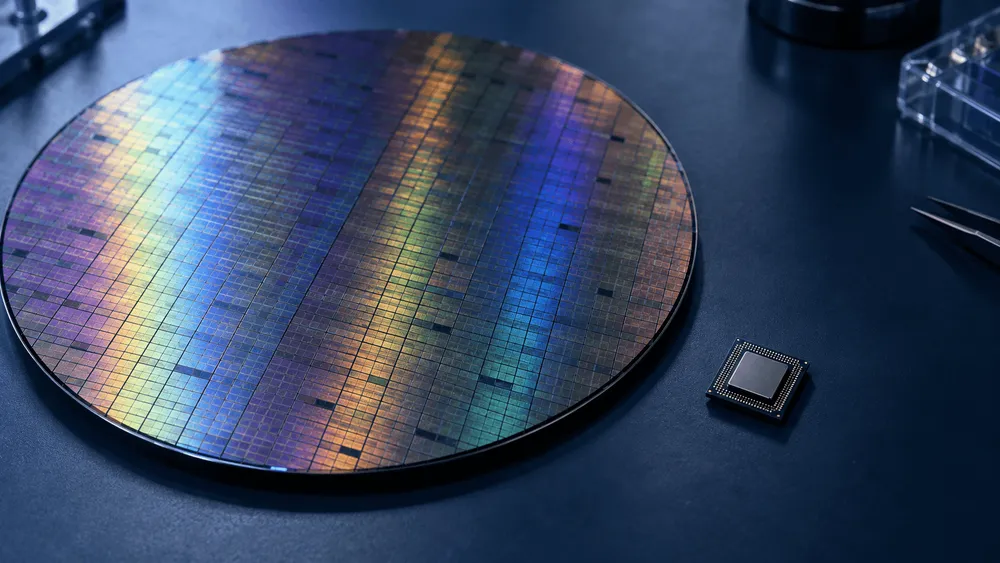
Talks between Samsung and Qualcomm over manufacturing 2nm semiconductors are dragging on over price. The Korean business outlet thebell reports that Qualcomm is seeking a lower price while Samsung is refusing to budge, and that production at Samsung could slip to 2027. Improvements in the manufacturing process have reportedly been noted, but that alone is not enough to close a deal. Layering in Samsung's published information on AI-related customer projects and its process technology, order volume and smartphone launch schedules also emerge as conditions that could shape the deal.
Beyond the price gap, order volume also shapes the talks
According to thebell's exclusive report, the talks concern contract manufacturing of Qualcomm application processors (APs) on Samsung's 2nm process. An AP is the semiconductor that handles the main processing in a smartphone, and a foundry is a business that manufactures chips from designs supplied by customers. The article was published on September 9 and made free to read on September 11.
The outlet says Qualcomm has a favorable view of the process under discussion. However, it does not disclose actual yield figures, which indicate the proportion of usable chips, or the conditions under which performance was evaluated. The technical improvements are also based on reporting, not an announcement by the two companies that the process has been certified for mass production.
One point that cannot be overlooked in the price negotiations is that the production volume under discussion is not large. thebell cites this as another reason Samsung is reluctant to cut its price. It also reports that, as the talks drag on, production within this year is becoming difficult and the parties may discuss next-generation products anew. Neither the products concerned nor the price or volumes have been made public.
The strategic value of winning a major customer has to be considered separately from the profitability of each individual order. Even if resuming business with Qualcomm carries strategic value, if near-term manufacturing volume is limited, the volume gains Samsung would get in return for a price cut are small. Conversely, if other customer projects increase, Samsung gains room to compare terms. The talks can also be read as an example of that profitability calculation coming to the surface.
How far can the expansion of major projects be confirmed?
In its July 30 earnings announcement, Samsung said design wins from major customers in its foundry business are expanding. Its example was a 2nm project for HPC, or high-performance computing. It also outlined plans to expand production of new mobile products on its second-generation 2nm process in the second half of 2026.
As drivers of improvement in the business, it cited demand for HBM base dies and strong orders from U.S. customers. HBM is high-bandwidth memory used for AI, and the base die is the foundational chip it is built on. However, the earnings improvement it described comes with the qualifier "before provisions for incentive-related costs." That cannot simply be read as meaning the foundry's profits have definitively grown.
The more concrete partner is Broadcom. The memorandum the two companies announced on July 25 expands cooperation in memory and foundry. On the manufacturing side it covers processes at 2nm and below, and lists cooperation on products such as those for wireless broadband communications. It is a vision of deepening ties in both AI memory and advanced manufacturing.
However, the figure of more than $200 billion in the announcement is the expected scale of cooperation across memory and foundry combined over the five years through 2030. It does not represent an amount confirmed as 2nm manufacturing orders. How much is allocated to manufacturing, and what production volume that implies, cannot be determined from the announcement.
| Project / initiative | Disclosed status | Caveat when judging contract manufacturing |
|---|---|---|
| Expanded cooperation with Broadcom | Memorandum signed covering memory and foundry | The expected scale of cooperation cannot be treated as a confirmed 2nm order value |
| New mobile products on second-generation 2nm | Samsung plans to ramp up in the second half of 2026 | The customer is not specified as Qualcomm |
| 2nm manufacturing for Qualcomm | thebell reports price talks are dragging on | Contract, product name and mass-production start date are undetermined |
The expanded Broadcom cooperation is a memorandum and Samsung's second-generation 2nm ramp-up is a plan; neither indicates that a manufacturing contract with Qualcomm has been concluded. For Qualcomm, the situation is a report that price talks continue, and an announcement of a contract is awaited.
Still, it matters that Samsung has officially explained the expansion of customer projects and even named the areas of cooperation with Broadcom. It means Samsung can advance business with other customers while waiting on a Qualcomm contract. That change helps explain its cautious stance on price. But it does not show that the fabs are full, or that Samsung can secure profitability without Qualcomm's orders.
Diversifying manufacturing takes time, not just price
What Samsung itself has cited as a challenge for customers adopting advanced processes is the labor and time required for design. In its official explanation of SAFE Forum 2023, Samsung explains that as feature sizes shrink, design rules grow more complex and the development resources and time required increase. To reduce that burden, it introduced supporting technologies for moving designs to Samsung's process, aimed at customers who source from multiple foundries.
Even if a chip's function is the same, changing the manufacturing process means implementing the design to suit that process and verifying that it meets the required performance. Samsung provides migration support to shorten that work. Even if the generation name "2nm" is shared, simply choosing a different manufacturer does not complete the preparation.
That explanation describes general development constraints and does not indicate how much migration work remains on current Qualcomm products. How far the designs under negotiation have progressed is unknown. Even so, it shows that when considering diversifying manufacturing, schedule must be weighed alongside unit price.
APs for smartphones must be supplied in time for the finished product's launch. As price negotiations continue, the time available for preparation and manufacturing shrinks, so it can become more rational to settle terms for the next generation than to rush to meet the current product. The prospect thebell reported of talks being carried over is easier to understand in light of this time constraint.
Therefore, reports that production at Samsung will be delayed cannot be extended to a launch delay for Qualcomm's 2nm products as a whole. The report covers only the talks on outsourcing manufacturing to Samsung. Product plans that include other manufacturers, and smartphone launch timing, have not been decided.
Adopting chips in Galaxy and contract manufacturing are separate deals
In an official article on July 22, Qualcomm said the Galaxy Z Fold8 will be powered worldwide by the Snapdragon 8 Elite Gen 5 for Galaxy. The relationship of Samsung products using Qualcomm semiconductors continues in actual products.
In the current talks, however, the roles of buyer and supplier are reversed. For Galaxy, Samsung adopts the chips; in the foundry deal, Qualcomm asks Samsung to manufacture. Supplying products in the former does not mean the two have agreed on manufacturing prices or volumes in the latter. The depth of the relationship alone cannot explain whether a manufacturing contract will succeed.
For smartphone buyers, too, it is premature to predict price cuts or hikes from these negotiations. Between more manufacturing sources and lower procurement costs lie actual price terms and production volumes. Whether any change is then reflected in device prices is a separate decision.
When news comes that a contract has been reached, it will be worth checking how concretely the target AP and mass-production start date are specified. Only when volumes and prices acceptable to both sides are set on a schedule that meets product launches will Samsung become a manufacturing option Qualcomm can actually use.