

テクノロジー
NVIDIAの5000億ドル計画、最大1250億ドル保証が示す「ダークGPU」の正体
NVIDIAの5000億ドル融資プラットフォームは動員目標でありMOUベースだ。Sacksが警告する供給過剰リスクをダークファイバーの歴史的数値と対比し、稼働しないGPUが可視化する条件を検証する。

世界的なオルタナティブ資産運用会社。Anthropicの中堅企業向けAI実装戦略を支援するため、新設された合弁会社に出資している。
NVIDIAの5000億ドル融資プラットフォームは動員目標でありMOUベースだ。Sacksが警告する供給過剰リスクをダークファイバーの歴史的数値と対比し、稼働しないGPUが可視化する条件を検証する。

NVIDIAは金融6社と覚書を結び、AI計算基盤へ5,000億ドル超の第三者資本を動員する構想を打ち出した。GPUを金融資産として扱う一方、最終契約と損失分担は未確定だ。

Anthropicは、AIモデルの企業導入における「最後の1マイル」問題解決のため、Blackstoneなどと15億ドルの合弁会社を設立した。この新会社は、Palantirが確立したFDEモデルを採用し、中堅企業向けにエンジニアを常駐させ、技術統合から変化管理まで一貫した導入支援を提供する。これは、AI産業の競争軸がモデル性能からデリバリー能力へ移行しつつあることを示唆しており、OpenAIも同様の動きを見せている。
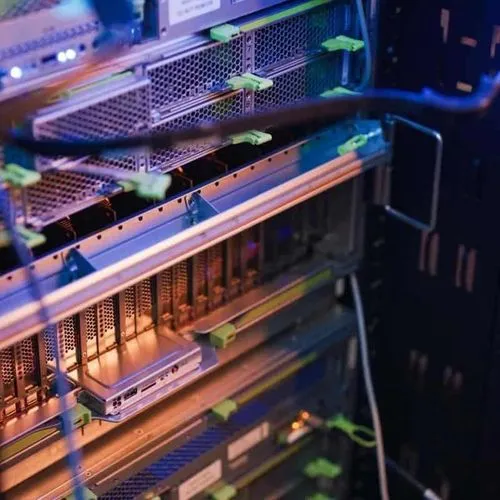
Facebook親会社のMetaが、米国内のデータセンター開発資金として約350億ドルの資金調達パッケージを検討している。Apollo Global Managementが主導し、KKR & Co.も参加する見込 […]
Heart failure poses a global health challenge affecting millions of individuals, and access to guideline-directed medical therapy is often limited. This limitation is frequently attributed to factors such as drug availability, slow adoption, clinical inertia, and delayed diagnosis. Despite international recommendations promoting the use of guideline-directed medical therapy for heart failure management, personalized approaches are essential in settings with resource constraints. In India, crucial treatments like angiotensin II receptor blocker neprilysin inhibitors and sodium-glucose co-transporter 2 inhibitors are not fully utilized despite their established safety and efficacy. To address this issue, an expert consensus involving 150 specialists, including cardiologists, nephrologists, and endocrinologists, was convened. They deliberated on patient profiles, monitoring, and adverse side effects and provided tailored recommendations for guideline-directed medical therapy in heart failure management. Stressing the significance of early initiation of guideline-directed medical therapy in patients with heart failure, especially with sodium-glucose co-transporter 2 inhibitors, the consensus also explored innovative therapies like vericiguat. To improve heart failure outcomes in resource-limited settings, the experts proposed several measures, including enhanced patient education, cardiac rehabilitation, improved drug access, and reforms in healthcare policies.
Efficient biomedical waste management is essential for hospital hygiene and public health, particularly within the context of smart city infrastructures. This study proposes an innovative hybrid model combining a Genetic Algorithm (GA) with a Fuzzy Inference System (FIS) to enhance waste classification accuracy and improve segregation efficiency. Leveraging six months of empirical data from Apollo Hospitals and Fortis Malar Hospital in Chennai, the model is tailored to classify five distinct types of biomedical waste effectively. A central component, AUTOM, employs fuzzy logic for automated decision-making, optimizing waste disposal and addressing challenges like the preservation of critical genetic information typically compromised in traditional GA approaches. This integration not only improves system interpretability but also enables precise waste classification using compact, cost-effective sensors that ensure scalability. Validation in the Proteus simulator demonstrates robust performance, with the model achieving a classification accuracy of 96.4%, precision of 96.8%, and recall of 94.8%. These results underscore the GA-FIS model's potential to elevate biomedical waste management practices, contributing to sustainable public health efforts and environmental protection within smart cities.
Integrative medicine is becoming an important part of future medical education, bringing together modern biomedicine with traditional systems such as Ayurveda, Unani, Yoga and traditional Chinese medicine (TCM). This approach supports whole-person care by focusing on physical, mental, emotional and lifestyle factors. It is increasingly used in chronic disease management, mental health, pain care, rehabilitation and preventive health. Case studies from different countries show improvements in patient comfort, quality of life and treatment adherence when integrative methods are combined with standard medical care. Growing public acceptance, government support and scientific interest continue to strengthen this field. Advances in technology, including telemedicine and artificial intelligence (AI), are helping make integrative care more accessible, personalised and effective. Together, these developments are shaping a more holistic and patient-centred direction for global healthcare and medical education.