
テクノロジー
Claude内でSlackやCanva等のアプリ直接操作が可能に:Anthropicが描く「AI OS」への野心
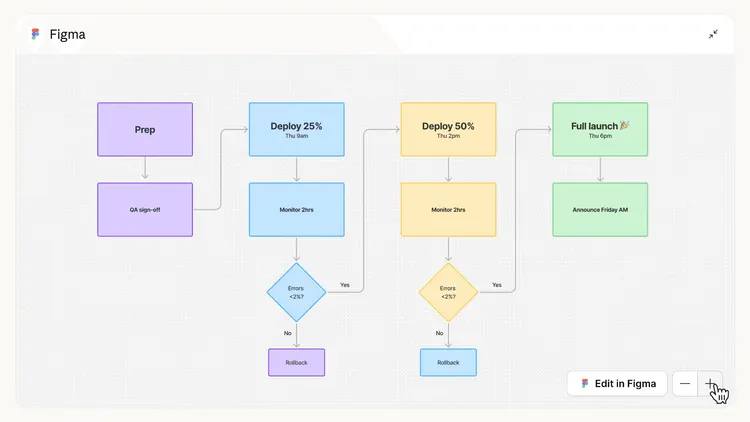
2026年1月27日、Anthropicは同社のAIアシスタント「Claude」に対し、Asana、Figma、Slack、Canvaといった主要なビジネスアプリケーションを統合し、チャットインターフェース内で直接操作可 […]

SQL、Python、Rを組み合わせたデータ分析と、その結果をインタラクティブなアプリとして共有できるプラットフォームを提供する企業。Claude内でのデータ分析と可視化の統合に活用されている。
We develop a novel synthetic biology platform for rapid, scalable expression of fungal biosynthetic genes and encoded metabolites. For decades, fungi have been a source of U.S. Food and Drug Administration–approved natural products such as penicillin, cyclosporine, and the statins. Recent breakthroughs in DNA sequencing suggest that millions of fungal species exist on Earth, with each genome encoding pathways capable of generating as many as dozens of natural products. However, the majority of encoded molecules are difficult or impossible to access because the organisms are uncultivable or the genes are transcriptionally silent. To overcome this bottleneck in natural product discovery, we developed the HEx (Heterologous EXpression) synthetic biology platform for rapid, scalable expression of fungal biosynthetic genes and their encoded metabolites in Saccharomyces cerevisiae. We applied this platform to 41 fungal biosynthetic gene clusters from diverse fungal species from around the world, 22 of which produced detectable compounds. These included novel compounds with unexpected biosynthetic origins, particularly from poorly studied species. This result establishes the HEx platform for rapid discovery of natural products from any fungal species, even those that are uncultivable, and opens the door to discovery of the next generation of natural products.
In this article, we provide a detailed survey of techniques for hexahedral mesh generation. We cover the whole spectrum of alternative approaches to mesh generation, as well as post-processing algorithms for connectivity editing and mesh optimization. For each technique, we highlight capabilities and limitations, also pointing out the associated unsolved challenges. Recent relaxed approaches, aiming to generate not pure-hex but hex-dominant meshes, are also discussed. The required background, pertaining to geometrical as well as combinatorial aspects, is introduced along the way.
Designs for quantum error correction depend strongly on the connectivity of the qubits. For solid-state qubits, the most straightforward approach is to have connectivity constrained to a planar graph. Practical considerations may also further restrict the connectivity, resulting in a relatively sparse graph such as the heavy-hexagonal (“heavy-hex”) architecture of current IBM Quantum devices. In such cases, it is hard to use all qubits to their full potential. Instead, in order to emulate the denser connectivity required to implement well-known quantum error-correcting codes, many qubits remain effectively unused. In this work, we show how this bug can be turned into a feature. By using the unused qubits of one code to execute another, two codes can be implemented on top of each other, allowing easy application of fault-tolerant entangling gates and measurements. We demonstrate this by realizing a surface code and a Bacon-Shor code on a 133-qubit IBM Quantum device. Using transversal controlled-X () gates and lattice surgery, we demonstrate entanglement between these logical qubits with code distance up to d=4 and five rounds of stabilizer-measurement cycles. The nonplanar coupling between the qubits allows us to simultaneously measure the logical XX, YY, and ZZ observables. With this, we verify the violation of Bell’s inequality for both the d=2 case with postselection featuring a fidelity of 94% and the d=3 instance using only quantum error correction. Published by the American Physical Society 2024
Standard PolyCube-based hexahedral (hex) meshing methods aim to deform the input domain into an axis-aligned PolyCube volume with integer corners; if this deformation is bijective, then applying the inverse map to the voxelized PolyCube yields a valid hex mesh. A key challenge in these methods is to maintain the bijectivity of the PolyCube deformation, thus reducing the robustness of these algorithms. In this work, we present an interactive pipeline for hex meshing that sidesteps this challenge by using a new representation of PolyCubes as unions of cuboids. We begin by deforming the input tetrahedral mesh into a near-PolyCube domain whose faces are loosely aligned to the major axis directions. We then build a PolyCube by optimizing the layout of a set of cuboids with user guidance to closely fit the deformed domain. Finally, we construct an inversion-free pullback map from the voxelized PolyCube to the input domain while optimizing for mesh quality metrics. We allow extensive user control over each stage, such as editing the voxelized PolyCube, positioning surface vertices, and exploring the trade-off among competing quality metrics, while also providing automatic alternatives. We validate our method on over one hundred shapes, including models that are challenging for past PolyCube-based and frame-field-based methods. Our pipeline reliably produces hex meshes with quality on par with or better than state-of-the-art. We additionally conduct a user study with 21 participants in which the majority prefer hex meshes they make using our tool to the ones from automatic state-of-the-art methods. This demonstrates the need for intuitive interactive hex meshing tools where the user can dictate the priorities of their mesh.
The High Energy X-ray Probe (HEX-P) is a proposed NASA probe-class mission that combines the power of high angular resolution with a broad X-ray bandpass to provide the necessary leap in capabilities to address the important astrophysical questions of the next decade. HEX-P achieves breakthrough performance by combining technologies developed by experienced international partners. To meet the science goals, the payload consists of a suite of co-aligned X-ray telescopes designed to cover the 0.2–80 keV bandpass. The High Energy Telescope (HET) has an effective bandpass of 2–80 keV, and the Low Energy Telescope (LET) has an effective bandpass of 0.2–20 keV. HEX-P will be launched into L1 to enable high observing efficiency, and the combination of bandpass and high observing efficiency delivers a powerful platform for broad science to serve a wide community. The baseline mission is 5 years, with 30% of the observing time dedicated to the PI-led program and 70% to a General Observer (GO) program. The General Observer program will be executed along with the PI-led program.