

Tech Product

Fedora Workstation 44

別名: Fedora 44

Overview

最終更新: 2026年7月21日

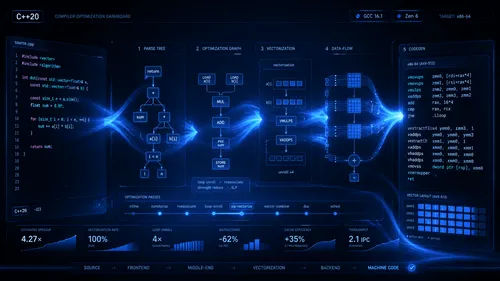
Red Hatが支援するコミュニティベースのLinuxディストリビューション。GCC 16の先行テスト環境として利用され、最新のコンパイラ技術をいち早く導入している。

Mentioned Articles

1 件

Research Papers

5 件
  • Objective Assessment of Knot-Tying Proficiency With the Fundamentals of Arthroscopic Surgery Training Program Workstation and Knot Tester.

    R. Pedowitz, Gregg T. Nicandri, R. Angelo, R. Ryu, A. Gallagher

    201575 件引用Semantic Scholar
  • Is Apparent Diffusion Coefficient Value Measured on Picture Archiving and Communication System Workstation Helpful in Prediction of High-grade Meningioma?

    S. Hirunpat, N. Sanghan, C. Watcharakul, K. Kayasut, N. Ina, H. Pornrujee

    20167 件引用Semantic Scholar
  • THE RELATIONSHIP BETWEEN MUSCULOSKELETAL DISORDERS AND WORKSTATION CONDITIONS AMONG ACADEMIC AND NONACADEMIC STAFFS IN SCHOOL OF PUBLIC HEALTH, QAZVIN UNIVERSITY OF MEDICAL SCIENCES IN 2012

    Aghanasab, Ghalenoei, Kouhnavard, A. Panah

    20174 件引用Semantic Scholar
  • Self-directed learning versus traditional instructor-led learning for education on a new anaesthesia workstation: a noninferiority, randomised, controlled trial

    Caterina Gutersohn, Sandra Schweingruber, Maximilian Haudenschild, Markus Huber, R. Greif, Aexander Fuchs

    20253 件引用Semantic Scholar

    Background It is fundamental for patient safety that medical devices are correctly and competently applied. Shift work, especially in anaesthesia, poses challenges to provide timely comprehensive learning opportunities. Because personnel shortages encourage cuts to staff education, self-directed learning might alleviate these difficulties. Methods We conducted a single-centre, noninferiority, randomised, controlled trial in a large university-based anaesthesia department. Anaesthesia nurses and physicians were randomly assigned 1:1 to self-directed learning including a learning video (intervention) or to an instructor-led workshop (control). Both groups attended a 1-h teaching session on a new anaesthesia workstation. Around 3 months later, participants from both groups were assessed on 12 competences at an examination station. The defined primary outcome was the difference in success rates between groups. We hypothesised that the success rate of self-directed learning would be noninferior to instructor-led learning by a noninferiority margin of Δ=10%. Results Data from 222 participants (97 anaesthesia nurses, 125 physicians) were analysed. Participants were aged between 32 and 44 yr; 35.6% had <5 yr of professional experience. The success rate difference between both groups was −0.9% (90% confidence interval: −3.8%–1.7%), confirming the noninferiority of self-directed learning. Discussion Creating an educational video for the self-directed acquisition of necessary knowledge and skills to handle an anaesthesia workstation requires initial investment, but reduces substantially instructor time, as learners can study independently according to their needs. Video-supported self-directed learning of the handling of an anaesthesia workstation was not inferior to traditional teacher-led instruction. Clinical trial registration ClinicalTrials.gov(NCT05530382).

  • Novel deep learning CCTA-FFR for detecting functionally significant coronary stenosis: Comparison with iFR.

    M. Roshan, G. Gigliotti, Jeffrey Gonzalez, R. Cury, C. Lamy, Karl Sayegh, Ricardo C. Cury

    20261 件引用Semantic Scholar

    BACKGROUND Deep learning-based fractional flow reserve derived from coronary CT angiography (CT-FFR) enables noninvasive assessment of lesion-specific ischemia. Onsite CT-FFR systems provide near-real-time physiologic evaluation at the workstation, potentially reducing unnecessary invasive testing. This study evaluated the diagnostic performance of a novel onsite deep learning CT-FFR algorithm compared with invasive instantaneous wave-free ratio (iFR). METHODS We retrospectively analyzed 44 patients (44 lesions) who underwent clinically indicated coronary CT angiography (CCTA) and invasive iFR. CT-FFR values were generated using an onsite deep learning algorithm (cFFR v6) 1-2 ​cm distal to visually identified stenoses. Physiologic significance was defined as CT-FFR ≤0.80 or iFR ≤0.89. Diagnostic performance metrics were calculated overall and within CCTA stenosis strata (<50 ​%, 50-70 ​%, >70 ​%). ROC analysis and Pearson correlation assessed discriminative ability and linear association. Additional comparative analyses evaluated diagnostic accuracy of CCTA ≥50 ​% and ≥70 ​% thresholds relative to iFR and quantified incremental diagnostic value of CT-FFR over CCTA alone. RESULTS Of 44 lesions, 28 (63.6 ​%) were iFR-positive and 30 (68.2 ​%) were CT-FFR-positive. CT-FFR demonstrated a sensitivity of 89.3 ​%, specificity of 68.8 ​%, positive predictive value of 83.3 ​%, negative predictive value of 78.6 ​%, and accuracy of 81.8 ​%; the area under the ROC curve was 0.79 (95 ​% CI, 0.66-0.92). CT-FFR and iFR showed a modest but significant correlation (r ​≈ ​0.37). Performance remained favorable in moderate (40-70 ​%) stenoses (AUC 0.73) and severe (>70 ​%) stenoses (AUC 0.84). In contrast, CCTA ≥50 ​% and ≥70 ​% thresholds showed limited discriminatory ability versus iFR (AUC 0.44 and 0.52, respectively). Compared with CCTA alone, CT-FFR improved both sensitivity and specificity and substantially increased AUC across both thresholds. CONCLUSION The onsite deep learning CT-FFR algorithm demonstrated good diagnostic agreement with invasive iFR and maintained performance across stenosis severity categories, while providing clear incremental value over CCTA stenosis assessment alone. These findings support the feasibility of rapid, workstation-integrated physiologic assessment during CCTA interpretation. Larger multicenter studies are needed to validate these results and clarify the clinical role of onsite CT-FFR.