
サイエンス
アイデアを形にするのに40年、三面ファスナー「Y-zipper」が空間建築の常識を覆す
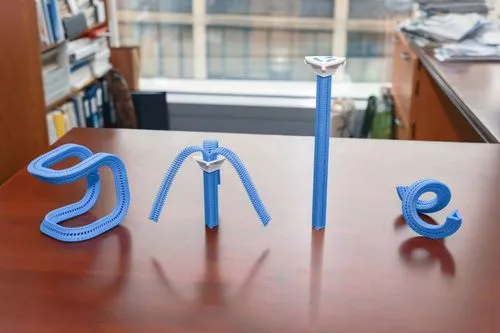
MITの研究チームは、約40年前に考案された「三辺のファスナー」のアイデアを現代のデジタルファブリケーション技術で実現した「Y-zipper」を開発した。これは、柔軟な3本のストリップを特殊なスライダーで結合し、瞬時に強固な三角柱構造を形成することで、可変剛性のニーズに応える画期的な技術である。

MITのCSAIL研究チームが開発した、3本のストリップを結合して立体的な三角柱を形成するファスナー技術。専用ソフトウェアによる自動設計と3Dプリンターでの一体成形が可能で、未結合時と比較して剛性を約160倍に高めることができる。医療用ブレイス、ロボットのアクチュエータ、建築用テントの骨組みなど、柔軟性と強度の切り替えが必要な幅広い分野への応用が期待されている。
Triglycerides (TG) are required for fatty acid transport and storage and are essential for human health. Angiopoietin-like-protein 8 (ANGPTL8) has previously been shown to form a complex with ANGPTL3 that increases circulating TG by potently inhibiting LPL. We also recently showed that the TG-lowering apolipoprotein A5 (ApoA5) decreases TG levels by suppressing ANGPTL3/8-mediated LPL inhibition. To understand how LPL binds ANGPTL3/8 and ApoA5 blocks this interaction, we used hydrogen-deuterium exchange mass-spectrometry and molecular modeling to map binding sites of LPL and ApoA5 on ANGPTL3/8. Remarkably, we found that LPL and ApoA5 both bound a unique ANGPTL3/8 epitope consisting of N-terminal regions of ANGPTL3 and ANGPTL8 that are unmasked upon formation of the ANGPTL3/8 complex. We further used ANGPTL3/8 as an immunogen to develop an antibody targeting this same epitope. After refocusing on antibodies that bound ANGPTL3/8, as opposed to ANGPTL3 or ANGPTL8 alone, we utilized bio-layer interferometry to select an antibody exhibiting high-affinity binding to the desired epitope. We revealed an ANGPTL3/8 leucine zipper-like motif within the anti-ANGPTL3/8 epitope, the LPL-inhibitory region, and the ApoA5-interacting region, suggesting the mechanism by which ApoA5 lowers TG is via competition with LPL for the same ANGPTL3/8-binding site. Supporting this hypothesis, we demonstrate that the anti-ANGPTL3/8 antibody potently blocked ANGPTL3/8-mediated LPL inhibition in vitro and dramatically lowered TG levels in vivo. Together, these data show that an anti-ANGPTL3/8 antibody targeting the same leucine zipper-containing epitope recognized by LPL and ApoA5 markedly decreases TG by suppressing ANGPTL3/8-mediated LPL inhibition.
Zipper codes are a framework for describing spatially-coupled product-like codes. Many well-known codes, such as staircase codes and braided block codes, are subsumed into this framework. New types of codes such as tiled diagonal and delayed diagonal zipper codes are introduced along with their software simulation results. Stall patterns that can arise in iterative decoding are analyzed, giving a means of error floor estimation.
A class of zipper fractal functions is more versatile than corresponding classes of traditional and fractal interpolants due to a binary vector called a signature. A zipper fractal function constructed through a zipper iterated function system (IFS) allows one to use negative and positive horizontal scalings. In contrast, a fractal function constructed with an IFS uses positive horizontal scalings only. This article introduces some novel classes of continuously differentiable convexity-preserving zipper fractal interpolation curves and surfaces. First, we construct zipper fractal interpolation curves for the given univariate Hermite interpolation data. Then, we generate zipper fractal interpolation surfaces over a rectangular grid without using any additional knots. These surface interpolants converge uniformly to a continuously differentiable bivariate data-generating function. For a given Hermite bivariate dataset and a fixed choice of scaling and shape parameters, one can obtain a wide variety of zipper fractal surfaces by varying signature vectors in both the x direction and y direction. Some numerical illustrations are given to verify the theoretical convexity results.