
サイエンス
アイデアを形にするのに40年、三面ファスナー「Y-zipper」が空間建築の常識を覆す
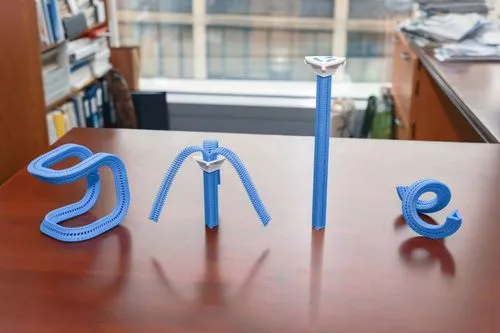
MITの研究チームは、約40年前に考案された「三辺のファスナー」のアイデアを現代のデジタルファブリケーション技術で実現した「Y-zipper」を開発した。これは、柔軟な3本のストリップを特殊なスライダーで結合し、瞬時に強固な三角柱構造を形成することで、可変剛性のニーズに応える画期的な技術である。

別名: 熱溶解積層法
熱可塑性樹脂をノズルで溶かしながら積層していく、最も一般的な3Dプリント技術。Y-zipperの設計データは、この方式の安価なプリンターで出力可能であることが特徴の一つとされている。
Fused deposition modelling (FDM) is one of the fastest-growing additive manufacturing methods used in printing fibre-reinforced composites (FRC). The performances of the resulting printed parts are limited compared to those by other manufacturing methods due to their inherent defects. Hence, the effort to develop treatment methods to overcome these drawbacks has accelerated during the past few years. The main focus of this study is to review the impact of those defects on the mechanical performance of FRC and therefore to discuss the available treatment methods to eliminate or minimize them in order to enhance the functional properties of the printed parts. As FRC is a combination of polymer matrix material and continuous or short reinforcing fibres, this review will thoroughly discuss both thermoplastic polymers and FRCs printed via FDM technology, including the effect of printing parameters such as layer thickness, infill pattern, raster angle and fibre orientation. The most common defects on printed parts, in particular, the void formation, surface roughness and poor bonding between fibre and matrix, are explored. An inclusive discussion on the effectiveness of chemical, laser, heat and ultrasound treatments to minimize these drawbacks is provided by this review.
Abstract This study aims to review research the progress on factors that affect the 3D printing results of the fused deposition modeling (FDM) process. The review is carried out by mapping critical parameters and characteristics determining FDM parameters, the effects of each parameter, and their interaction with other parameters. The study started from the filament manufacturing process, filament material types, and printing parameters of FDM techniques. The difference in each section has determined different parameters, and the respective relationships between parameters and other determinants during printing have a significant effect on printing results. This study also identifies several vital areas of previous and future research to optimize and characterize the critical parameters of the FDM printing process and FDM filament manufacturing.
Additive manufacturing (AM) or 3D printing is a digital manufacturing process and offers virtually limitless opportunities to develop structures/objects by tailoring material composition, processing conditions, and geometry technically at every point in an object. In this review, we present three different early adopted, however, widely used, polymer-based 3D printing processes; fused deposition modelling (FDM), selective laser sintering (SLS), and stereolithography (SLA) to create polymeric parts. The main aim of this review is to offer a comparative overview by correlating polymer material-process-properties for three different 3D printing techniques. Moreover, the advanced material-process requirements towards 4D printing via these print methods taking an example of magneto-active polymers is covered. Overall, this review highlights different aspects of these printing methods and serves as a guide to select a suitable print material and 3D print technique for the targeted polymeric material-based applications and also discusses the implementation practices towards 4D printing of polymer-based systems with a current state-of-the-art approach.
The fused deposition modeling (FDM) process, an extrusion-based 3D printing technology, enables the manufacture of complex geometrical elements. This technology employs diverse materials, including thermoplastic polymers and composites as well as recycled resins to encourage sustainable growth. FDM is used in a variety of industrial fields, including automotive, biomedical, and textiles, as a rapid prototyping method to reduce costs and shorten production time, or to develop items with detailed designs and high precision. The main phases of this technology include the feeding of solid filament into a molten chamber, capillary flow of a non-Newtonian fluid through a nozzle, layer deposition on the support base, and layer-to-layer adhesion. The viscoelastic properties of processed materials are essential in each of the FDM steps: (i) predicting the printability of the melted material during FDM extrusion and ensuring a continuous flow across the nozzle; (ii) controlling the deposition process of the molten filament on the print bed and avoiding fast material leakage and loss of precision in the molded part; and (iii) ensuring layer adhesion in the subsequent consolidation phase. Regarding this framework, this work aimed to collect knowledge on FDM extrusion and on different types of rheological properties in order to forecast the performance of thermoplastics.
Fused Deposition Modeling (FDM) is an additive manufacturing technology that has emerged as a promising technique for fabricating 3D printed polymers. It has gained attention recently due to its ease of use, efficiency, low cost, and safety. However, 3D-printed FDM components lack sufficient strength compared to those made using conventional manufacturing methods. This low strength can be mainly attributed to high porosity and low sinterability of layers and then to the characteristics of the polymer used in the FDM process or the FDM process itself. Regarding polymer characteristics, there are two main types of reinforcing fibers: discontinuous (short) and continuous. Continuous-fiber reinforced composites are becoming popular in various industries due to their excellent mechanical properties. Since continuous reinforcing fibers have a more positive effect on increasing the strength of printed parts, this article focuses primarily on continuous long fibers. In addition to polymer characteristics, different mechanisms have been developed and introduced to address the issue of insufficient strength in 3D-printed FDM parts. This article comprehensively explains two main FDM mechanisms: in-situ fusion and ex-situ prepreg. It also provides relevant examples of these mechanisms using different reinforcing elements. Additionally, some other less frequently utilized mechanisms are discussed. Each mechanism has its own advantages and disadvantages, indicating that further development and modification are needed to increase the strength of 3D-printed FDM parts to be comparable to those produced using traditional methods.