
サイエンス
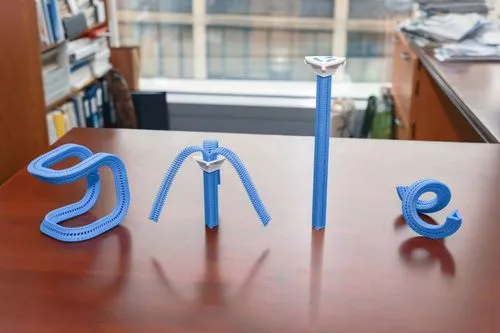
アイデアを形にするのに40年、三面ファスナー「Y-zipper」が空間建築の常識を覆す
MITの研究チームは、約40年前に考案された「三辺のファスナー」のアイデアを現代のデジタルファブリケーション技術で実現した「Y-zipper」を開発した。これは、柔軟な3本のストリップを特殊なスライダーで結合し、瞬時に強固な三角柱構造を形成することで、可変剛性のニーズに応える画期的な技術である。

マサチューセッツ工科大学(MIT)のComputer Science and Artificial Intelligence Laboratory(CSAIL)に所属する研究者。William Freeman教授の初期構想に現代の計算幾何学と3Dプリンティング技術を組み合わせ、実用的なY-zipperシステムとして結実させた。
Abstract When it comes to “phase measurement” or “quantitative phase imaging”, many people will automatically connect them with “laser” and “interferometry”. Indeed, conventional quantitative phase imaging and phase measurement techniques generally rely on the superposition of two beams with a high degree of coherence: complex interferometric configurations, stringent requirements on the environmental stabilities, and associated laser speckle noise severely limit their applications in optical imaging and microscopy. On a different note, as one of the most well-known phase retrieval approaches, the transport of intensity equation (TIE) provides a new non-interferometric way to access quantitative phase information through intensity only measurement. Despite the insufficiency for interferometry, TIE is applicable under partially coherent illuminations (like the Kohler’s illumination in a conventional microscope), permitting optimum spatial resolution, higher signal-to-noise ratio, and better image quality. In this tutorial, we give an overview of the basic principle, research fields, and representative applications of TIE, focus particularly on optical imaging, metrology, and microscopy. The purpose of this tutorial is twofold. It should serve as a self-contained introduction to TIE for readers with little or no knowledge of TIE. On the other hand, it attempts to give an overview of recent developments in this field. These results highlight a new era in which strict coherence and interferometry are no longer prerequisites for quantitative phase imaging and diffraction tomography, paving the way toward new generation label-free three-dimensional microscopy, with applications in all branches of biomedicine.
For quantitative phase imaging (QPI) based on transport-of-intensity equation (TIE), partially coherent illumination provides speckle-free imaging, compatibility with brightfield microscopy, and transverse resolution beyond coherent diffraction limit. Unfortunately, in a conventional microscope with circular illumination aperture, partial coherence tends to diminish the phase contrast, exacerbating the inherent noise-to-resolution tradeoff in TIE imaging, resulting in strong low-frequency artifacts and compromised imaging resolution. Here, we demonstrate how these issues can be effectively addressed by replacing the conventional circular illumination aperture with an annular one. The matched annular illumination not only strongly boosts the phase contrast for low spatial frequencies, but significantly improves the practical imaging resolution to near the incoherent diffraction limit. By incorporating high-numerical aperture (NA) illumination as well as high-NA objective, it is shown, for the first time, that TIE phase imaging can achieve a transverse resolution up to 208 nm, corresponding to an effective NA of 2.66. Time-lapse imaging of in vitro Hela cells revealing cellular morphology and subcellular dynamics during cells mitosis and apoptosis is exemplified. Given its capability for high-resolution QPI as well as the compatibility with widely available brightfield microscopy hardware, the proposed approach is expected to be adopted by the wider biology and medicine community.
A study describes a wood-based, three-tailed, biodegradable seed carrier that self-drills into the ground in response to moisture fluctuations with a success rate higher than that of natural self-drilling seeds. Aerial seeding can quickly cover large and physically inaccessible areas^ 1 to improve soil quality and scavenge residual nitrogen in agriculture^ 2 , and for postfire reforestation^ 3 – 5 and wildland restoration^ 6 , 7 . However, it suffers from low germination rates, due to the direct exposure of unburied seeds to harsh sunlight, wind and granivorous birds, as well as undesirable air humidity and temperature^ 1 , 8 , 9 . Here, inspired by Erodium seeds^ 10 – 14 , we design and fabricate self-drilling seed carriers, turning wood veneer into highly stiff (about 4.9 GPa when dry, and about 1.3 GPa when wet) and hygromorphic bending or coiling actuators with an extremely large bending curvature (1,854 m^−1), 45 times larger than the values in the literature^ 15 – 18 . Our three-tailed carrier has an 80% drilling success rate on flat land after two triggering cycles, due to the beneficial resting angle (25°–30°) of its tail anchoring, whereas the natural Erodium seed’s success rate is 0%. Our carriers can carry payloads of various sizes and contents including biofertilizers and plant seeds as large as those of whitebark pine, which are about 11 mm in length and about 72 mg. We compare data from experiments and numerical simulation to elucidate the curvature transformation and actuation mechanisms to guide the design and optimization of the seed carriers. Our system will improve the effectiveness of aerial seeding to relieve agricultural and environmental stresses, and has potential applications in energy harvesting, soft robotics and sustainable buildings.
We present a new label-free three-dimensional (3D) microscopy technique, termed transport of intensity diffraction tomography with non-interferometric synthetic aperture (TIDT-NSA). Without resorting to interferometric detection, TIDT-NSA retrieves the 3D refractive index (RI) distribution of biological specimens from 3D intensity-only measurements at various illumination angles, allowing incoherent-diffraction-limited quantitative 3D phase-contrast imaging. The unique combination of z-scanning the sample with illumination angle diversity in TIDT-NSA provides strong defocus phase contrast and better optical sectioning capabilities suitable for high-resolution tomography of thick biological samples. Based on an off-the-shelf bright-field microscope with a programmable light-emitting-diode (LED) illumination source, TIDT-NSA achieves an imaging resolution of 206 nm laterally and 520 nm axially with a high-NA oil immersion objective. We validate the 3D RI tomographic imaging performance on various unlabeled fixed and live samples, including human breast cancer cell lines MCF-7, human hepatocyte carcinoma cell lines HepG2, mouse macrophage cell lines RAW 264.7, Caenorhabditis elegans (C. elegans), and live Henrietta Lacks (HeLa) cells. These results establish TIDT-NSA as a new non-interferometric approach to optical diffraction tomography and 3D label-free microscopy, permitting quantitative characterization of cell morphology and time-dependent subcellular changes for widespread biological and medical applications.
Dual-atom catalysts with nitrogen-coordinated metal sites embedded in carbon can drive the oxygen reduction and evolution reactions (ORR/OER) in rechargeable zinc-air batteries (ZABs), and the further improvement is limited by the linear scaling relationship of intermediate binding energies in the absorbate evolution mechanism (AEM). Triggering the lattice oxygen mechanism (LOM) is promising to overcome this challenge, but has yet been verified since the lacking of bridge oxygen (O) in the rigid coordination environment of the metal centers. Here, we demonstrate that suitably tailored dual-atom catalysts of FeCo-N-C can undergo out-plane and in-plane reconstruction to form the both axial O and bridge O at the metal centers, and thus activate the LOM pathway. The tailored FeCo-N-C with shortened Fe-N bonds also favor the ORR process, therefore is a promising dual-atom oxygen catalyst. The assembled rechargeable ZABs demonstrate a peak power density of 332 mW cm-2, and exhibit no notable decline after ~ 720 h of continuous cycling.