
テクノロジー
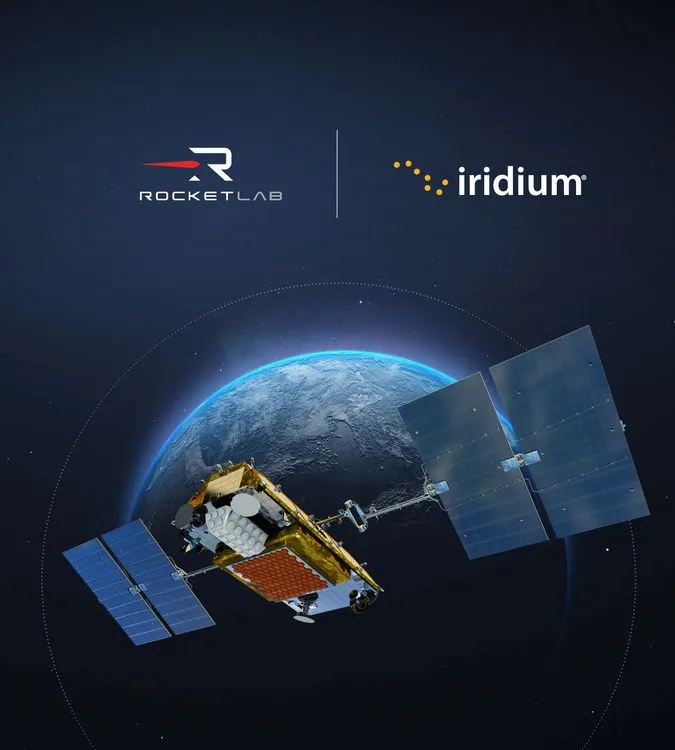
Rocket Lab、Iridium買収で通信網取得へ。80億ドルで軌道上サービスを拡大
Rocket Labは衛星通信大手Iridiumを約80億ドルで買収し、自社で衛星の製造から通信網の運用までを一貫して担う企業へと進化する。これによりロケット販売から軌道上サービスによる継続収益モデルへ転換し、宇宙産業での競争力を高める狙いだ。

別名: Positioning, Navigation, and Timing
PNTは、位置決定(Positioning)、目的地への移動(Navigation)、および正確な時刻同期(Timing)の3つの機能を指します。GPSなどの衛星測位システムはこのPNT情報の主要な供給源であり、現代の通信、金融、電力網などの重要インフラを支える基盤となっています。
Rocket Labは衛星通信大手Iridiumを約80億ドルで買収し、自社で衛星の製造から通信網の運用までを一貫して担う企業へと進化する。これによりロケット販売から軌道上サービスによる継続収益モデルへ転換し、宇宙産業での競争力を高める狙いだ。

現代文明のインフラストラクチャーは、「正確な時間」という目に見えない土台の上に構築されている。金融取引の同期、電力網の制御、そして通信ネットワークの安定運用に至るまで、すべては10億分の1秒単位の精度に依存している。現在 […]
Positioning, Navigation, and Timing (PNT) is an essential service for modern societies, their industries, and governmental organizations. Mobility, logistics, and agriculture, among others, depend heavily on reliable PNT and will do so even more in the future. However, the predominant Global Navigation Satellite Systems (GNSS) are highly susceptible to jamming and spoofing, a threat that has increased in the recent years. As a result, there is a growing need for a robust, independent PNT backup system. A promising approach to meet this demand is to use the communication signals of satellites in Low Earth Orbit (LEO) as signals of opportunity (opportunistic LEO-PNT). In recent years, opportunistic LEO-PNT has gained relevance in academic research due to the emergence of megaconstellations. This survey provides an holistic overview of opportunistic LEO-PNT and an exhaustive review of the academic work in the field. Error sources and challenges with respect to the development of operational systems are evaluated, and the state of the art performance is analyzed. System-level strategies to mitigate the error sources and challenges are identified, including the combination of opportunistic LEO-PNT with GNSS or other sensors, or the use of base stations. Future research directions, such as the investigation of non-accuracy related KPIs, the required receiver hardware, or the use in low SNR scenarios, are derived.
Low earth orbit (LEO) satellites provide the potential to overcome the current limitations in global navigation satellite systems (GNSSs) due to the increased satellite velocity and signal reception power. As the whole LEO segment grows, preliminary studies and simulations have been conducted in the most recent years to identify how to develop a LEO positioning, navigation, and timing (PNT) system and add value to the GNSS. To promote the development of LEO-PNT, this work presents the simulation of several key components of a dedicated LEO-PNT system. Our investigation analyzes features of the satellite constellation, orbits, onboard instruments, signal propagation effects, and user measurements and maps the accuracy of the service on the ground. The analysis considers the signal propagation from both LEO and medium earth orbit satellites and provides the expected accuracy of a ground user when certain system parameters and instruments are defined in the space mission design. All parameters and statistical distributions, which can serve to future LEO-PNT simulations and developments, are presented. For validation and demonstration, a comparison is presented to analyze the expected positioning errors for LEO satellites and how they differ from the classic GNSS. Our investigation enables a valuable quantitative analysis of the dedicated LEO-PNT systems and provides analysis for LEO-PNT system design optimization.
Currently, about ten dedicated LEO-PNT activities are under way on a worldwide basis. The SOOP (signals-of-opportunity) research within existing mega-constellations and plans for LEO-PNT research satellites are left out of consideration here. Thus, we observe a kind of hype and euphoria for LEO-PNT. However, shortcomings, contradictions and risks in several system designs are observed. In particular, many system designers underrate user segment aspects. In the paper we try to analyze the advantages and disadvantages of the proposed concepts, and to consider the most reasonable and realistic approach for LEO-PNT in a trade-off. We perform systematic assessments of the technical & non-technical characteristics of the LEO-PNT concepts: Orbit and constellation, carrier frequency, bandwidth and signal power issues, atmospheric (rain) and foliage attenuation and C/N 0 as function of carrier-frequency (UHF to Ku-Band). Additionally, satellite platform issues (dedicated satellite versus hosted payload), payload technology and SWAP-budgets, LEO satellite classes are considered. We expect that a LEO payload will also show code-and phase bias delays in the individual satellite signals (not different from MEO). If this is the case and calibration does not solve the bias issue with required
As the satellite launch and manufacturing costs have become affordable, the industrial and academic interest in low‐Earth orbit (LEO) satellites has increased in recent years. With this interest, the concept of LEO‐based positioning, navigation, and timing (LEO‐PNT) has also gained popularity as a complementary and/or standalone system in addition to the already existing Global Navigation Satellite Systems (GNSS). This article proposes a LEO constellation optimization methodology from the perspective of a LEO‐PNT design, identifies and discusses the state‐of‐art of the LEO satellite constellation optimization approaches, introduces relevant performance‐ and feasibility‐related metrics and parameters, and addresses key concepts and trade‐offs that must be considered for any LEO‐PNT constellation design. In addition, a case study for a LEO‐PNT constellation optimization is presented, where we showcase the discussed trade‐offs. We present optimization results obtained with the adaptive weighting algorithm “ADaW” applied to the Pareto‐optimization algorithm nondominated sorting genetic algorithm III (“NSGA‐III”). A detailed performance analysis is done for six relevant scenarios with varying receiver location properties, namely, by considering indoor/outdoor, rural/urban and line of sight/non–line of sight (NLOS) cases.