

テクノロジー
メモリは下がったのにPC自作は高くなった理由。エージェント型AI需要でCPU争奪戦が勃発
Agentic AIの台頭により、データセンターにおけるCPU需要が急増し、コンシューマー向けCPUの価格が大幅に上昇している。DRAM価格は下落したものの、IntelやAMDの主力CPUが最大20%値上がりし、自作PCのコストは高止まりしている。この状況は、サーバー市場での需要逼迫と最先端プロセスを巡る生産枠競争が原因で、2027年まで続く可能性がある。

別名: 285K, Core Ultra 9 285K
IntelのCore Ultraシリーズ(開発コード名:Arrow Lake)の最上位モデル。新しいソケットLGA1851に対応し、電力効率の向上とNPUの統合を特徴とする。ゲーミング性能においてはAMDのX3Dシリーズと競合するが、本記事ではRyzen 7 9850X3Dの比較対象として言及されている。
: To investigate the residual mechanical performance of ultra-high performance concrete filled 8 steel tube (UHPCFST) columns exposed to high temperatures during construction, in this research, an 9 experimental study on 27 UHPCFST columns is conducted to examine the impact of fire scenarios, age of 10 the core UHPC exposed to elevated temperature, and volume ratio of coarse aggregates on the post fire 11 behavior of the UHPCFST columns. Detailed analyses are carried out on the failure modes, the historical 12 maximum temperatures in the cross-sections, the axial load-deformation curve, the residual compressive 13 strengths, and the residual stiffness of the columns. The findings indicate that both the steel tubes and the 14 bearing capacity UHPC cores show increases in the historical maximum temperatures with the increase in 15 the aging of the core UHPC. For columns exposed to fire sources at greater distances, a significant 16 enhancement in bearing capacity was observed following high-temperature exposure at varying ages. The 17 bearing capacity demonstrated an increasing trend with the aging of the UHPC subjected to high 18 temperatures. In contrast, when exposed to nearby fire sources, a decline in strength was noted, and the 19 overall bearing capacity of the columns decreased as the age of UHPC exposed to elevated temperature 20 increased. Furthermore, a predictive model for the residual bearing capacity of UHPCFST columns 21 subjected to high temperatures during construction was developed and validated. This research is expected 22 to provide valuable insights for the post-fire evaluation and reinforcement of UHPCFST structure in 23 construction settings.
This work demonstrates the enhancement of the power conversion efficiency of thin film organic-inorganic halide perovskites solar cells by embedding triple-core-shell spherical plasmonic nanoparticles into the absorber layer. A dielectric-metal-dielectric nanoparticle can be substituted for embedded metallic nanoparticles in the absorbing layer to modify their chemical and thermal stability. By solving Maxwell's equations with the three-dimensional finite difference time domain method, the proposed high-efficiency perovskite solar cell has been optically simulated. Additionally, the electrical parameters have been determined through numerical simulations of coupled Poisson and continuity equations. Based on electro-optical simulation results, the short-circuit current density of the proposed perovskite solar cell with triple core-shell nanoparticles consisting of dielectric-gold-dielectric and dielectric-silver-dielectric nanoparticles has been enhanced by approximately 25% and 29%, respectively, as compared to a perovskite solar cell without nanoparticles. By contrast, for pure gold and silver nanoparticles, the generated short-circuit current density increased by nearly 9% and 12%, respectively. Furthermore, in the optimal case of the perovskite solar cell the open-circuit voltage, the short-circuit current density, the fill factor, and the power conversion efficiency have been achieved at 1.06 V, 25 mAcm-2, 0.872, and 23.00%, respectively. Last but not least, lead toxicity has been reduced due to the ultra-thin perovskite absorber layer, and this study provides a detailed roadmap for the use of low-cost triple core-shell nanoparticles for efficient ultra-thin-film perovskite solar cells.
Many experiments in the field of optical levitation with nanoparticles today are limited by the available technologies for particle loading. Here, we introduce a particle loading method that solves the main challenges, namely deterministic positioning of the particles and clean delivery at ultra-high vacuum levels as required for quantum experiments. We demonstrate the efficient loading, positioning, and repositioning of nanoparticles in the range of 100–755 nm diameter into different lattice sites of a standing wave optical trap, as well as direct loading of 143–365 nm diameter particles into ultra-high vacuum, down to an unprecedented pressure below 10−9 mbar. Our method relies on the transport of nanoparticles within a hollow-core photonic crystal fiber using an optical conveyor belt, which can be precisely positioned with respect to the target trap. Our work opens the path for increasing nanoparticle numbers in the study of multiparticle dynamics and high turn-around times for exploiting the quantum regime of levitated solids in ultra-high vacuum.
Salt-tolerant aerobic granular sludge (SAGS) had great potential in ultra-hypersaline wastewater treatment while slow and unstable formation hindered its application. Mycelial pellets (MPs) inoculation strategy could accelerate SAGS formation but collapse or peeling commonly occurred due to dense hyphal structures hindering microbial colonization in the connection layer between the shell and core. Besides, no MPs were reported to maintain structure under ultra-hypersaline environment. Herein, a novel strategy using newly-isolated ultra-high salt tolerant fungi Penicillium steckii NCSL-JXA6 with a loose MPs structure was applied for AGS start-up in 9 % salinity wastewater. Granulation completed on Day 1 and maintained stable for 97 days (D10 & D50 > 200 μm, SVI30/SVI5 = 1), which was the fastest under similar salinity. SEM and stained cross-sectional slides showed the loose MPs structure allowed early inner microbial colonization and dense connection layer and core formed before hyphae collapsed, enabling stable transition within 27 days without fragmentation or peeling. Extracellular polymeric substances (EPS) and acyl-homoserine lactone signals (AHLs) (mainly PN, C8-HSL, C12-HSL) increased during transition period, supporting rapid microbial colonization. High TOC and TN removal (∼93 % and ∼ 82 %, respectively) was obtained within only 5 days. Metaproteomic analysis identified Penicillium as module hub of community. Integrative metagenomics and metaproteomics revealed upregulated colonization-related pathways and further confirmed that Penicillium steckii NCSL-JXA6 probably facilitated microbial colonization through metabolic complementarity, adhesion sites, and a loose hyphal structure easily enabling bacterial sensing, motility, adhesion, and biofilm construction. This study proposed a novel loose MPs inoculation theory and achieved the fastest SAGS formation in ultra-hypersaline wastewater.
Early, non‐invasive detection of esophageal cancer at sub‐millimeter resolution is critical for tailoring precise therapeutic strategies. While ultra‐high‐field (UHF) magnetic resonance imaging (MRI) offers exceptional spatial resolution, the lack of optimized contrast agents capable of enhancing sensitivity for detecting microscopic tumors remains a significant challenge. Here, we report a cyclo‐RGD peptide‐conjugated antiferromagnetic nanoparticle (RANP) as a novel targeted T1 contrast agent, specifically designed to improve in vivo imaging of esophageal tumors at the micrometer scale. The RANP integrates an antiferromagnetic core with low magnetization, minimizing T2 decaying effects, while the cyclo‐RGD peptide enhances its targeting ability by specifically binding to integrin αvβ3, a biomarker highly expressed on tumor vasculature. This targeted conjugation improves the probe's selective accumulation at the tumor site and facilitates superior T1 relaxation of water protons. Under 9 T MRI conditions, the RANP exhibits an r1 value of 1.88 mM−1 s−1 and a low r2/r1 ratio of 1.84, enabling the detection of primary esophageal tumors as small as 0.8 mm. This study significantly advances the sensitivity of current imaging techniques, pushing the detection limit of in vivo esophageal cancer diagnosis into the sub‐millimeter range. Our results demonstrate the promising potential of RANP‐enhanced UHF MRI for early detection, monitoring, and therapeutic intervention in esophageal cancer, offering a powerful tool for more effective clinical management.
Agentic AIの台頭により、データセンターにおけるCPU需要が急増し、コンシューマー向けCPUの価格が大幅に上昇している。DRAM価格は下落したものの、IntelやAMDの主力CPUが最大20%値上がりし、自作PCのコストは高止まりしている。この状況は、サーバー市場での需要逼迫と最先端プロセスを巡る生産枠競争が原因で、2027年まで続く可能性がある。
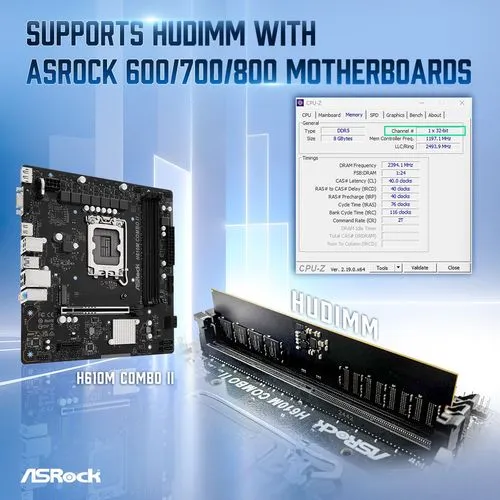
DDR5メモリの高騰を受け、ASRock等が物理仕様を半減させコストを抑える新規格HUDIMMを発表した。AIサーバー向けDRAM需要増がコンシューマ市場の価格高騰を招いた結果であり、HUDIMMは性能を犠牲に手頃さを追求する妥協策だ。HKEPCのベンチマークでは、HUDIMMの性能は標準的なUDIMMの約半分に留まることが示された。

Intelが2026年末の投入を予定している次世代デスクトップCPU「Nova Lake-S(開発コードネーム)」、その最上位モデルに関する衝撃的なリークが世界を駆け巡っている。著名なリーカーであるkopite7kimi […]
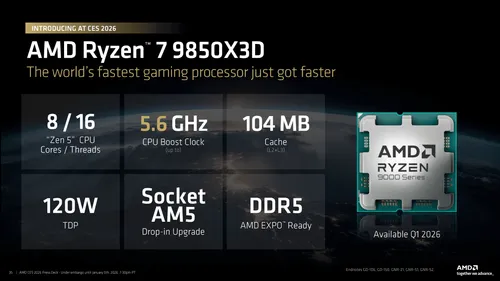
CES 2026において、AMDはゲーミングPC市場での地位を盤石にするべく、新型プロセッサ「Ryzen 7 9850X3D」を正式に発表した。 すでに「世界最高のゲーミングCPU」としての地位を確立していたRyzen […]

Appleが最新のMacBook ProおよびiPad Proに搭載した新SoC「M5」のGeekbench 6ベンチマーク結果が公開され、その詳細な性能が明らかになった。結果は、シングルコア性能でApple Silic […]
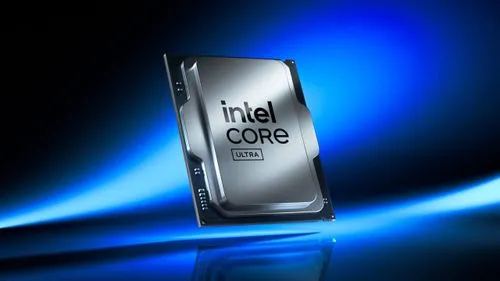
2026年の登場が噂されるIntelの次世代デスクトップCPU「Nova Lake-S」。その詳細なスペックに関する新たなリーク情報が報じられた。それによれば、最上位モデルは、これまでの常識を覆す最大52コア構成(16P […]
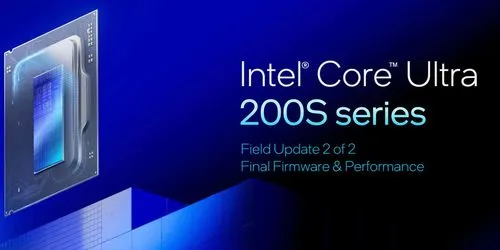
Intel Core Ultra 200シリーズ(開発コードネーム:Arrow Lake-S)において報告されていた性能面での課題が、包括的なソフトウェアおよびBIOSアップデートによって解決される見通しとなった。CES […]

新型MacBook Proに搭載されたAppleの最新プロセッサM4 Maxの詳細なベンチマークスコアが公開され、同社のシリコン製品において過去最高の性能を記録したことが明らかになった。特にシングルコア性能では大幅な向上 […]