

On July 23, 2026, Primate Labs released "Geekbench 7," a cross-platform CPU benchmark, for Windows, Linux, and macOS. This marks the first major version update since Geekbench 6 was released three years ago.
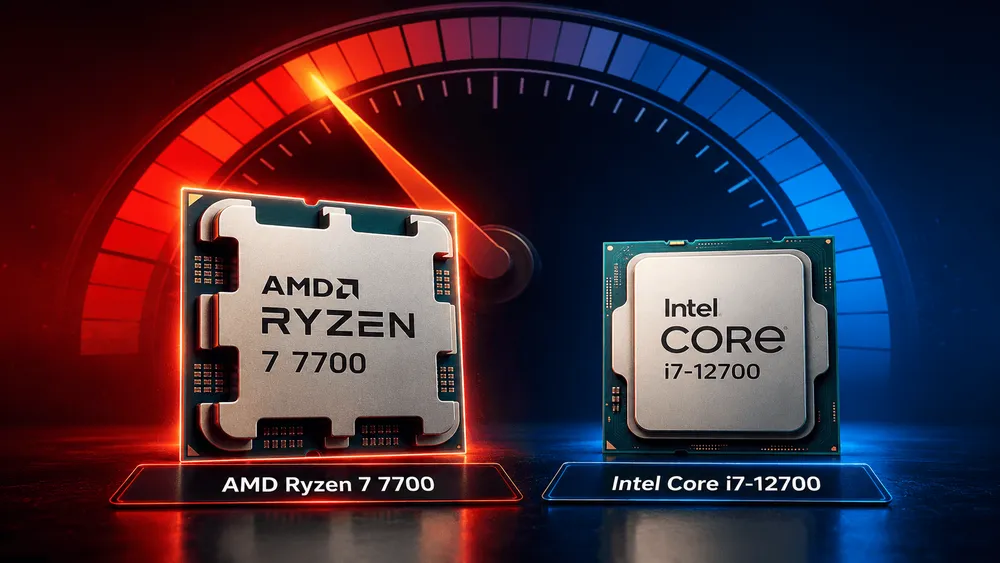
At the heart of the change is a swap of the baseline. Geekbench 7 uses the company's own Lenovo Legion (equipped with a Ryzen 7 7700) as its 2,500-point reference. Geekbench 6 had set its 2,500-point baseline using the Core i7-12700 in a Dell Precision 3460, so the baseline machine has moved from Intel to AMD. Three years is not a short span. Back in February 2023, when Geekbench 6 launched, the desktop market was locked in a tight battle between Raptor Lake and Zen 4—and the balance has since shifted enough that AMD was chosen as the mainstream reference point.
The baseline is merely a calibration anchor, not a measurement target. If a system scores 5,000 against a 2,500-point baseline machine, it means that system has twice the processing performance of the baseline machine. However, Geekbench 6 and Geekbench 7 scores cannot be directly compared. Because both the workload composition and the baseline have changed, past scores were effectively measured with a different yardstick. The fact that three years' worth of comparative data is now rendered obsolete is a change that affects everyone equally—media outlets, manufacturers, and users—who have used the benchmark as a basis for evaluating products.
New Workloads and Their Intent
Geekbench 7 introduces five new workloads: "Photo Editor," "Game Physics," "Video Encoder," "Audio Encoder," and "Video Decoder." Meanwhile, Object Remover, Horizon Detection, and Photo Filter, which existed in Geekbench 6, have been consolidated into Photo Editor, and the standalone Object Detection and Background Blur tests have been discontinued. The direction of this reorganization is simple: bundle tests with similar purposes together to reduce their number, and allocate the freed-up capacity to new, more practically relevant areas.
The Game Physics test uses the Jolt Physics engine. This open-source rigid body physics library is incorporated by Guerrilla Games into the Decima engine, and is actually used in Horizon Forbidden West and Death Stranding 2: On the Beach. Stressing the CPU with processing actually used in shipped games is an approach that previous versions of Geekbench never took. Jolt Physics is designed to actively leverage multi-threaded processing, making it well-suited to highlighting the difference between chips with many threads and those with few.
The media workloads have also been solidified around modern codecs. Video uses AV1 (the royalty-free, next-generation video codec), Audio uses Opus (the standard for low-latency audio compression), and the path simulating automatic subtitle generation uses Whisper's speech recognition model. Photo Library has been expanded to handle JPEG, JPEG-XL, and DNG imports along with thumbnail generation, plus object tagging via MobileNetV1 SSD. Python, which underpins the text-processing tests, has been upgraded from 3.9 to 3.13.
Asset Compression now handles Draco-format geometry compression in addition to ASTC and BC7 textures. File Compression targets three formats: LZ4, zlib, and Zstandard (zstd). Both of these are formats actually used in current game and 3D content production today, and this reflects a consistent shift in stance—from "artificial loads for benchmarking's sake" to "loads that simulate actual processing."
Only 8 Tests Count Toward the Multi-Core Score
There is one specification that requires careful attention when interpreting scores. Currently, only 8 workloads are counted toward the multi-core score. These are File Compression, Photo Library, Clang, Text Processing, Asset Compression, HDR, Photo Editor, and Ray Tracer. The remaining workloads—including Game Physics, Video Encoder, Audio Encoder, and Video Decoder—are reflected only in the single-core score.
The multi-core score, which is commonly used for comparing overall processing performance, does not include game physics or media processing performance. Game Physics is a workload closely tied to thread-level parallelism, and the company's published workload documentation does not clearly explain the rationale for including it only in the single-core score. When comparing chips that excel at media encoding or AI inference, it is necessary to check the single-core score in addition to the multi-core score.
This design particularly affects the Apple M series. Because the M series processes video and audio encoding using a dedicated media engine, its strengths don't tend to show up in the multi-core score, which runs on general-purpose cores. On the other hand, in AI-leaning workloads such as the speech recognition path that uses Whisper, the Neural Engine contributes to performance. When reading Geekbench 7 results, it's important to keep in mind that which score you look at can significantly change your impression of the chip in question.
A Strange Launch: "Self-Unembargoing"
The circumstances surrounding Geekbench 7's launch drew almost as much attention as the benchmark itself.
Primate Labs had offered press outlets embargoed information, but ultimately never distributed the promised materials. Nevertheless, the installer, documentation, and published results were left sitting on the company's own servers, and VideoCardz discovered them and was the first to report on it. In effect, Primate Labs ended up exposing the information ahead of its own embargo.
The Geekbench Browser has long been known as a major source of leaked information, with scores for unreleased CPUs frequently leaking through it in the past. Even though the company had set an embargo, it left the data sitting on its servers—meaning the containment effort never really held in the first place. As of this writing, Primate Labs has not issued an official press release, and eager users have already downloaded Geekbench 7, run it on their own systems, and piled up results from Apple M-series, AMD, and Intel chips in the public database.
There's also a structural issue with the Geekbench Browser at play here. Because results are automatically uploaded after a benchmark run, there have been several industry cases where engineering sample scores were unintentionally made public. What sets this incident apart from past hardware leaks is that this time it wasn't unreleased hardware but the software itself that was exposed. It's a case of the Geekbench Browser's structural quirks being applied, this time, to the company's own release management.
Points to Watch Going Forward
The effects of the score reset will become concrete over the coming weeks. The parties most immediately forced to make a decision are CPU review outlets. Switching to Geekbench 7 comes with the problem of a disconnect from scores in past articles. Existing review articles remain online with Geekbench 6 figures still posted, risking confusion among readers who might mix up old and new numbers. On the other hand, the cost of re-testing every article is also substantial. In today's CPU media landscape—where readers scattered after the discontinuation of outlets in the Anandtech mold—which outlet is first to align its numbers with Geekbench 7 becomes a competitive issue. For a while, listing both versions side by side will likely be the practical approach, though that itself risks increasing the amount of information on the page and confusing readers.
Intel's position has also changed. Under Geekbench 6, the Dell Precision 3460 (Core i7-12700) was itself the baseline machine, meaning Intel chips were structurally positioned to automatically claim the "baseline" 2,500-point score. Under Geekbench 7, that position has shifted to the Ryzen 7 7700, and Intel is now evaluated on equal footing alongside other vendors. How the company handles Geekbench 7 scores in its next product announcements—or whether it avoids mentioning Geekbench 7 altogether—is worth watching as a matter of marketing strategy.
Primate Labs' own next moves also remain uncertain. As of this writing, no official press release has been issued, and there has been no formal explanation of the launch circumstances or the design intent behind the new workloads. Hot Chips 38 is scheduled for August 2026, but it remains unclear at this point whether the company will use that as a venue for an announcement. The fact that adoption within the technical community is outpacing any official announcement means that perception of Geekbench 7 is being shaped through word of mouth and third-party reports. Whether that accelerates its acceptance as a benchmarking standard or breeds distrust will depend on when Primate Labs finally communicates officially.