

Microsoft's stock rose approximately 9% in after-hours trading on July 29, 2026. Revenue for the fourth quarter of fiscal year 2026 came in at $90 billion, up 18% year-over-year, while revenue from Azure and other cloud services grew 43%, far exceeding the company's guidance of 39–40%. Yet this doesn't mean AI-related capital expenditure has decreased. Quarterly CapEx reached $41 billion, and it's set to rise further in fiscal 2027. What the market—which has long recoiled at the sheer scale of investment—rewarded this time was the speed at which newly available compute capacity was converted into cloud revenue.
The earnings also contained one-time factors. Earnings per share excluding the impact of the OpenAI investment came to $4.74, but Microsoft explained that this included a 27-cent benefit relative to its prior guidance. This was because a $3.2 billion mark-to-market gain on the Anthropic investment and reduced pension-related expenses outweighed severance costs and an Xbox impairment charge. The upside in earnings and the acceleration in cloud business need to be evaluated separately.
Azure and Other Cloud Services Jump to 43% Growth
Growth in Azure and other cloud services revenue climbed from 39% in Q2 FY2026 to 40% in Q3, then to 43% in Q4. Since guidance heading into Q4 had been 39–40%, this upside cannot be explained by currency effects. Microsoft expects the same metric to grow roughly 45% on a constant-currency basis in the coming Q1 as well. Separately, annual Azure-only revenue surpassed $100 billion for the first time, growing 41%.
| Quarter | Azure and Other Cloud Services YoY Growth | CapEx | Stock Reaction Immediately After Earnings |
|---|---|---|---|
| FY2026 Q2 | 39% | $37.5 billion | Fell more than 5% after hours |
| FY2026 Q3 | 40% | $31.9 billion | Roughly flat after hours |
| FY2026 Q4 | 43% | $41.0 billion | Rose approximately 9% after hours |
Lining up these three quarters, the stock has reacted more strongly to how fast Azure-related revenue is growing than to the size of spending increases or decreases. Q4's $41 billion was $9.1 billion higher than Q3's figure. Even so, the market responded with buying because it could clearly confirm signs that revenue growth was catching up with investment.
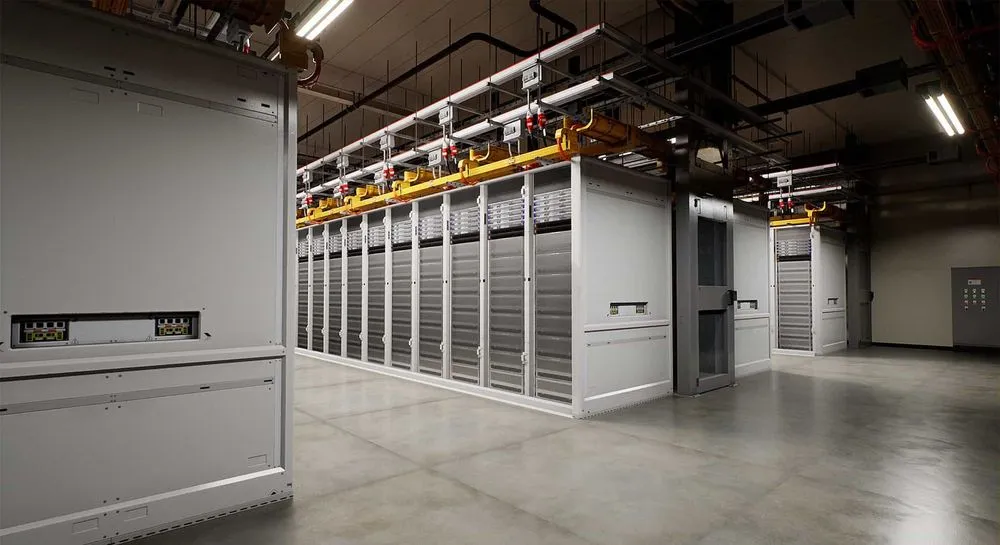
The completion of new data centers coincided with efficiency improvements at existing facilities. Microsoft added data centers at 31 sites across five continents in Q4, and 88 sites over the full year, bringing 1 gigawatt of capacity online in that quarter alone. At the same time, the company nearly halved—over the course of a year—the time it takes to bring a large-scale region into service after GPUs are delivered. It also said it increased the throughput it can extract from existing CPUs and GPUs.
Customer demand still exceeds supply. Under these conditions, shortening installation timelines or raising utilization of existing equipment means that freed-up compute capacity gets immediately absorbed by orders. Chief Financial Officer Amy Hood explained that the company was able to monetize additional capacity within the same quarter. This 43% figure reflects less an aggressive demand forecast than the speed at which the operational teams brought equipment online, which pushed up revenue.
From $190 Billion to $175 Billion: A Gap Between Accounting Presentation and Investment Reality
Following the earnings release, the outlook for calendar-year 2026 CapEx was lowered from approximately $190 billion to approximately $175 billion. However, Microsoft has not scaled back its physical investment plans. Starting in fiscal 2027, the company is extending the estimated useful life of data centers and office buildings from 15 years to 25 years, which will shift some future lease contracts from finance leases to operating leases. Since the latter isn't included in CapEx, the reported figure drops by about $15 billion.
The change in useful life has two accounting consequences. It extends the depreciation period for buildings, and it moves some future leases into operating leases, which are excluded from CapEx tallies. Neither change slows the pace at which AI equipment is deployed. Microsoft itself stated clearly that, excluding the effect of the useful-life change, its calendar-year 2026 investment forecast remains unchanged. CapEx for fiscal 2027 is expected to rise year-over-year, with Q1 alone projected to exceed $50 billion. Interpreting the stock's rise as relief over curtailed investment would lead to a conclusion opposite to what the company itself has stated.
CapEx spending also spans two different timeframes. In Q4, roughly two-thirds consisted of short-lived assets centered on CPUs and GPUs, with the remainder going toward long-lived assets such as data center land and buildings. Microsoft has explained that it depreciates CPUs and GPUs over six years. Extending the useful life of buildings to 25 years does nothing to ease the burden of refreshing the semiconductors that power AI computation.
While shifting to operating leases removes spending from the CapEx headline, the rental payments and contractual obligations remain. Microsoft's operating cash flow is already affected by operating lease payments. Going forward, it will be necessary to look not just at total CapEx but also at operating cash flow together with lease liabilities to assess the true equipment burden.
Two Monetization Paths Widening the Base of New Bookings
Microsoft lends compute capacity to Azure customers while also directing it toward its own Copilot products. Paid seats for Microsoft 365 Copilot grew from 15 million in Q2 to over 20 million in Q3, then to over 30 million in Q4. The net increase in the most recent quarter was more than double that of the prior quarter. GitHub Copilot, too, saw revenue accelerate more than 60% quarter-over-quarter after shifting to consumption-based pricing.
This two-pronged approach broadens the ways in which capital investment gets monetized. On Azure, CPUs and GPUs are sold as cloud usage fees; on Copilot, the model shifts to seat fees plus usage-based charges. Capacity diverted to model training or in-house applications can sometimes drag down that quarter's Azure revenue. Even so, as application usage and unit pricing rise, it flows back to Microsoft overall as a different revenue stream.
The base of new bookings has widened. Commercial RPO grew to $678 billion, up 84% year-over-year. Excluding OpenAI, it still grew 25%, and all of the quarter-over-quarter increase came from customers other than frontier model companies. This disclosure pertains specifically to the increase in RPO. Meanwhile, for full-year Microsoft Cloud revenue, roughly 90% came from customers other than frontier model companies, indicating a broad base of customers already generating monetized revenue.
That said, it would be premature to say the concentration around OpenAI has dissolved. As of Q2, OpenAI accounted for roughly 45% of the $625 billion in commercial RPO, but Microsoft did not update that composition figure for Q4. What can be confirmed this time is that new bookings have expanded to enterprise customers. The question of whether existing large-scale contracts convert into revenue on schedule remains open. The average duration across all RPO is 2.3 years, with about 30% expected to be recognized as revenue over the next 12 months.
65% Gross Margin and Roughly $115.9 Billion in Annual Cash Outlays
Recovering the cost of AI infrastructure requires protecting gross margin even as revenue grows. Microsoft Cloud gross margin in Q4 was 65%, down from 67% in Q2 and 66% in Q3. Company-wide gross margin was also 67%. A rising share of Azure in the mix, investment in AI infrastructure, and increased Copilot usage are pushing up costs, with equipment efficiency improvements absorbing part of the impact.
Cash flow dynamics carry even more weight. Q4 operating cash flow was $55.4 billion, cash capital expenditures were $35.8 billion, and free cash flow came to $19.6 billion. For full fiscal year 2026, cash capital expenditures rose from roughly $64.6 billion in the prior year to roughly $115.9 billion. Operating cash flow over the same period also grew, from roughly $136.2 billion to roughly $182.9 billion, but much of that increased cash is being absorbed by data centers and compute capacity.
The defense Microsoft points to is lowering per-unit processing costs on both the silicon and software sides. The company's own AI chip, Maia 200, reportedly delivers 30% better performance-per-dollar compared with the latest-generation machines within its facilities, and 40% better performance-per-watt when running Microsoft's proprietary models. Compute volume dedicated to Copilot has also grown fourfold since the start of the year. These are all company-measured figures, but achieving roughly 45% growth in Azure-related revenue without a sharp drop in gross margin will require stacking up such improvements quarter after quarter.
For fiscal 2027, Microsoft expects operating margin to decline by less than one point and to keep full-year free cash flow positive. The first test comes with the next earnings report. If Azure and other cloud services grow approximately 45%, Microsoft Cloud gross margin holds around 65%, and cash-generating capacity doesn't falter even with CapEx exceeding $50 billion, the case for the market to credit AI investment with genuine payback potential will strengthen. If any of these conditions fails to hold, a seemingly lower headline figure of $175 billion won't be enough to compensate.