

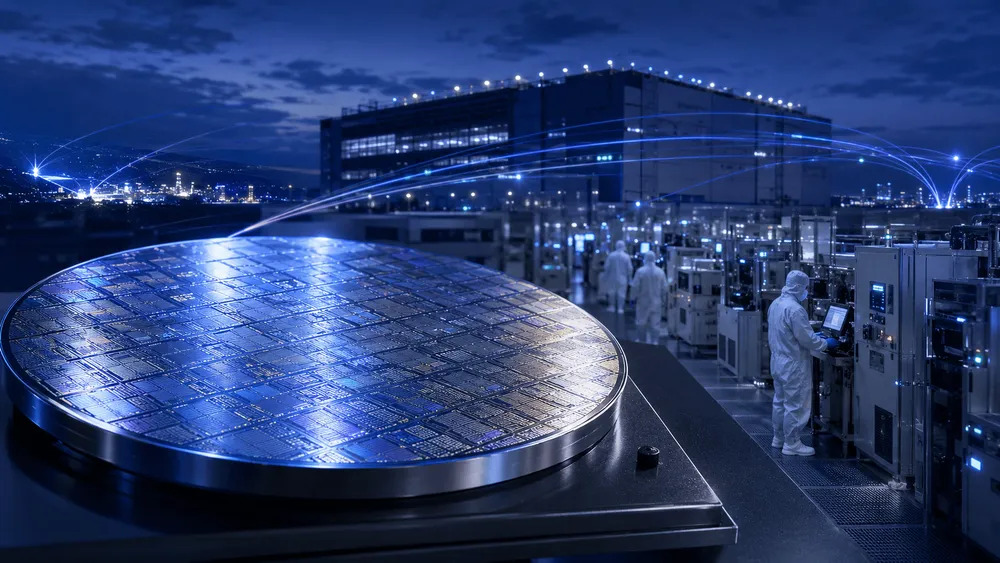
The Samsung Foundry price revision reported by Reuters on August 19 involves regional differences that can't be captured by a blanket summary of "price hikes of up to 15%." According to the report, new SF4 orders for July 2026 showed price increases of 10-15% month-over-month for customers in China and the US, and 5-10% for customers in Taiwan. The report, based on two sources familiar with the matter, noted that Samsung declined to comment. Neither price lists nor customer-specific contract terms have been officially disclosed.
According to Reuters' sources, orders from China exceed Samsung's order-fulfillment capacity, but the company is prioritizing US customers and has also reserved capacity for its own chips, meaning it cannot fulfill every order. What the article shows is a situation where, even within the same 4nm generation, quoted prices differ by region and supply is subject to prioritization. However, it hasn't been confirmed what criteria Samsung used to determine the size of the price increases. With AI/HPC now accounting for a larger share and HBM4 base dies also starting to use the 4nm process, it's necessary to look at the allocation of limited production capacity separately from the price revision itself.
SF4 price increases vary by region
According to Reuters, SF4 price increases were 10-15% month-over-month for customers in China and the US, and 5-10% for customers in Taiwan. One source explained that Chinese customers are accepting the highest increases. Even within the same process node, the size of the increase in new quotes differs by region. However, customer-specific terms—including order volume and contract duration—have not been disclosed, so it cannot be concluded that region alone accounts for the difference.
The price increases aren't limited to SF4. Reuters reported that SF5 rose 10-15% and 8nm rose nearly 10%. However, this applies to new orders for July 2026, and there's no report that existing contracts were revised under the same terms. Since Samsung hasn't disclosed the effective date, customers, or per-wafer prices, what's visible is limited to the scope of new deals covered by the report.
The policy of raising 5nm and 4nm prices isn't new this time around. TrendForce had previously reported that Samsung notified customers of price increases in Q4 2025. What's new this time isn't the existence of the policy itself, but the fact that Reuters specifically reported regional pricing quotes and supply prioritization. Customers who need 4nm now have to factor in not just which node to choose, but which region's supply allocation they fall into as a procurement condition.
Just because the 5-10% range for Taiwan is lower than that for China and the US doesn't mean Taiwanese customers have sufficient production allocation. Reuters' report shows regional pricing quotes, but it doesn't reveal order volume, die size, or contract duration per customer. Conversely, the 10-15% figures for China and the US aren't the final confirmed unit prices that each company actually pays. The numbers should be read as the size of increases presented in new deals as of July.
Orders from China and priority supply to US customers
Orders from China exceed Samsung's order-fulfillment capacity, but since the company prioritizes supply to US customers, it cannot accept all of them. Reuters also reported, per its anonymous sources, that the company has reserved some capacity for its own chips. The same article also reported that Chinese customers are accepting higher SF4 price increases, but it hasn't confirmed that excess demand or supply prioritization is the actual cause of the price gap.
Reuters cites, as background to why Chinese customers depend on overseas foundries, US export controls on advanced semiconductor manufacturing equipment. The US Department of Commerce's Bureau of Industry and Security (BIS) announced on December 2, 2024 that it would add further controls on 24 types of manufacturing equipment and 3 types of software for advanced-node ICs, among other items. The BIS measures are a policy aimed at restricting China's advanced semiconductor manufacturing capability. While it's unclear which individual Chinese companies ordered which products from Samsung, this does create conditions that strengthen demand for overseas manufacturing capacity.
If supply to the US is prioritized and capacity is also secured for in-house use, then Chinese customers may struggle to secure their desired volumes even with strong demand. However, Samsung has not officially acknowledged any regional prioritization or the criteria behind it. It's unclear whether the higher price increase functions as a surcharge for securing production allocation, or what actually determined the price gap—and export controls alone cannot fully explain the entire price differential.
Foundry-wide AI/HPC share, and the products filling SF4 capacity
Reuters reported Samsung's outlook that advanced processes will account for over 50% of Foundry revenue in 2026, with AI/HPC applications accounting for over 30%. AI/HPC reportedly stood at 15-20% in the second half of 2025. This is a figure for Foundry's overall revenue mix, not one representing SF4 pricing, utilization rates, or the application mix of any individual line. Meanwhile, a separate Reuters report on production items at the Pyeongtaek line makes clear which products are filling SF4 capacity.
Reuters reported that Samsung's Pyeongtaek, Korea SF4 line has been running at full capacity since late 2025, producing logic for external customers such as Qualcomm as well as base dies for Samsung's own multi-layer HBM. The HBM4 base die is a logic die that controls stacked DRAM, and Samsung announced on February 12 the mass production and commercial shipment of HBM4 using a 4nm process. Contract manufacturing of logic for external customers and in-house production of logic used in memory products intersect within the same 4nm-generation supply allocation.
In Samsung's Q2 2026 outlook presented in April 2026, the company also cited full utilization of advanced nodes, 4nm memory products, expanded mass production of AI/HPC-oriented LPUs, and increased supply of HBM4 base dies. In its Q2 results, the company said Foundry revenue increased due to demand for HBM base dies and strong orders from US customers. It's not disclosed whether external-customer products and base dies directly compete on individual manufacturing lines, but 4nm allocation includes both externally sold logic and in-house HBM base dies.
Samsung has set a goal of expanding sales of 4nm LPUs and base dies in the second half of 2026 and growing Foundry revenue by double digits, driven by rising demand from the US and China. This goal doesn't officially corroborate the regional pricing or supply prioritization reported by Reuters. Still, if external AI/HPC logic, base dies used in memory products, and new regional orders all increase simultaneously, the decisions about how to allocate 4nm production capacity by application and by customer will carry more weight than before.
From wafer cost to the final product
A Foundry price increase first pushes up the cost of the wafers customers purchase. But there are multiple steps between that and the per-chip cost, and further still to the price of the finished product. A larger die size means fewer chips per wafer, and lower yields mean fewer good units. Packaging costs also vary by product, so the size of a new wafer price increase cannot simply be translated into an equivalent increase in retail price.
For AI-oriented products, costs also include HBM and advanced packaging in addition to the logic die itself. Depending on the terms of long-term contracts, customers may absorb part of the price increase themselves. Therefore, the Reuters figures of 10-15% for SF4 in China and the US, and 5-10% in Taiwan, are not a forecast of retail prices for smartphones or AI servers. For procurement personnel, what matters is that which region's new order allocation you fall into—alongside which process you use—affects cost.
Samsung's profitability also cannot be judged from the size of the price revision alone. The company doesn't disclose Foundry's standalone revenue or profit figures, so it's not even known whether Foundry is profitable. While running advanced lines at capacity and raising prices could improve earnings, profit after accounting for yield, product mix, and equipment depreciation needs to be confirmed separately. Assessing profitability requires disclosure of actual sales mix and costs, not just the size of the price revision. In the next earnings report, it will be worth watching how the expansion of 4nm LPU and HBM4 base die sales shows up in actual results, whether advanced-node utilization remains high, and whether Samsung provides any disclosure that goes further into Foundry's standalone profitability.