

When it comes to developing next-generation reactors, the real constraint is neither funding nor design—it is the supply chain itself, which must reliably deliver specialized materials.
Small modular reactor (SMR) developer X-energy has signed a milestone-based investment agreement worth up to $8 million with SGL Carbon. The funds will go toward upgrading equipment at SGL Carbon's plant in Chedde, France. The goal is clear: to double production capacity for NBG-18, the nuclear-grade graphite that serves as the core material for X-energy's high-temperature gas reactor, the Xe-100.
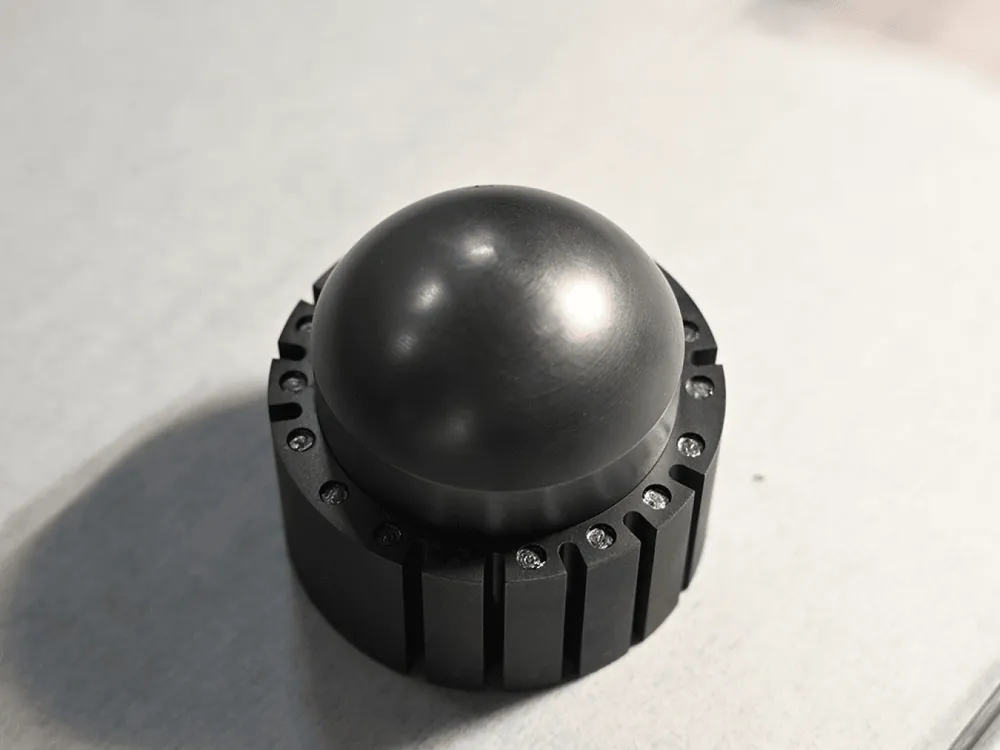
NBG-18 is a medium-grain isotropic graphite that serves a dual role in the Xe-100's pebble bed core—as both a neutron moderator and a structural component. Pebble bed reactors operate at temperatures of 750 to 1,000°C, with countless fuel spheres (pebbles) circulating through the core and generating physical friction. This demands extremely high homogeneity (isotropy) from the graphite so it can withstand wear under these harsh conditions as well as dimensional changes caused by neutron irradiation. As a result, the manufacturing process—including vibration molding using pitch coke—requires sophisticated quality control and a long production timeline. According to X-energy, its pipeline already exceeds 11GW. Yet there are very few companies in the world capable of producing specialized materials to match that scale. With this investment, SGL Carbon will be able to manufacture enough graphite billets annually to supply up to eight Xe-100 units.
A Division of Labor Connecting Europe and the United States
This initiative goes beyond simply expanding a factory—it aims to strengthen the supply chain through international division of labor.
As part of the 10-year framework agreement the two companies signed in January 2026, a supply contract worth more than $100 million has already been established for the initial three-year period. The first batch of NBG-18 billets manufactured in France has already been shipped to SGL Carbon's US facility for machining. A system is taking shape in which raw material is produced in France and then processed into reactor-grade blocks in the United States.
This is a strategy designed to distribute the risk of depending on a single manufacturing site. Processing capacity at SGL Carbon's US facility will also be expanded in parallel. By the time this plan is completed in 2030, European manufacturing capacity for NBG-18 will reach double its current level. That said, this division-of-labor structure carries a weakness alongside its strength: vulnerability to trade policy shifts and geopolitical risk.
An Approaching Commercialization Timeline
Building out the supply chain is closely tied to X-energy's commercialization roadmap.
The first commercial deployment of the Xe-100 involves a plan to build four reactors as part of a US Department of Energy project pursued jointly with Dow Chemical Company. This expansion of graphite supply capacity is meant to shore up the foundation for this initial project. At the same time, it is intended to proactively resolve supply bottlenecks for long-lead-time materials.
For advanced nuclear technology to be integrated into existing power grids and industrial processes, what matters is not just technological maturity but also a stable supply of these components and materials. How will the current structure—in which the manufacturing of specialized materials depends on a small number of companies—diversify and expand going forward? The resilience of the supply chain, as it gets tested through the initial project with Dow, will serve as the first key indicator of how this unfolds.