
テクノロジー
核融合炉を「燃料自給自足」にする技術、世界初の試験施設がサンディエゴに
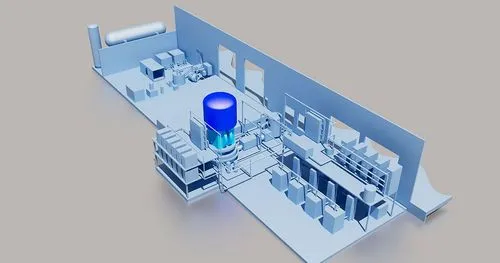
米GA社は、商業用核融合炉の実現に不可欠な燃料生産装置「ブランケット」を実機規模で試験する新施設を2026年に建設する。日米の産学官が連携して商業炉相当の過酷な環境下で耐久性や性能を検証し、核融合発電の実用化に向けた開発を加速させる。

マサチューセッツ工科大学(MIT)のプラズマ科学核融合センターからのスピンオフとして設立された企業。高温超伝導(HTS)技術を活用し、従来の核融合炉よりも小型かつ強力な磁場を発生させることで、クリーンで無限のエネルギー源としての核融合発電の早期実用化を目指している。主要なプロジェクトに実証炉「SPARC」と商用炉「ARC」がある。
米GA社は、商業用核融合炉の実現に不可欠な燃料生産装置「ブランケット」を実機規模で試験する新施設を2026年に建設する。日米の産学官が連携して商業炉相当の過酷な環境下で耐久性や性能を検証し、核融合発電の実用化に向けた開発を加速させる。
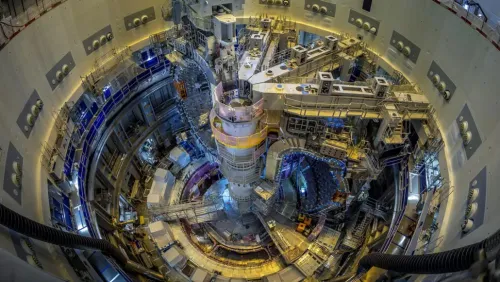
核融合炉内で発生するアルファ粒子が、熱を逃がす原因となる乱流を抑制し、加熱効率を劇的に向上させることが最新のシミュレーションで判明した。この発見は次世代炉の設計に光明を投じ、核融合エネルギーの実用化を大きく加速させる可能性を秘めている。
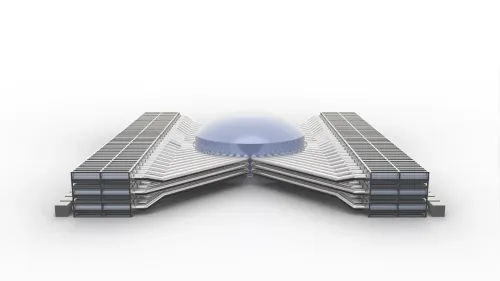
実現すれば人類の抱えるエネルギー問題を解決するとされる核融合発電において、最大の懸念事項は常に「コスト」であった。いかにして、反応を開始させるための莫大なエネルギーコストを、売電価格よりも低く抑えるか。この難題に対し、カ […]
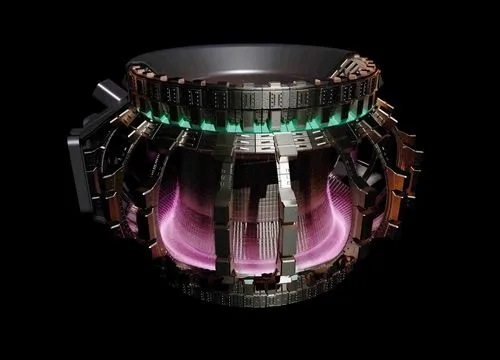
CES 2026の喧騒の中で、コンシューマーエレクトロニクスの枠を超えた、人類のエネルギー史における極めて重要なマイルストーンが提示された。米国の核融合スタートアップの筆頭格であるCommonwealth Fusion […]
核融合エネルギーは、未だ人類が手に入れる事が叶わない夢のエネルギーだ。なぜなら、この夢の無限エネルギーを実現するには、太陽の中心部よりも高い温度のプラズマを、極めて精緻な磁場容器の中に閉じ込め続ける必要があるからだ。これ […]
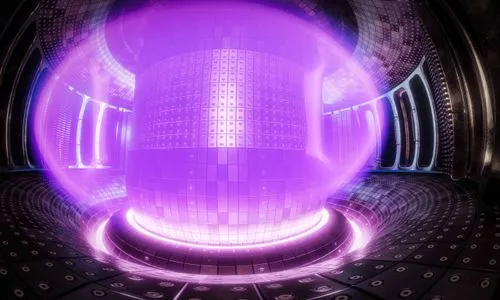
米国エネルギー省が、国家戦略として掲げる核融合技術の実用化に向けた「核融合科学技術ロードマップ」を発表した。これは、長年「未来のエネルギー」とされてきた核融合発電を、歴史上最も速いタイムラインで商業化するための包括的な計 […]
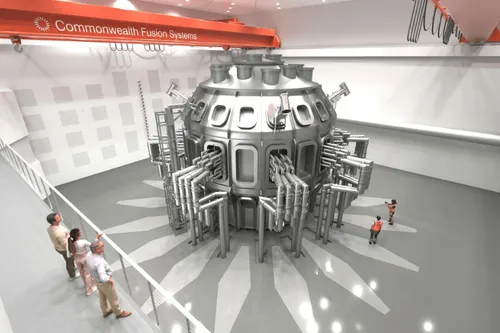
GoogleのAI研究部門DeepMindが、核融合スタートアップ、Commonwealth Fusion Systems(CFS)と手を組み、人工知能(AI)を用いて核融合プラズマを制御するという壮大なプロジェクトに乗 […]
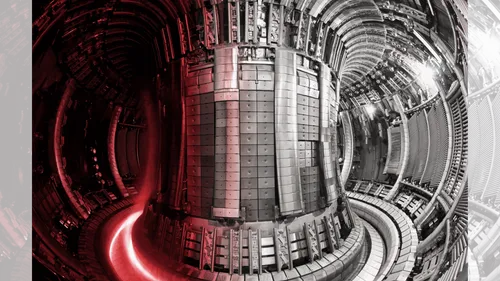
過去5年間で、核融合エネルギーに対する民間セクターからの資金調達が爆発的に増加した。ベンチャーキャピタル、ディープテック投資家、エネルギー企業、および各国政府からの投資総額は、100億米ドル(1兆5000億円)に近づいて […]

AIの進化が世界のパワーバランスを塗り替えようとする中、その頭脳を動かすための膨大な「電力」をいかに確保するかという問題が、テクノロジー巨人の最重要課題として浮上している。 2025年6月30日、Googleはマサチュー […]
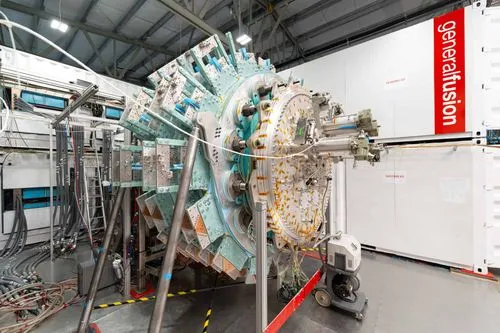
カナダを拠点とする核融合スタートアップの雄、General Fusionが深刻な資金難に直面している。20年以上にわたり商業用核融合炉の実現を目指してきた同社は、最新実証炉「LM26」で重要な技術的マイルストーンを達成し […]
An emerging industry of nuclear-fusion firms promises to have commercial reactors ready in the next decade. An emerging industry of nuclear-fusion firms promises to have commercial reactors ready in the next decade. Credit: Gretchen Ertl, CFS/MIT-PSFC, 2021 Commonwealth Fusion Systems - Collaborative team working on the magnet inside the test stand housed at MIT. Commonwealth Fusion Systems - Collaborative team working on the magnet inside the test stand housed at MIT.
PIT VIPER cables are rare-Earth barium copper oxide (REBCO)-based high-temperature superconducting (HTS) cables developed at the Massachusetts Institute of Technology and Commonwealth Fusion Systems. The cable design consists of a twisted copper former with grooves filled with stacks of REBCO tape, enclosed in a structural jacket. The assembly is then filled with solder in a vacuum pressure impregnation (VPI) process. One side effect of the VPI process, however, is potential damage to the superconductor that reduces its critical current and critical exponent. Damage may result from two mechanisms: prolonged exposure to elevated temperatures, and physical erosion of the copper stabilizer layer of the HTS tape, which leaves parts of the REBCO layer unprotected. In this experiment, the effect of extended time scales ($>2$ h) of flowing tin-lead-based solder exposure on HTS in PIT VIPER cables was tested, exploring for the first time exposure to flowing solder at a time scale that is particularly relevant to large-scale magnet manufacturing. During this study, two experimental samples were manufactured for electrical testing: one 2.5-m-long straight cable and one 20-m-long coiled cable. Each cable was exposed to molten tin-lead solder for 2.5 h during the VPI process, and then, electrically tested in a liquid nitrogen bath. Critical current, $n$-value, and resistance were measured. Critical current is compared to modeled values determined from characterization of the tape used, and degradation is assessed from this comparison. The measured critical current, when tested in a liquid nitrogen bath and under self-field, was uniform within reasonable experimental error. This result derisks solder degradation for the manufacturing of SPARC cable magnets.
Commonwealth Fusion Systems plans to build ARC as the first fusion power plant at a site in Chesterfield County, Virginia, USA by the early 2030s. We present an overview of analysis comprising the physics basis of the ARC V3A design, a high-magnetic-field tokamak with $B_0=11.4 \ \text{T}$ , $I_p=12.0 \ \text{MA}$ , $R_0=4.62 \, \text{m}$ , $a=1.18 \, \text{m}$ . ARC V3A is designed to produce $P_{fus} \approx 1.13$ GW DT fusion power and deliver $\geqslant$ 400 MW net electric power to the grid. This overview includes quantitative analysis of fundamental issues for design of and operational plasma scenarios for a tokamak power plant, and lays out the design targets and strategic choices for ARC, including empirical fusion performance projections, assessment of H-mode access, ion cyclotron resonance heating simulations, alpha particle physics and time-dependent full-pulse simulations. This is complemented by topical papers on fusion performance and transport, disruption physics, boundary physics and magnetohydrodynamic stability. Critically, these studies identify key model uncertainties and physics risks to be retired through SPARC operation. Due to the modular nature of ARC, early results from SPARC can be incorporated into the design of the first ARC as well as subsequent replacements of the ARC vacuum vessel.
The path to demonstrate how fusion energy can be used to generate net electricity is undergoing an important transition, shifting from relying almost exclusively on public funding to also being supported by a diverse set of private companies. This article discusses the motivations and processes by which peer review, a mainstay of publicly funded fusion science, translates to the research and development activities of private fusion companies. The perspective is from a team which has experienced this evolution first-hand, having transitioned from publicly funded fusion projects to working on the high-field tokamak path, supported or employed by Commonwealth Fusion Systems. We believe the continuation of peer review to be critical to the advancement of industry-led fusion science, but also acknowledge where it needs to have restrictions due to pursuit of some fusion technology that may need to remain proprietary. The discussion is expected to be generally applicable to any privately funded fusion endeavor, but necessarily draws upon the experience gained from developing the science, engineering, and technology basis for the SPARC tokamak and the planning for its future operation.
Full transposition of superconducting wires within a conductor may not be a requirement for high temperature superconductor (HTS) magnet for fusion applications. Already, conduction-cooled 20 T model coil built with non-transposed HTS stacks has been demonstrated by Commonwealth Fusion Systems (CFS). Here, we discuss 3 possible stacked HTS cryogen-cooled conductor concepts for toroidal field (TF) magnet applications. The first one is somewhat like LTS conductors, the second, HTS stacks are capped by copper stabilizer, the last one, only stacks without copper. We simulate a simplified TF magnet model, 12 T, size of KSTAR, using the 3 conceptual HTS conductor designs. A comparative thermo-hydraulic analysis for a fast charging case has been carried out and its implications on HTS conductor design are further discussed.