

テクノロジー
Microsoft「Project Helix」とAMD「FSR Diamond」:コンソールとPCの境界を消滅させるニューラルレンダリングの実像
2026年のGame Developers Conference(GDC)において、MicrosoftとAMDが提示した次世代ゲーミングハードウェアに関する技術的詳細は、数十年にわたって続いてきたコンソールビジネスの構造 […]

別名: RDNA 5
AMDが開発している次世代のグラフィックスアーキテクチャ。RDNA 4の後継として、2027年頃にNVIDIAのRubinアーキテクチャと競合することが予測されている。
2026年のGame Developers Conference(GDC)において、MicrosoftとAMDが提示した次世代ゲーミングハードウェアに関する技術的詳細は、数十年にわたって続いてきたコンソールビジネスの構造 […]

2018年、NvidiaがGeForce RTX 20シリーズを発表した際、ゲーム業界には一つの輝かしい未来が提示された。それは「ハードウェア・レイトレーシング」による写実的表現の民主化だ。複雑な光の反射や屈折をリアルタ […]

PlayStation 5の発売から約5年が経過し、ゲーム業界の視線はすでに「次」へと向いている。長年信頼性の高いリーク情報を発信してきた実績を持つKepler_L2氏による最新の情報では、次世代コンソールであるPlay […]

半導体大手AMDの2025年第4四半期決算説明会は、単なる財務報告の場を越え、世界のゲームプラットフォームの勢力図を塗り替える歴史的な転換点となった。CEOのLisa Su博士は、長らく憶測の域を出なかったMicroso […]

現代のデジタルエコシステムにおいて、GPU(Graphics Processing Unit)は単なる画像処理装置の枠を超え、世界経済を牽引する戦略物資としての地位を確立している。しかし今、PCゲーマーやシステムビルダー […]

PCゲーマーにとって、2026年の幕開けは寂しい物になった。ラスベガスで開催されたCES 2026において、多くのゲーマーやエンスージアストが期待していたNVIDIAからの「次の一手」――すなわちGeForce RTX […]
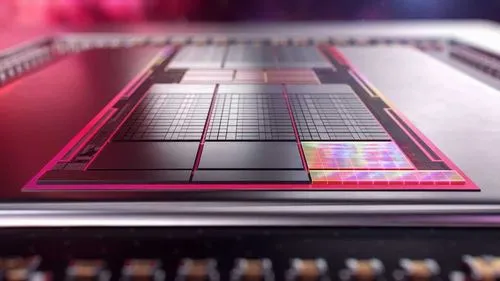
ハードウェアリーカーとして実績はあるが、最近はあまり情報提供を行っていなかったwjm47196氏が久しぶりにChipphell投稿した新たな情報によれば、AMDのGPUは次の次の世代となるRDNA 5で大きな変革を迎える […]
Herein, a strand displacement amplification (SDA)-assisted CRISPR/Cas12a (LbCpf1) electrochemiluminescence (ECL) biosensor was fabricated for ultrasensitive identification of Staphylococcus aureus (Sa)-16S rDNA. A porphyrinic Zr metal-organic framework (MOF) (PCN-224) nanomaterial was prepared as the coreactant accelerator, which promoted the conversion of S2O82- and SO4*-, thus enhancing the reaction with CdS quantum dots (QDs) and amplifying the ECL emission signal. Meanwhile, with the presence of Sa-16S rDNA, the auxiliary probes and primers stimulated the SDA reaction under the action of Klenow fragment (3'-5' exo-) and Nt. BbvCI specifically recognized Sa-16S rDNA to form a defective T-junction structure and generated second primers to initiate the cycles. Such a structure transformed the input signal (Sa-16S rDNA) into substantial single-stranded DNA products (SP) through SDA. SP acted as activators and activated arbitrary side chain cleavage of CRISPR/Cas12a (trans-cleavage) and further realized effective annihilation of ECL signals. This ECL platform demonstrated desirable assay performance for Sa-16S rDNA with a wide response range of 1 fM to 10 nM, and the limit of detection was 0.437 fM (S/N = 3), showing good sensitivity and specificity. Therefore, the method not only expanded the applications of CRISPR/Cas12a but also opened up a novel strategy for clinical diagnosis.
While nuclear small subunit ribosomal DNA (nSSU rDNA) is the most commonly-used gene marker in studying phylogeny, ecology, abundance, and biodiversity of microbial eukaryotes, mitochondrial small subunit ribosomal DNA (mtSSU rDNA) provides an alternative. Recently, both copy number variation and sequence variation of nSSU rDNA have been demonstrated for diverse organisms, which can contribute to misinterpretation of microbiome data. Given this, we explore patterns for mtSSU rDNA among 13 selected ciliates (representing five classes), a major component of microbial eukaryotes, estimating copy number and sequence variation and comparing to that of nSSU rDNA. Our study reveals: (1) mtSSU rDNA copy number variation is substantially lower than that for nSSU rDNA; (2) mtSSU rDNA copy number ranges from 1.0 × 10⁴ to 8.1 × 10⁵; (3) a most common sequence of mtSSU rDNA is also found in each cell; (4) the sequence variation of mtSSU rDNA are mainly indels in poly A/T regions, and only half of species have sequence variation, which is fewer than that for nSSU rDNA; and (5) the polymorphisms between haplotypes of mtSSU rDNA would not influence the phylogenetic topology. Together, these data provide more insights into mtSSU rDNA as a powerful marker especially for microbial ecology studies.