

テクノロジー
AppleがBroadcomを2031年まで残す理由、C1後も専用ASICは外へ出る
AppleとBroadcomは、複数世代の製品向けカスタムASICの開発・供給に関する長期契約を2031年まで延長した。モデム等の内製化を進めるAppleだが、端末やAIサーバーの高度化に伴い、今後も外部の専門技術を長期間活用する方針である。

テキサス・インスツルメンツ(TI)は、米国テキサス州ダラスに本拠を置く世界的な半導体企業です。アナログICおよび組み込みプロセッサの設計・製造において圧倒的なシェアを誇り、産業、自動車、パーソナル電子機器など幅広い市場に製品を供給しています。近年は300mmウエハーファブへの巨額投資を行い、垂直統合型の製造体制を強化しています。
AppleとBroadcomは、複数世代の製品向けカスタムASICの開発・供給に関する長期契約を2031年まで延長した。モデム等の内製化を進めるAppleだが、端末やAIサーバーの高度化に伴い、今後も外部の専門技術を長期間活用する方針である。

アナログおよび電源管理ICで世界をリードするTexas Instruments(以下、TI)が、無線接続と低消費電力プロセッサのスペシャリストであるSilicon Laboratories(以下、Silicon Labs […]

NVIDIAは今後4年間で米国の半導体サプライチェーンに数千億ドルを投資する計画を発表した。同社CEO Jensen Huang氏は、全体で約5,000億ドル相当の電子機器を調達予定であり、そのうち「数千億ドル」を米国内 […]

Appleは2月25日、今後4年間で5000億ドル(約75兆円)を米国に投資する大型計画を発表した。テキサス州に新AIサーバー工場を建設し、2万人の雇用創出を含む同計画は、Trump政権の中国輸入品関税引き上げを背景に打 […]
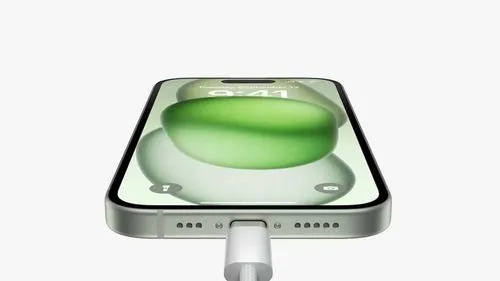
セキュリティ研究者が、iPhone 15シリーズに搭載されたUSB-Cコントローラーの脆弱性を発見した。現時点で一般ユーザーへの直接的な影響は限定的とされているものの、将来的なセキュリティリスクの可能性が指摘されている。 […]
Over the last few years, DLP® Products at Texas Instruments, Inc. has been developing a MEMS-based phase-only spatial light modulator that we call the Phase Light Modulator or PLM. The device which shares many of the process steps with the DLP micromirror device consists of a vertically actuated mirror on top of a CMOS array. The current reflective device provides enough vertical range to be suitable for visible wavelengths. This paper discusses a number of metrics important to the performance of a phase-only spatial light modulator and the corresponding characteristics of the PLM. The metrics include diffraction efficiency, number of phase levels, resolution, speed, and die flatness. The paper also discusses in depth recent design improvements such as increasing the number of phase levels to improve efficiency and reduce image noise. Recent lifetime test results collected over more than 1000 hours are also presented. Finally, there is a discussion of our possible approaches to testing the device in a high-volume production environment.
The Digital Micromirror Device (DMD), developed by Texas Instruments (TI), has been in production for over 25 years. It is a Micro-optical-electro-mechanical system (MOEMS) that functions as a spatial light modulator (SLM) by directing millions of points of light into or out of the projection optics path. TI is now developing a new MOEMS device based on the same processes, equipment sets, and design knowledge as the DMD. This new device operates in a piston mode with each mirror moving up and down instead of rotating left and right as the DMD does. By operating in a piston mode, the mirrors can modulate the phase of light and function as a phase light modulator (PLM). This paper focuses on the reliability of the PLM device. TI has a strong foundation for MOEMS reliability resulting in the mature and reliable DMD. Early results from various life tests and environmental tests confirm that PLM reliability is comparable to DMD reliability. The paper will discuss reliability test results and related performance metrics.
Sympatico–vagal balance is essential for regulating cardiac electrophysiology and plays an important role in arrhythmogenic conditions. Various noninvasive methods, including electrocardiography (ECG), have been used for clinical assessment of the sympatico–vagal balance. This study aimed to use a custom-designed wearable device to record ECG and ECG-based cardiac function biomarkers to assess sympatico–vagal balance during tonic pain in healthy controls. Nineteen healthy volunteers were included for the ECG measurements using the custom-designed amplifier based on the Texas Instruments ADS1299. The ECG-based biomarkers of the sympatico–vagal balance, (including heart rate variability, deceleration capacity of the heart rate, and periodic repolarization dynamic), were calculated and compared between resting and pain conditions (tonic pain). The custom-designed device provided technically satisfactory ECG recordings. During exposure to tonic pain, the periodic repolarization dynamics increased significantly (p = 0.02), indicating enhancement of sympathetic nervous activity. This study showed that custom-designed wearable devices can potentially be useful in healthcare as a new telemetry technology. The ECG-based novel biomarkers, including periodic repolarization dynamic and deceleration capacity of heart rate, can be used to identify the cold pressor-induced activation of sympathetic and parasympathetic systems, making it useful for future studies on pain-evoked biomarkers.