

テクノロジー
携帯型ゲーミングの覇権を奪還せよ。Intel、専用設計チップ「Arc G3」でAMDの牙城に肉薄する
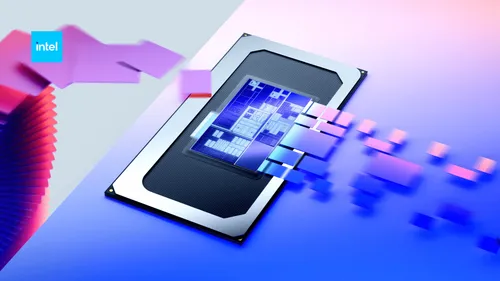
Intelが携帯型ゲーミングPC専用の新SoC「Arc G3」シリーズを発表。最新「18A」プロセスと圧倒的な描画力でAMDの牙城に迫る一方、1,200ドル規模と予想される価格高騰の課題に迫る。

別名: Intel Arc B390, Arc B390
Core Ultra Series 3(Panther Lake)の最上位モデルに搭載される内蔵GPU。12基のXeコアを備え、競合他社のiGPUを大きく上回るゲーミング性能を発揮する。
Intelが携帯型ゲーミングPC専用の新SoC「Arc G3」シリーズを発表。最新「18A」プロセスと圧倒的な描画力でAMDの牙城に迫る一方、1,200ドル規模と予想される価格高騰の課題に迫る。
2026年、テクノロジー業界の幕開けを告げるCES(Consumer Electronics Show)において、最も熱い視線が注がれたのはAI家電でも自動運転車でもなく、「ポータブルゲーミングPC」という、かつてはニッ […]

2026年1月6日、Intelは同社の命運を握ると言っても過言ではない次世代モバイルプロセッサ、Core Ultra Series 3(開発コードネーム:Panther Lake)を正式に発表した。 この発表が単なる年次 […]
We present a new question set, text corpus, and baselines assembled to encourage AI research in advanced question answering. Together, these constitute the AI2 Reasoning Challenge (ARC), which requires far more powerful knowledge and reasoning than previous challenges such as SQuAD or SNLI. The ARC question set is partitioned into a Challenge Set and an Easy Set, where the Challenge Set contains only questions answered incorrectly by both a retrieval-based algorithm and a word co-occurence algorithm. The dataset contains only natural, grade-school science questions (authored for human tests), and is the largest public-domain set of this kind (7,787 questions). We test several baselines on the Challenge Set, including leading neural models from the SQuAD and SNLI tasks, and find that none are able to significantly outperform a random baseline, reflecting the difficult nature of this task. We are also releasing the ARC Corpus, a corpus of 14M science sentences relevant to the task, and implementations of the three neural baseline models tested. Can your model perform better? We pose ARC as a challenge to the community.
The Abstraction and Reasoning Corpus for Artificial General Intelligence (ARC-AGI), introduced in 2019, established a challenging benchmark for evaluating the general fluid intelligence of artificial systems via a set of unique, novel tasks only requiring minimal prior knowledge. While ARC-AGI has spurred significant research activity over the past five years, recent AI progress calls for benchmarks capable of finer-grained evaluation at higher levels of cognitive complexity. We introduce ARC-AGI-2, an upgraded version of the benchmark. ARC-AGI-2 preserves the input-output pair task format of its predecessor, ensuring continuity for researchers. It incorporates a newly curated and expanded set of tasks specifically designed to provide a more granular signal to assess abstract reasoning and problem-solving abilities at higher levels of fluid intelligence. To contextualize the difficulty and characteristics of ARC-AGI-2, we present extensive results from human testing, providing a robust baseline that highlights the benchmark's accessibility to human intelligence, yet difficulty for current AI systems. ARC-AGI-2 aims to serve as a next-generation tool for rigorously measuring progress towards more general and human-like AI capabilities.
Wire arc additive manufacturing (WAAM) is an emerging and promising technology for producing medium-to-large-scale metallic components/structures for different industries, i.e., aerospace, automotive, shipbuilding, etc. It is now a feasible alternative to traditional manufacturing processes due to its shorter lead time, low material waste, and cost-effectiveness. WAAM has been widely used to produce components using different materials, including copper-based alloy wires, in the past decades. This review paper highlights the critical aspects of WAAM process in terms of technology, various challenges faced during WAAM process, different in-process and post-process operations, process monitoring methods, various gases, and different types of materials used in WAAM process. Furthermore, it briefly overviews recent developments in depositing different copper-based alloys via WAAM process.
The abilities to form and abstract concepts is key to human intelligence, but such abilities remain lacking in state-of-the-art AI systems. There has been substantial research on conceptual abstraction in AI, particularly using idealized domains such as Raven's Progressive Matrices and Bongard problems, but even when AI systems succeed on such problems, the systems are rarely evaluated in depth to see if they have actually grasped the concepts they are meant to capture. In this paper we describe an in-depth evaluation benchmark for the Abstraction and Reasoning Corpus (ARC), a collection of few-shot abstraction and analogy problems developed by Chollet [2019]. In particular, we describe ConceptARC, a new, publicly available benchmark in the ARC domain that systematically assesses abstraction and generalization abilities on a number of basic spatial and semantic concepts. ConceptARC differs from the original ARC dataset in that it is specifically organized around"concept groups"-- sets of problems that focus on specific concepts and that are vary in complexity and level of abstraction. We report results on testing humans on this benchmark as well as three machine solvers: the top two programs from a 2021 ARC competition and OpenAI's GPT-4. Our results show that humans substantially outperform the machine solvers on this benchmark, showing abilities to abstract and generalize concepts that are not yet captured by AI systems. We believe that this benchmark will spur improvements in the development of AI systems for conceptual abstraction and in the effective evaluation of such systems.
As of December 2024, the ARC-AGI benchmark is five years old and remains unbeaten. We believe it is currently the most important unsolved AI benchmark in the world because it seeks to measure generalization on novel tasks -- the essence of intelligence -- as opposed to skill at tasks that can be prepared for in advance. This year, we launched ARC Prize, a global competition to inspire new ideas and drive open progress towards AGI by reaching a target benchmark score of 85\%. As a result, the state-of-the-art score on the ARC-AGI private evaluation set increased from 33\% to 55.5\%, propelled by several frontier AGI reasoning techniques including deep learning-guided program synthesis and test-time training. In this paper, we survey top approaches, review new open-source implementations, discuss the limitations of the ARC-AGI-1 dataset, and share key insights gained from the competition.